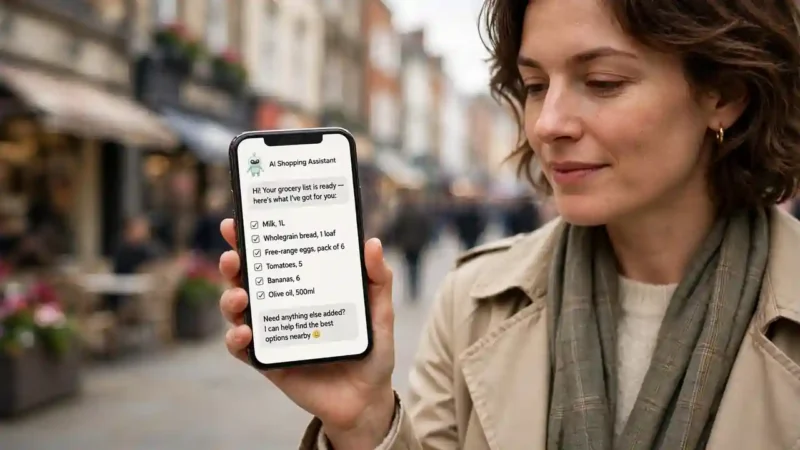
DeepL Aure v2 is the new Voice AI translation model DeepL launched on 26 November 2026 at its inaugural Unmute Summit in Tokyo: live speech translation with half the delay of the model it replaces. In a live conversation, that is the difference between a meeting that flows and one that stumbles.
The model is available now to DeepL Voice customers, automatically enabled for supported languages, with no additional setup. It works across DeepL Voice for Online Meetings, DeepL Voice for In-Person Conversations, and the DeepL API for Voice, in six languages at launch: English, German, French, Spanish, Japanese, and Korean.
This article looks at what DeepL Aure v2 changes, how it compares with rivals, and how to use it. Every performance figure comes from DeepL.
Why a half second of delay breaks a live conversation
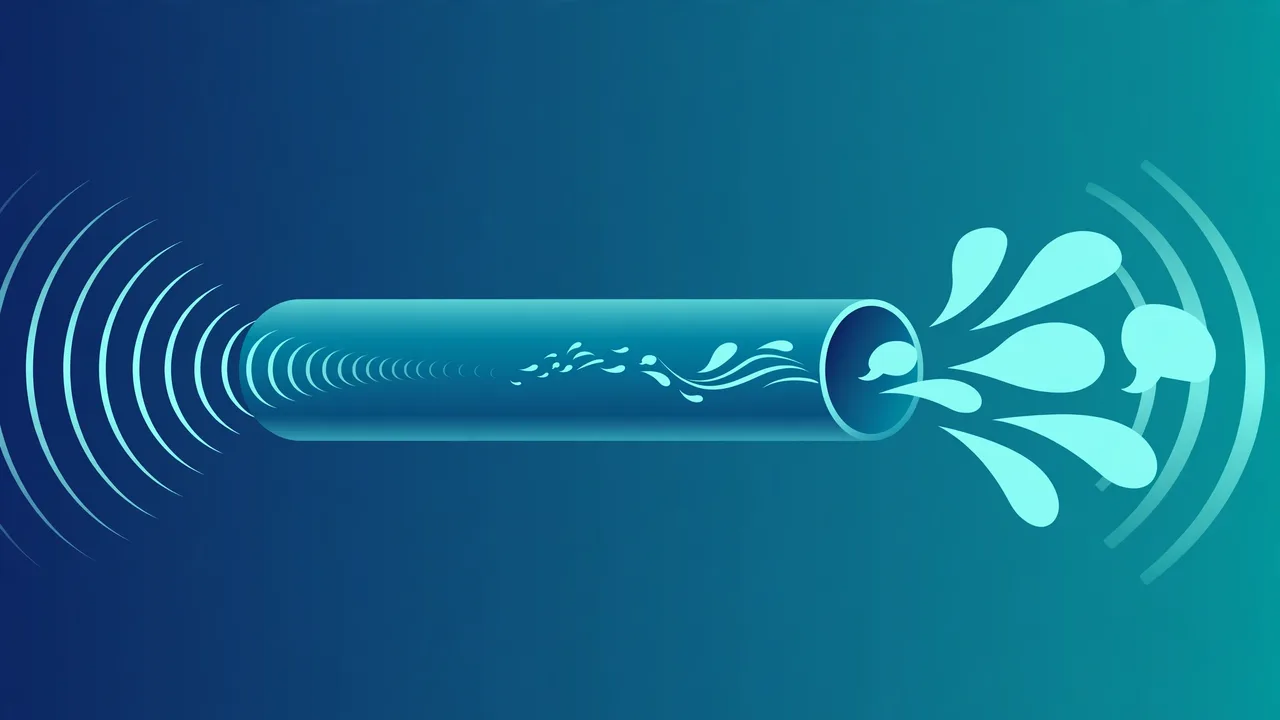
In a live conversation, timing carries meaning. A translation that arrives even a second late forces people to pause, repeat themselves, or talk over each other. DeepL Aure v2 targets that problem, cutting median translation delay by 50 percent against its predecessor, according to DeepL’s own internal study.
In a normal meeting, people take turns in fractions of a second. Add a translation delay, and that rhythm falls apart: speakers wait to see if their point landed, and listeners answer a sentence that ended two seconds ago.
“With Aure v2, we’ve significantly cut translation delays while also pushing the accuracy and quality of DeepL Voice even further,” said Jarek Kutylowski, Founder and CEO of DeepL. DeepL says the gain matters most in support centers and high-stakes negotiations, where delays disrupt conversations and misunderstandings carry real consequences.
DeepL Voice usage rose more than 8 times year over year in the third quarter of 2026, and translated meeting minutes rose approximately 7 times.

What DeepL Aure v2 changes under the hood
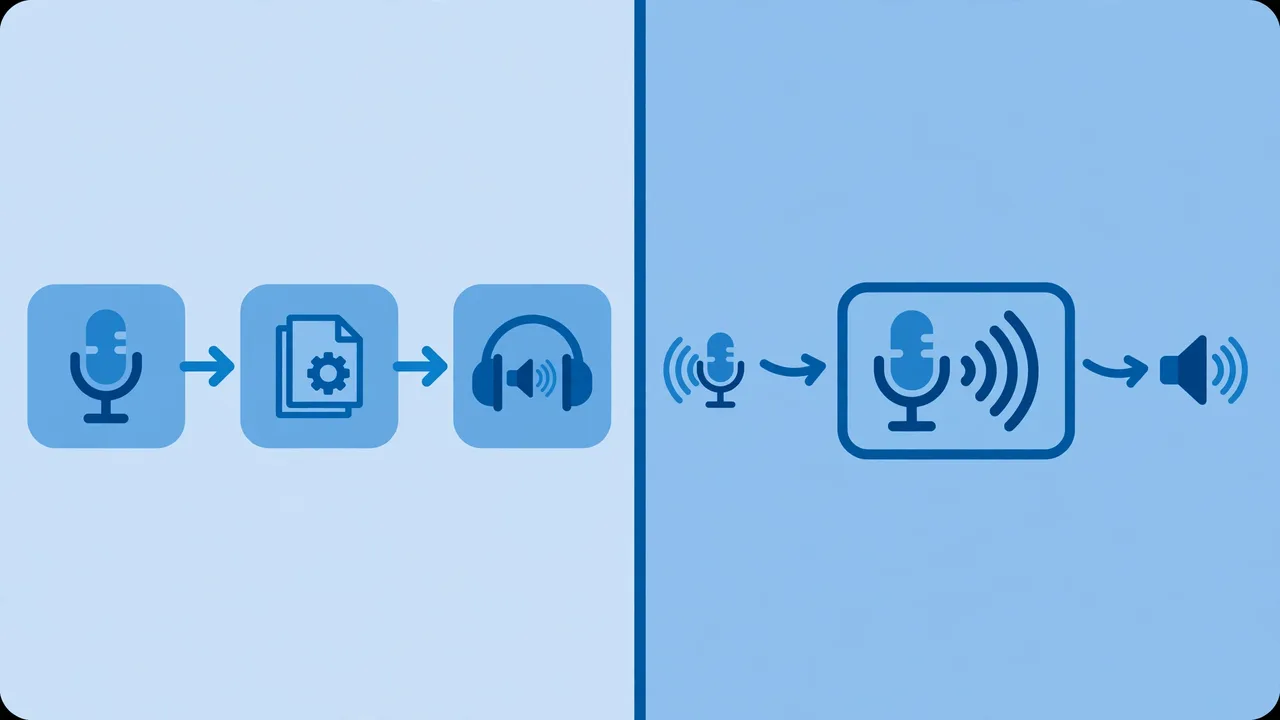
DeepL Aure v2 replaces the usual three separate steps of speech translation with a single end-to-end model that goes straight from speech to speech, and it was trained with reinforcement learning to judge when it has heard enough to start. The result, DeepL says, is lower delay with higher accuracy and more expressive output.
Live voice translation has traditionally worked in three stages: speech to text, then text translation, then speech synthesis. Each stage waits for the one before it, so the delays add up. DeepL Aure v2 brings those stages together into one step, listening to speech in one language and producing speech in the other directly.
The second change is when to start speaking. Start too early, and the model may miss context that changes the meaning. Wait too long, and the conversation has moved on. The problem is worst in German and Japanese, where essential information can arrive at the end of a sentence. Training data for that decision is scarce, so DeepL says it used reinforcement learning: the model was rewarded for translations that were both accurate and quick to start, and it learned to recognize when it had heard enough.
“The key to real-time translation isn’t simply processing speech faster, it is knowing when you have enough information to translate accurately,” said Sebastian Enderlein, Chief Technology Officer at DeepL.
The new model builds on Aure, introduced on 11 November 2026, only fifteen days earlier. Aure made translations more natural by adapting to a speaker’s voice, tone, and intonation during a conversation. DeepL Aure v2 keeps that quality and adds the speed. The original Voice-to-Voice product launched on 16 April 2026.
DeepL Aure v2 vs Aure vs the old three-stage pipeline
DeepL Aure v2 is the third step in DeepL’s voice translation line in less than a year. The table below sets out how the old pipeline, Aure, and DeepL Aure v2 differ in approach, delay, and what the listener hears, using only what DeepL has published.
| Feature | Old three-stage pipeline | Aure (11 Nov 2026) | DeepL Aure v2 (26 Nov 2026) |
|---|---|---|---|
| How it works | Speech to text, then text translation, then speech synthesis | Voice AI model that adapts to the speaker’s voice, tone, and intonation | One end-to-end model that translates directly from speech to speech |
| Training approach | Separate models for each stage | Continuous adaptation to the speaker | New architecture plus reinforcement learning |
| Delay | Each stage adds its own wait | Not quantified in DeepL’s release | 50 percent lower median delay than Aure, per DeepL’s internal study |
| What the listener hears | Translated speech, often flat in tone | More natural speech that keeps more of the speaker’s expression | More accurate and expressive output, per DeepL |
| Languages | Depends on the system | Not stated in DeepL’s release | Six at launch, with more coming soon |
Two things stand out. First, the pace: Aure arrived on 11 November 2026, and its replacement arrived fifteen days later, so DeepL is iterating in weeks, not years. Second, language coverage is still six languages, with no list or date for the next ones. The old pipeline is not dead either: for recorded audio or written text, the three separate stages still work well.
How it compares with Google Gemini Live Translate and ChatGPT voice mode
Only DeepL has published numbers so far, and they are DeepL’s own. Its internal study puts DeepL Aure v2 ahead of six rival systems on quality in every language pair tested, with 32 percent fewer English-Japanese translation errors than Google Gemini 3.5 Live Translate. No independent test has been published yet.
| Question | DeepL Aure v2 | Google Gemini 3.5 Live Translate | ChatGPT voice mode |
|---|---|---|---|
| What DeepL tested | The model under test | Rival system, tested on English-Japanese errors | Not included in DeepL’s published benchmark |
| Delay claim | 50 percent lower median delay than Aure | No figure in DeepL’s release | No figure in DeepL’s release |
| Accuracy claim | Higher quality than six competing systems in every pair tested | 32 percent more English-Japanese errors than DeepL Aure v2 in DeepL’s test | No comparison published |
| Languages at launch | Six | Not stated in DeepL’s release | Not stated in DeepL’s release |
| Where it runs | DeepL Voice and the DeepL API for Voice | Google’s own products | OpenAI’s ChatGPT app |
Read the table with the method in mind. The figures come from a DeepL internal study in November 2026, run on one-minute real-speech recordings across ten language pairs, with human-validated transcripts, and all models were tested over public APIs with no app overhead. DeepL notes that results may differ in real conversations. English to Japanese is one of the hardest pairs for live voice translation, so a 32 percent error reduction there is a strong claim, but it is a single pair. For wider context, see our reports on Google Gemini 3 and OpenAI GPT-6.2.
Using DeepL Aure v2 in online meetings
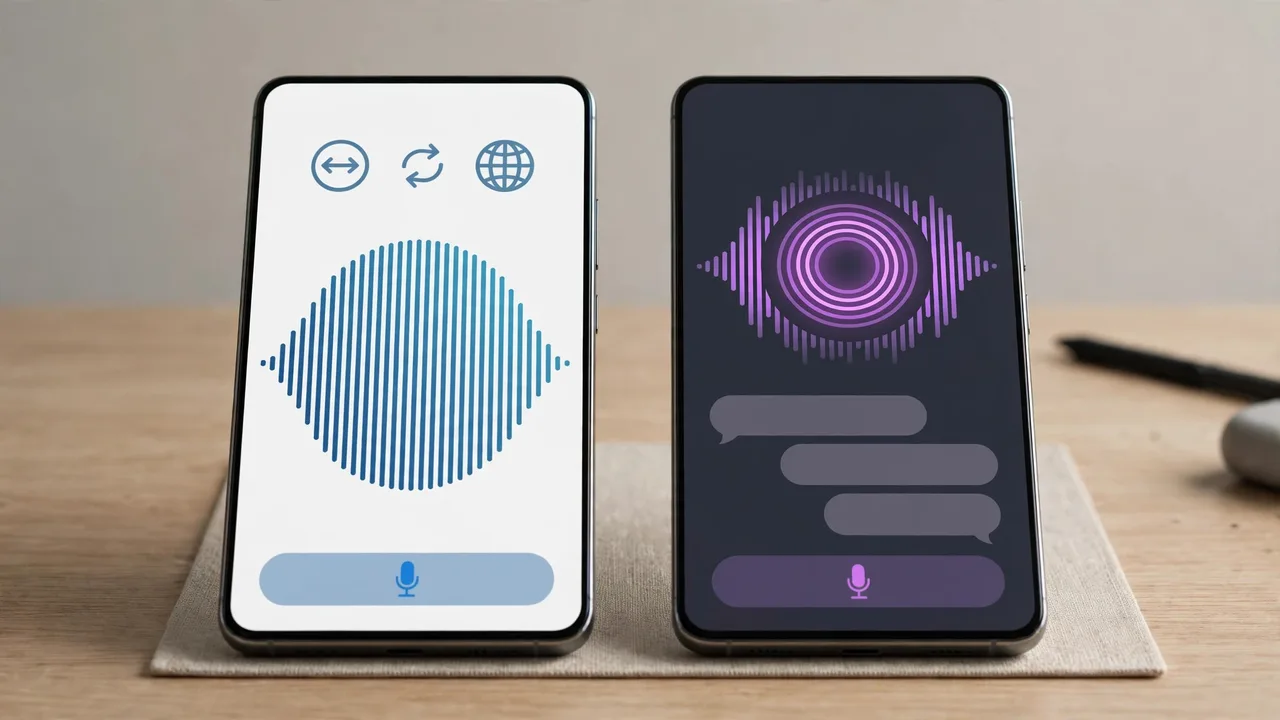
If your team already uses DeepL Voice, there is nothing to install. DeepL Aure v2 is automatically enabled for supported languages, and it runs inside DeepL Voice for Online Meetings. Pick one of the six launch languages, speak at your normal pace, and let the model decide when it has enough context to start translating.
Here is a practical way to run your first meeting with it.
- Start or join the meeting through DeepL Voice for Online Meetings. DeepL Voice works with Zoom, Microsoft Teams, and Google Meet, according to DeepL.
- Before the call, confirm that both sides are speaking one of the six launch languages.
- Speak in complete thoughts. Short fragments give the model little context.
- Avoid talking over other people. Overlapping speech is hard for any live translation system.
- Let the model choose its moment. It was trained to start once it has heard enough, so normal pace works better than careful, stilted speech.
- After the call, compare notes with the other side.
For enterprise customers, DeepL says audio, transcriptions, and translations are not used to train its AI models, and meeting data is deleted when calls end, subject to customer-controlled retention settings. The company holds ISO 27001 and SOC 2 Type II certifications and supports GDPR compliance.

Using it in person while traveling
DeepL Voice for In-Person Conversations turns your phone into a live interpreter for face-to-face talks, and DeepL Aure v2 now powers it in six languages. It fits the moments a phrasebook cannot reach: a hotel desk, a market stall, a train platform, or a business dinner where a slow translation would stall the conversation.
Open DeepL Voice for In-Person Conversations on your phone and choose the two languages. Hold the phone where both people can hear it, speak as you normally would, and let the other person answer in their own language. The model translates each turn as it comes, so the conversation stays a conversation instead of becoming a series of dictated messages.
A few habits make it work better. Speak in full sentences rather than single words, since the model needs context. Confirm important details, such as an address or a time, by showing the written translation on screen as well as listening to it.
The six launch languages shape where the tool is most useful. English, German, French, and Spanish cover much of Europe and the Americas, while Japanese and Korean cover two of the most visited countries in Asia. Outside those six, the in-person mode will not help you yet.

Who gains most from DeepL Aure v2, and who should wait
The clearest winners are global teams, support agents, and negotiators who already live in multilingual meetings, plus travelers and frontline workers in Japan and Korea. If your language is not among the six at launch, or you need a free consumer app rather than DeepL Voice access, waiting is the sensible choice.
A company with offices in Berlin, Tokyo, and New York already spends part of every meeting on the language gap, and DeepL Aure v2 is aimed directly at that cost. Support teams gain too: faster translation means shorter calls and fewer misunderstandings, and the same applies in negotiations, where a delayed answer can be misread.
There is also a use that has nothing to do with business. On 26 November 2026, DeepL also launched the Disaster Multilingual Communication Support Program, which provides free access to DeepL Voice for In-Person Conversations for municipalities, support organizations, and people affected by disasters in Japan. Announced on 25 November 2026 with Macnica, it gives officials and residents a way to hold real-time, one-on-one conversations across languages when clear information matters most.
Who should wait? Anyone whose language is not among the six at launch. People looking for a free consumer translation app should wait too: DeepL Aure v2 is available to DeepL Voice customers, and DeepL has not disclosed pricing for that access. Anyone who needs an independent verdict should wait for outside testing, since every figure so far comes from DeepL itself.

Limits and open questions
DeepL Aure v2 is fifteen days younger than its predecessor, and every performance figure comes from DeepL’s own internal study, not an independent test. Six languages is a narrow start, no price has been disclosed, and real conversations are messier than one-minute recordings, so the 50 percent delay cut is a claim to watch, not a guarantee.
The study used one-minute real-speech recordings across ten language pairs, with human-validated transcripts, and all models were tested over public APIs with no app overhead. Real meetings have interruptions, accents, background noise, and people who change their minds mid-sentence. DeepL itself notes that results may differ in real conversations, and that is the honest limit of the 50 percent figure.
Language coverage is the second limit. Six languages is a strong set for business, but it leaves out most of the world, including Portuguese and Chinese. DeepL says more are coming soon, but there is no list and no date.
Price is the third open question. DeepL has not disclosed what DeepL Voice access costs, and this article will not guess. For enterprise customers, DeepL says audio, transcriptions, and translations are not used to train its models, and meeting data is deleted when calls end, subject to customer-controlled retention settings. The company holds ISO 27001 and SOC 2 Type II certifications and supports GDPR compliance.

What to try first
Start with one real meeting, not a demo. Run your next call with a colleague in German, French, Spanish, Japanese, or Korean through DeepL Voice for Online Meetings, keep your sentences complete, and compare the flow with your last call. If the conversation feels closer to natural pace, DeepL Aure v2 is doing its job.
A short checklist will help you judge it fairly.
- Pick a low-stakes meeting first. A weekly team call is the right test.
- Confirm the language pair before the call; both sides must be within the six launch languages.
- Speak normally. Complete sentences, normal pace, no pausing after every phrase.
- Note the moments that still feel slow: the translation, or someone talking over someone else?
- Try the in-person mode on your next trip, even for something small such as asking directions.
If the six languages cover your team, there is little reason to wait: the model is automatically enabled for DeepL Voice customers, so the first test costs you one meeting. If your language is not covered, watch for the next language announcement and test then. Either way, judge DeepL Aure v2 on a real conversation.

Frequently asked questions
These are the questions readers ask first about DeepL Aure v2: what it is, which languages it covers, how much faster it is, where it runs, and what it costs. The answers below use only what DeepL has published, and they say plainly where DeepL has not disclosed a figure.
What is DeepL Aure v2? DeepL Aure v2 is a Voice AI translation model from DeepL that translates speech directly into speech in another language, in real time. It launched on 26 November 2026 at DeepL’s Unmute Summit in Tokyo, and it powers DeepL Voice for meetings, in-person conversations, and the DeepL API for Voice.
How much faster is DeepL Aure v2 than Aure? DeepL says DeepL Aure v2 cuts median translation delay by 50 percent compared with Aure. The figure comes from DeepL’s internal study in November 2026, run on one-minute recordings across ten language pairs, with human-validated transcripts. No independent test has been published yet.
Which languages does DeepL Aure v2 support? Six languages at launch: English, German, French, Spanish, Japanese, and Korean. DeepL says more languages are coming soon, but it has not named them or given a date.
Where can I use DeepL Aure v2? Across DeepL Voice for Online Meetings, DeepL Voice for In-Person Conversations, and the DeepL API for Voice. It is automatically enabled for supported languages, with no additional setup, and it is available now to DeepL Voice customers.
How much does DeepL Aure v2 cost? DeepL has not disclosed pricing for DeepL Voice access. DeepL Aure v2 is available to DeepL Voice customers, and this article states no price because none has been published.
Is DeepL Aure v2 available to everyone? No. It is available now to DeepL Voice customers, automatically enabled for the six supported languages. It is not a free consumer app.
What is the Disaster Multilingual Communication Support Program? DeepL launched it on 26 November 2026, in partnership with Macnica. It provides free access to DeepL Voice for In-Person Conversations for municipalities, support organizations, and people affected by disasters in Japan, so they can access critical information and communicate their needs across languages during disaster response and recovery.

Sources
- DeepL press release, “DeepL introduces Aure v2, its fastest Voice AI translation model,” 26 November 2026: https://home.deepl.com/en/press-release/aure-v2
- PR Newswire, “DeepL introduces Aure v2, its fastest Voice AI translation model,” 26 November 2026: https://www.prnewswire.com/news-releases/deepl-introduces-aure-v2-its-fastest-voice-ai-translation-model-302950629.html
- DeepL press information, including the Disaster Multilingual Communication Support Program announcement (25 November 2026) and the Aure launch (11 November 2026): https://app.deepl.com/en/press-release
Note: SEMrush metrics for this topic were unavailable, so none are stated in this article.