
SpaceX Starmind moved from a filing to a federal authorization on Wednesday, 25 November 2026, when the Federal Communications Commission approved SpaceX’s plan to deploy up to one million orbital compute modules for artificial intelligence work. The FCC called the decision the first authorization in United States history for a constellation of data centers in space.
The approval does not mean the satellites will appear soon. SpaceX has until 2033 to put the first one into operation and until 2040 to finish the full network, and the company still has to solve hard problems in manufacturing, launch, cooling and financing first. This article sets out what the FCC approved, how the satellites are meant to work, how they compare with data centers on the ground, who objected, and what has to go right.
What the FCC approved on 25 November
The FCC authorized SpaceX to build and operate up to one million Starmind satellites that process AI workloads in orbit and send the results back to Earth. The agency called the decision the first authorization in United States history for a constellation of data centers in space, and it attached conditions on communications, reporting and debris mitigation.
The application reached the FCC on 30 January 2026. SpaceX asked for permission to deploy up to one million orbital compute modules, and the FCC order published on 25 November granted that request. SpaceX describes Starmind as capturing solar energy in space to power low-cost, high-performance AI compute for Earth, a line the FCC repeated.
FCC Chair Brendan Carr said the action “opens a bold new frontier for the computing infrastructure needed to power America’s leadership and growth.” Musk replied on X: “Much appreciated. This will be a great asset to America and the world.” The authorization carries conditions on backup communications, status updates and debris mitigation.
How a Starmind satellite is built to work
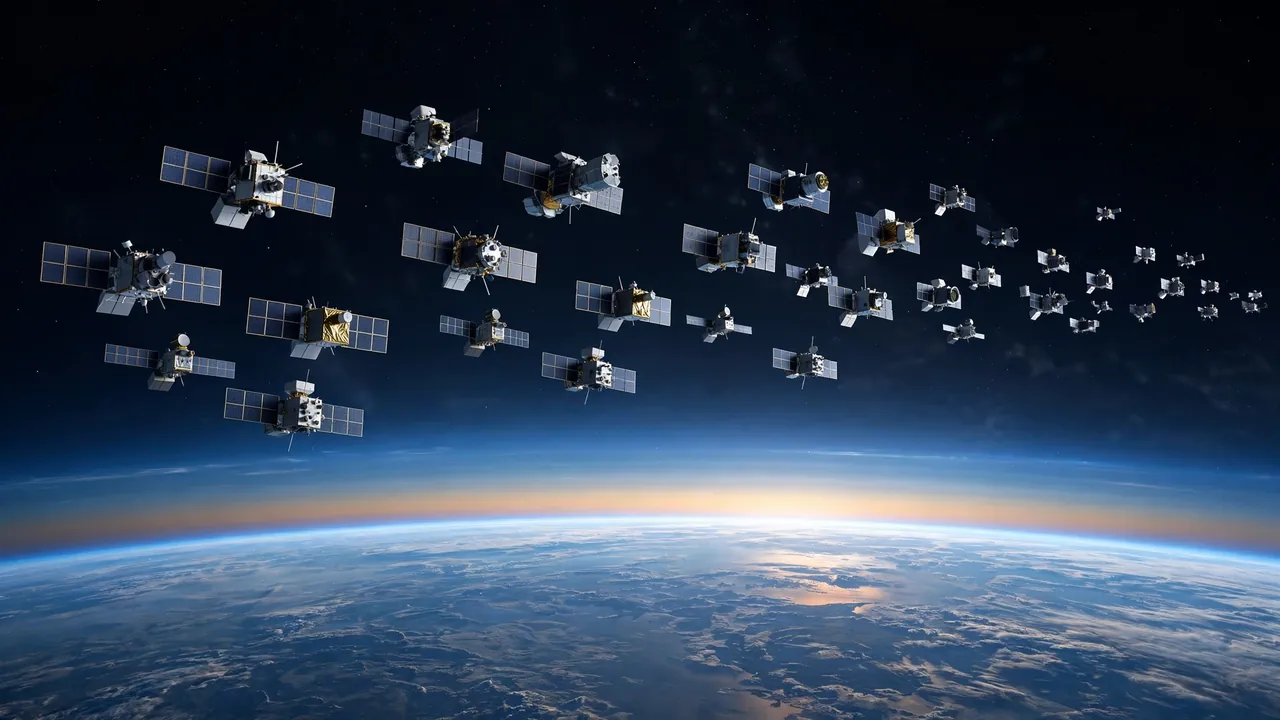
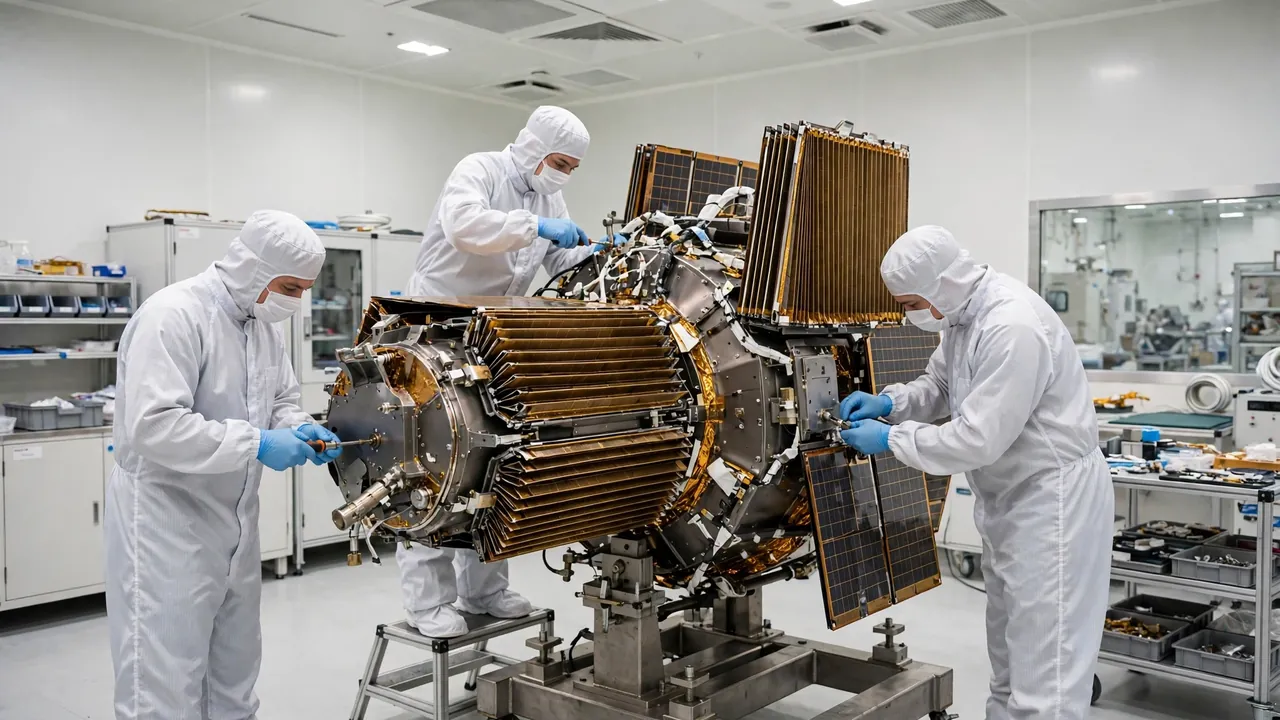
Each SpaceX Starmind satellite is a large spacecraft with a wingspan of 75 meters and a deployed height of 30 meters, built around Nvidia Rubin GPUs and Vera CPUs. SpaceX says each one draws about 250 kilowatts, roughly the power of one rack of ground-based compute. The satellites work in tight clusters of about ten, linked by laser beams.
Michael Nicholls, the senior vice president of Starlink and AI at SpaceX, described the design at the International Astronautical Congress in October. He said the satellites must fly in tight formation so their compute adds up to enough power to run AI models. Each cluster holds about ten satellites, joined by about 10 terabits of bandwidth, and the clusters link into the wider constellation and into Starlink.
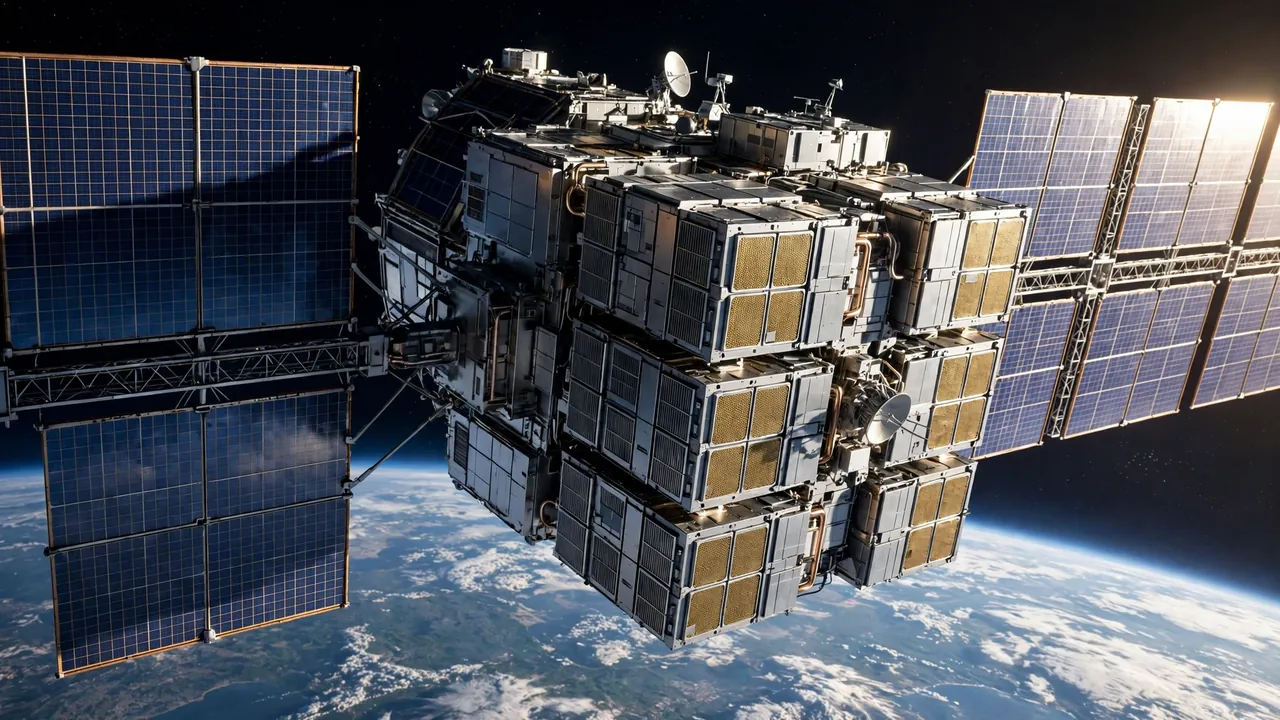
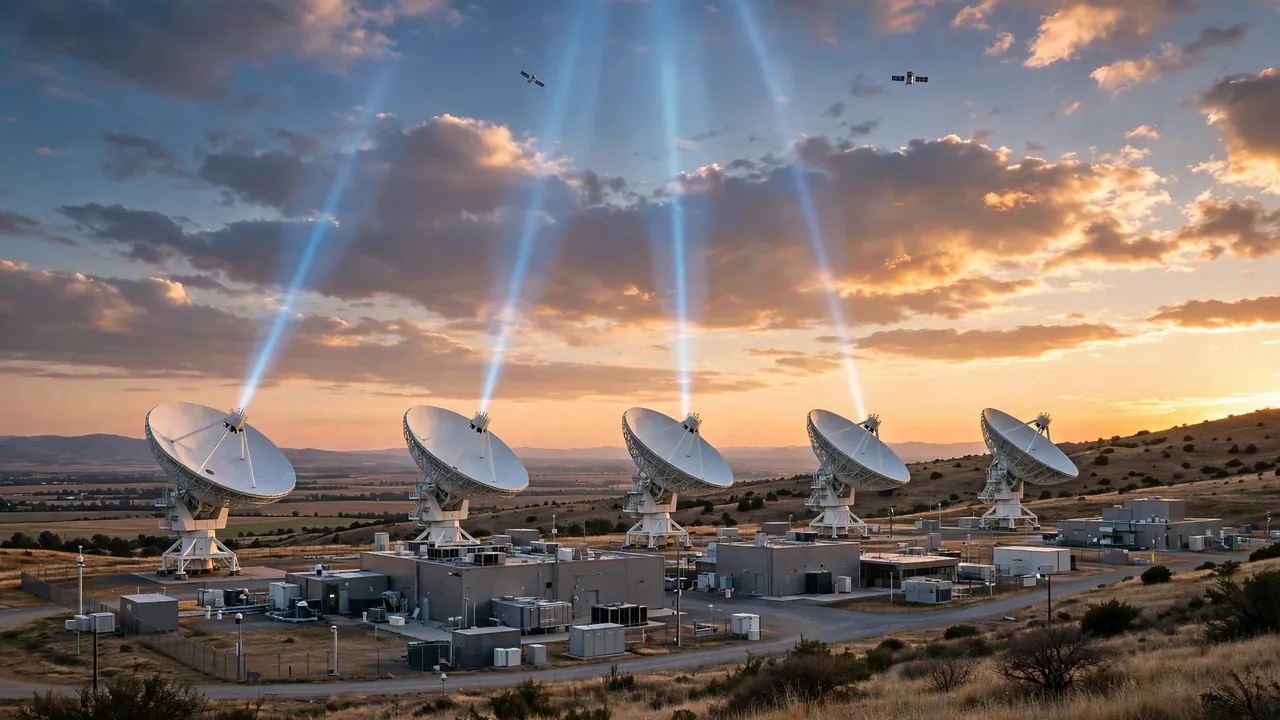
SpaceX will deploy the satellites in shells that each span 50 kilometers, at altitudes from 500 to 1,002 kilometers, in 30-degree and sun-synchronous inclinations. The satellites talk to each other mainly over optical links, which is to say laser beams. The FCC also granted Ka-band radio for telemetry, tracking and command, but only if the optical links fail. SpaceX is working with Nvidia on the compute payload, and each satellite will carry Nvidia Rubin GPUs and Vera CPUs. For background on the network Starmind would plug into, see TechNewsNest’s Starlink Mini 2 coverage.
Orbital data centers vs ground data centers
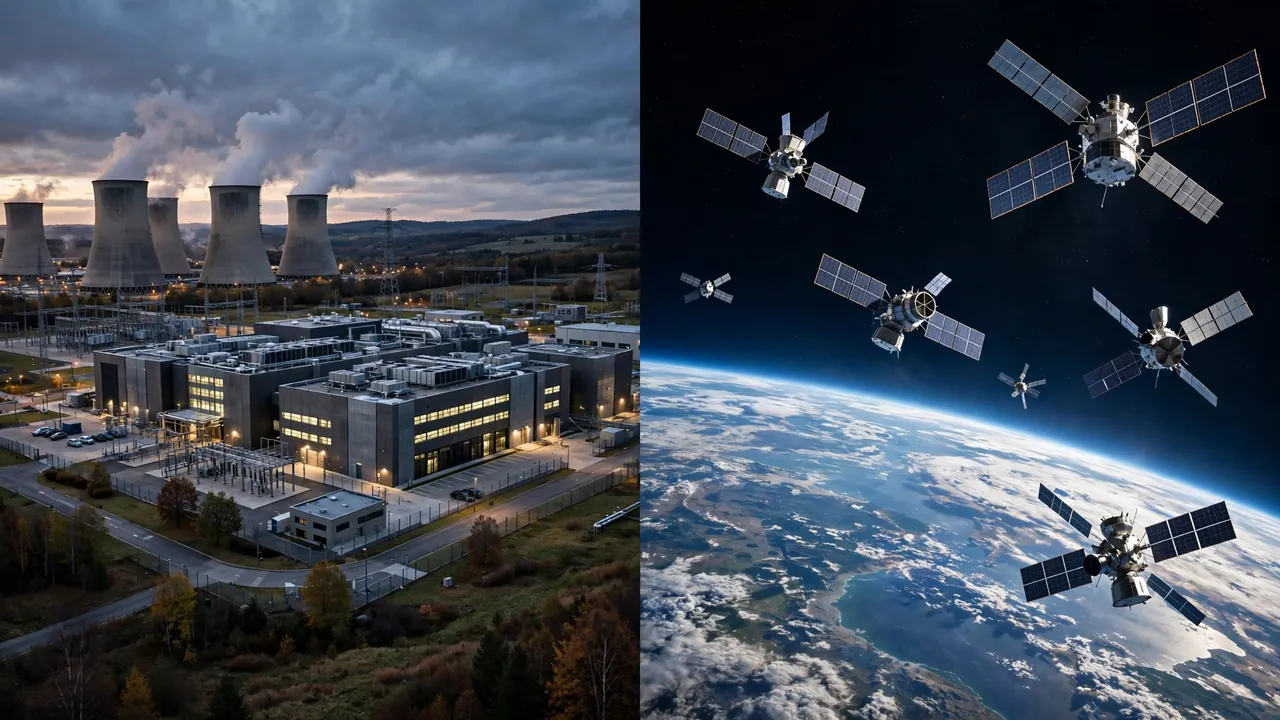
The core trade is simple. Space offers constant sunlight and natural cold, while the ground offers cheap construction, easy repair and fast fiber links. The table below compares the two on power, cooling, land and water, latency, repair and scale, using only facts from the FCC order and SpaceX.
| Aspect | Orbital data centers (Starmind) | Ground data centers |
|---|---|---|
| Power | Solar arrays, constant sunlight in sun-synchronous orbits | Grid power, often backed by gas or renewables |
| Cooling | Cold of space, no water needed | Water or air cooling |
| Land | None needed | Large sites and grid connections |
| Latency | Results travel from orbit to ground stations | Fiber links, lower latency |
| Repair | No hands-on repair; failed units are replaced | Technicians swap parts on site |
| Scale | Up to 1,000,000 satellites by 2040 | No fixed cap |
| Main risk | Debris, congestion, astronomy | Power, water, local opposition |
The table shows why the two will compete rather than replace each other. Orbit wins on power and cooling. The ground wins on repair, cost and latency. A training run that can wait for results may suit orbit, while a service that must answer in milliseconds will stay on the ground for now.
Data centers on the ground keep running into the same walls. They need large plots of land, huge amounts of power, and water for cooling. Proponents of orbital data centers say a constellation in space answers all three at once, because sunlight is free and constant above the atmosphere and the cold of space does the cooling work.
Critics answer that the hard part is not power. Cooling processors in a vacuum is a real engineering problem, because heat has nowhere to go without air or water. Launching a million satellites and paying for the chips all have to work at the same time.
The 2027 promise against the 2033 deadline
SpaceX founder Elon Musk said at a Baron Capital talk that he expects the first Starmind spacecraft to launch in the third quarter of 2027. The FCC order gives SpaceX until 25 November 2033 to put the first satellite into operation. The six-year gap between the company target and the legal deadline shows how much work remains.
Chief financial officer Bret Johnsen gave the same picture to the Wall Street Journal last week. He said SpaceX plans to launch its first data centers into space in 2027 and expand through 2029. Musk added that the company will start slow, ramp to significant volume in 2028, and reach very large volume in 2029.
The FCC milestones sit well behind those dates: one satellite in operation by 25 November 2033, the first 10 percent, or 100,000 satellites, by 25 November 2035, half the constellation by 25 November 2038, and the full million by 25 November 2040.

The launch vehicle is the pacing item. The Wall Street Journal notes that SpaceX needs Starship to be operational to launch the constellation at scale. SpaceX recently completed its second orbital flight with the launcher and has deployed 52 Starlink V3 satellites from Starship so far.
Who objected, and why the FCC said no
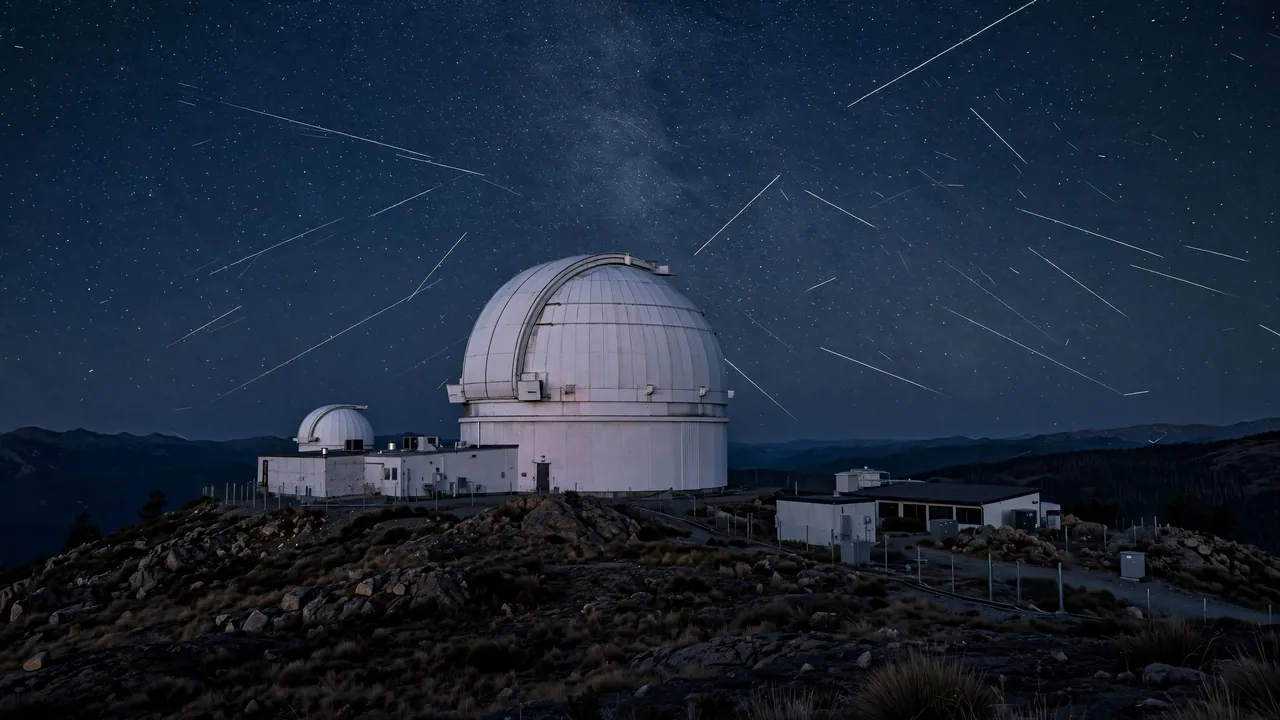
Amazon, Viasat and the American Astronomical Society asked the FCC to reject the application, citing debris, congestion, radio interference and harm to astronomy. Amazon called the plan a lofty ambition rather than a real plan and said it risks real harm. The FCC rejected the petitions and said the astronomy concerns fall outside its authority.
Amazon, which is building its own rival to Starlink, argued that the application lacked basic details. Viasat raised the risk of radio interference with other satellite services. The American Astronomical Society warned that a million bright satellites would damage federally funded astronomy and waste money already spent on observatories across the country.
The society called itself disheartened and dismayed by the decision. It said the constellation would undercut decades of federal investment in astronomical facilities and the ability of astronomers and the public to enjoy and study the night sky. It also said the license has no formal coordination requirements with the National Science Foundation, a gap it called out directly.
The FCC answered that the astronomy concerns are about effects other than spectrum, which puts them outside a radiofrequency authorization. It also found that limited Ka-band backup use answers the interference concerns, because the radio frequencies will be used only if the optical links fail.
The debris question the FCC left open
The FCC did not approve SpaceX’s request to move retired satellites above 600 kilometers into graveyard orbits instead of bringing them back through the atmosphere. The agency said SpaceX had not given it enough information to judge whether that plan meets its rules. SpaceX must file a new application before it can use that disposal method.
Under current FCC rules, satellites that finish their missions below 2,000 kilometers must reenter the atmosphere within five years. SpaceX asked for a waiver so it could move some retired Starmind satellites into other orbits around Earth, or even into orbits around the sun, instead of burning them up. The FCC deferred that request, which means it is not approved and not rejected, only parked until SpaceX files a modification application with enough justification.
SpaceX senior vice president Michael Nicholls raised the same point himself at the October astronautical congress. He said it may make sense not to reenter Starmind satellites into the atmosphere at end of life, but that this will be a new way of operating that has not been designed yet.

Google, Blue Origin and the rest of the race
SpaceX is first through the FCC door, but it is not alone. Google is testing satellites for Project Suncatcher, Blue Origin has proposed a 51,600-satellite network called Project Sunrise, and Starcloud and Cowboy Space have filed their own plans. The FCC says it is still reviewing the other proposals.
Google’s Project Suncatcher is the most advanced rival. Google announced last week that its first Suncatcher satellites will launch on Blue Origin’s New Glenn rocket, with liftoff planned for no earlier than 2029. Blue Origin is also a rival in its own right: its Project Sunrise proposal covers 51,600 satellites. The Secure World Foundation tracks nine companies with orbital data center plans, five of them American.
Two smaller filings show how wide the field has become. Starcloud has applied to operate an 88,000-satellite data center constellation, and Cowboy Space, formerly known as Aetherflux, has applied for a 20,000-satellite constellation. Sophia Space, a California startup, is planning a ten-satellite constellation for high-performance orbital computing and says its orbital operating system is already running on another company’s relay satellites.

Carr noted the competitor constellations when he announced the decision, and the FCC said it will decide each proposal under its regular procedures.
What it takes to build one million satellites
One million satellites is about 58 times the number of active satellites now in orbit, so the plan depends on factories and rockets that do not yet run at that pace. SpaceX will build Starmind at its Bastrop, Texas, facility with Nvidia, and launch on Starship. The cost of chips, launches and financing is still an open question.
Jonathan McDowell, an astrophysicist at the Harvard-Smithsonian Center for Astrophysics, counts 17,247 active satellites in orbit as of 18 November 2026, and 11,195 of them are Starlink satellites. Starlink itself is authorized for 42,000 satellites. Starmind alone would be about 58 times the active total, and about 24 times the full Starlink network.
Manufacturing is the first bottleneck. SpaceX will build the Starmind spacecraft at Bastrop, Texas, about 350 miles north of its Starbase launch site, in partnership with Nvidia. The company has to turn a satellite 75 meters across into a product that rolls off a line in the thousands, while also building Starlink satellites at its Redmond, Washington, plant.
Money is the second bottleneck. TechCrunch notes that SpaceX faces questions about how to cut the cost of making and launching satellites, how to cool processors in space, and how to secure financing for chips bound for orbit.
Who should pay attention now, and who should wait
AI companies, satellite operators, astronomers and investors should follow Starmind closely, because the approval sets the rules for every orbital data center that follows. Ordinary readers and buyers of AI services need not change any plans. Nothing in this approval changes what your phone, laptop or cloud service does in the near term.
For AI companies, the approval is a signal to start planning, not a product to buy. No SpaceX Starmind capacity exists yet, and no price, service date or customer list has been published. Demand for that compute keeps rising, as shown by new flagship models such as Alibaba’s Qwen4-Max and Microsoft’s MAI models shown at Ignite 2026.
For astronomers, the work is coordination, not waiting. The American Astronomical Society has said it hopes SpaceX keeps working with the National Science Foundation, and the lack of formal coordination requirements is the part of the decision it criticized most. For investors, the number to watch is Starship flight cadence, because every part of the Starmind plan rides on it.
For everyone else, file this under long-term change. A million satellites would reshape how AI compute is built, but the first one is years away and the full network is set for 2040. The next fact that matters is a launch date, and SpaceX has pointed at the third quarter of 2027.
Frequently asked questions

What is SpaceX Starmind?
Starmind is SpaceX’s planned network of up to one million orbital compute modules that process AI workloads in space and send the results to Earth. The FCC authorized it on 25 November 2026, calling it the first authorization in United States history for data centers in space.
How many satellites will Starmind have?
Up to one million. SpaceX must have one satellite in operation by 25 November 2033, 100,000 by 25 November 2035, half the constellation by 25 November 2038, and the full million by 25 November 2040.
When will the first Starmind satellite launch?
Elon Musk said at a Baron Capital talk that he expects the first Starmind spacecraft to launch in the third quarter of 2027. The FCC deadline for the first operating satellite is 25 November 2033.
What will Starmind be used for?
Processing AI workloads in orbit, using solar power captured in space. SpaceX describes the goal as low-cost, high-performance AI compute for Earth. The results of that work would come back to Earth through laser links to Starlink satellites and ground stations.
How will the Starmind satellites communicate?
Mainly over optical links, which is to say laser beams between satellites and to Starlink. The FCC also granted Ka-band radio frequencies for telemetry, tracking and command, but only as a backup if the optical links fail. The bands are 18.8 to 19.3 gigahertz down and 28.6 to 29.1 gigahertz up.
Will Starmind affect the night sky and astronomy?
Astronomers say yes. The American Astronomical Society called the decision disheartening and said a million satellites would undermine decades of federal investment in observatories. The FCC said the astronomy effects fall outside its authority, and the license sets no formal coordination requirements with the National Science Foundation.
Is Starmind the same as Starlink?
No. Starlink is SpaceX’s broadband internet network, authorized for 42,000 satellites, with about 11,200 in orbit now. Starmind is a separate network for AI computing in space. The two would share laser link technology, and Starmind clusters would connect into Starlink.
Sources
- Reuters, US authorizes SpaceX to deploy 1 million satellites for data centers in space, 25 Nov 2026
- TechCrunch, FCC approves SpaceX plan to put AI data centers in space, 25 Nov 2026
- Spaceflight Now, FCC green lights SpaceX’s plan to launch 1 million ‘Starmind’ data center satellites, 26 Nov 2026
- GeekWire, FCC clears SpaceX to put a million data center satellites in orbit, 25 Nov 2026
- SpacePolicyOnline, FCC Approves Elon Musk’s One Million Orbital Data Centers, 25 Nov 2026
- The Wall Street Journal, SpaceX Gets Approval to Launch One Million Satellites for Orbital Data Centers, Nov 2026
- Jonathan McDowell, Jonathan’s Space Report, satellite statistics (data as of 18 Nov 2026)