Meta Muse arrives in the UK with shopping, travel and chores on its to-do list
Meta Muse UK is now live. Meta switched on its personal AI agent for adults in the United Kingdom on 24 November 2026, about eleven weeks after the agent first appeared in the United States on 8 September. The launch puts a shopping and errand-running assistant in an app, on the web and in WhatsApp, with 15 British retail and travel partners signed up from day one.
For readers in the US, the news matters because the UK is the seventh market to get Muse, and the way it works there shows how Meta plans to roll the agent out elsewhere. The British launch also comes with regulators who spoke up on the same day, and a version with limits the US version did not carry at launch.
What launched on 24 November
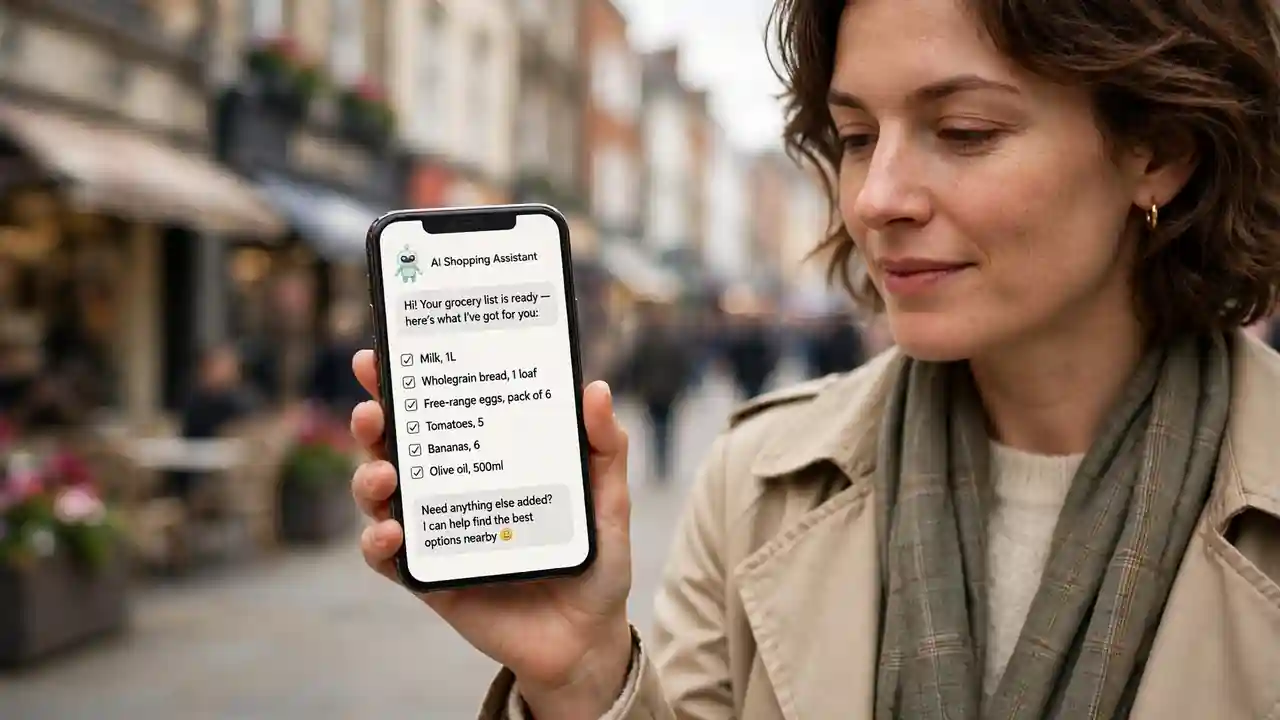
Meta Muse UK launched on 24 November 2026 for anyone aged 18 and over. It runs on iOS, Android, muse.ai and WhatsApp, and Meta says it is coming to Meta AI glasses soon. The agent is free for most uses, with optional paid subscriptions for greater usage. It runs on Muse Spark, the first model from Meta Superintelligence Labs.
Meta announced the launch in its newsroom on 24 November 2026, describing Muse as a personal agent that takes on tasks rather than only answering questions. A user writes a request in plain language and Muse acts on it. Each Muse gets its own virtual computer in the cloud, which Meta compares to a laptop that belongs to one person, and logins and personal information stay there rather than being shared with Meta’s other services. The UK is the seventh market after the United States, Canada, Japan, Singapore, Mexico and Australia, and the first in Europe. Muse passed 10 million downloads after its September launch in the US, according to Reuters, which makes it one of the fastest growing apps on record.

Why the UK came next, and why it looks different
The UK is the seventh market for Muse, after the United States, Canada, Japan, Singapore, Mexico and Australia. Meta picked a market where retailers were willing to connect their stores and regulators had set out expectations for AI agents. The UK version arrives with partners and limits the US version did not have at launch.
Retail Gazette reported that the launch gives large British businesses a chance to test AI-led shopping with real customers during the Black Friday and Christmas trading period.
The UK version also arrives narrower than the American one: reporting on the launch noted that Muse in the UK will not initially be able to access bank account statements or provide personalised financial guidance. Meta says it wants to connect Muse to UK banking services, but only after speaking to regulators and obtaining any necessary licences, according to the same reporting. The rollout order was the United States on 8 September, Canada on 18 September, Japan on 23 October, Singapore on 27 October, Mexico on 5 November and Australia on 17 November, before the UK on 24 November.

The retailers that signed up first
Meta named 15 UK connector partners at launch, covering groceries, clothing, electrical goods, beauty, travel and parking. The list is Marks and Spencer, Debenhams Group, Currys, Ocado Retail, Trainline, Argos, Sainsbury’s, ASOS, Jet2, LOOKFANTASTIC, MyProtein, Cult Beauty, JustPark, easyJet and JD Sports, plus Spotify and OpenTable.
Sainsbury’s is the most deeply connected partner. Customers can give Muse a weekly budget or a meal plan and ask it to check offers and build a basket, taking into account Nectar Prices, Aldi Price Match and other promotions. Muse can suggest recipes for dietary needs and add the ingredients to the basket, according to Sainsbury’s. Orders still go through Sainsbury’s own checkout, and customers can see the basket and total first. Sainsbury’s launched SmartLists last month, which turns a meal idea or a photo of a handwritten list into a complete basket, and Muse builds on that work.
Argos has connected a catalogue of more than 150,000 products to Muse, according to Retail Gazette. Customers can ask it to compare electrical products, find gifts or build a shopping list. Debenhams Group is connecting all five of its brands, according to launch-day reporting. With some partners a personal account can be connected; with others Muse navigates the website from day one.

How checkout works when an agent pays
Muse can pay with Onelink built by Stripe, which creates a unique digital version of the user’s card that only agents using Onelink can access. It can also check out with Shop Pay from Shopify at supported stores. PayPal is coming soon, according to Meta.
Meta says the agent asks for a go-ahead before important actions, such as sending an email or making a purchase, and that approval step is the main control between a request and money leaving an account. Check the item, the size, the quantity, the price and the delivery address every time.
The payment design differs from the one OpenAI chose for its own agent. OpenAI launched ChatGPT Wallet on 13 November 2026 for a limited group of US ChatGPT Pro users, and it works only inside a conversation with a dot. It uses a substitute card credential so the agent can pay on a store’s checkout without seeing the real card number. We covered that launch in our ChatGPT Wallet report. Muse, by contrast, pays inside the assistant through Onelink or Shop Pay, so the place where the money changes hands is not the same.

What Muse can do beyond shopping
Muse can take on tasks that have nothing to do with buying things. Meta says it can send an email, book travel, open a browser, fill out forms and chase a refund. It can also build a tracker, an itinerary or a dashboard, and it keeps working after the app is closed.
Each Muse runs in its own virtual computer in the cloud, which Meta compares to a laptop that belongs to one person, and logins and personal information stay there rather than being shared with Meta’s other services.
A user gives Muse a name, a look and a personality, and can choose from hundreds of voices, including a range of British accents. Spaces let a user create a custom experience inside Muse, such as a holiday savings tracker, which Muse builds and keeps up to date.
Connecting Instagram lets Muse turn a saved recipe Reel into a shopping list, and connecting email and calendar lets it sort an inbox. Meta says Muse remembers what matters to a user, so it can suggest a dinner party menu before sending the invites.
Muse against ChatGPT, Google and doing it yourself
Muse is not the only assistant that can shop, so the useful question is what each option can actually do, where the money changes hands, and who checks the purchase. The table below compares Muse with OpenAI’s ChatGPT agent, Google’s AI shopping tools and the old method of doing the work yourself.
| Muse | ChatGPT agent | Google AI shopping | Doing it yourself | |
|---|---|---|---|---|
| Can it buy for you | Yes, inside the assistant, with your approval | Live, but the purchase completes on the merchant’s site or app | Yes, direct checkout in AI Mode and Gemini | Yes, you do every step yourself |
| Where checkout happens | Inside Muse, through Onelink or Shop Pay | On the merchant’s checkout, via ChatGPT Wallet for eligible US Pro users | Inside Google’s cart | On the retailer’s own site or app |
| Approval before spending | Yes, Muse asks before every purchase | Yes, each transaction needs approval | Yes, the shopper approves the purchase | You approve each step as you go |
| Where it works | US, Canada, Japan, Singapore, Mexico, Australia and the UK | ChatGPT everywhere; Wallet is US Pro only, inside a dot conversation | US and Canada, with a spending cap | Everywhere |
| Cost to start | Free for most uses, with optional paid subscriptions | Free to start; Wallet needs a Pro subscription | Free inside Search and Gemini | Free, apart from your time |
The gap between the agents is smaller than the launch announcements suggest. All three ask before spending, and all three keep the real card number away from the agent. The real differences are where checkout happens, which shops are connected, and which countries each service has reached. Our Gemini vs ChatGPT comparison covers how the underlying assistants differ, and doing the work yourself is still the only option with no agent in the middle.

What to try first in the UK
Start with a task that costs nothing if it goes wrong, and only then move to spending. A good first test is asking Muse to turn a saved recipe Reel into a shopping list, or to plan a week’s meals around a budget at Sainsbury’s.
Connect one retailer first. Give Muse access to a single shop, try a basket, and check how it handles offers, sizes and delivery slots. If the result is clean, add a second connector; if not, disconnecting the service in settings takes the agent out of that shop. Use the memory controls from the start: tell Muse what to remember, such as a dietary need, and ask it to forget anything it should not keep. Try a refund chase or a bill comparison before a purchase.
What to watch before you hand over spending
Approval is the main control, so treat it as one. Meta has not published a spending limit for Muse, which means the approval prompt before each purchase is doing the heavy work. Read the full order summary each time, and do not approve a purchase from a notification without opening it.
Check what Muse can reach before giving it a task: email, calendar, Instagram and retailer accounts each hand over different information, and each connector can be given or removed in settings. A grocery basket needs far less access than an inbox clear-out, so match the connection to the job. The same applies to memory, which keeps details mentioned once: useful for a standing order, risky for a password shared by accident.
Meta has said Muse has no visibility into passwords or payment methods, and that conversations are not shared with its advertising systems, so the permission screen still deserves a slow read before you connect an account.

The Amazon ban and the coverage gap
The biggest gap in Muse’s coverage is the most famous shop in online retail. Amazon blocked Muse from shopping on its site in September 2026, saying Meta had not notified it, the agent did not identify itself, and it appeared to store customer credentials. Amazon says agents should operate openly and respect a provider’s decision.
Meta says Muse cannot see users’ passwords or payment methods, and that credentials sit in secure storage the model cannot read. Either way, Muse cannot shop on Amazon, so anyone whose weekly shop runs through Amazon still has to do that part by hand.
The split is widening rather than closing. Walmart opened its own agent checkout path to Muse for Black Friday, letting the agent buy deals through its Agent Gateway, according to TechCrunch. Shoppers create an Agent Profile inside their Walmart account, choose a spending limit, and can require approval for every purchase. Amazon chief executive Andy Jassy said in November that the door is not permanently closed, but any reopening would depend on a good consumer experience and fair value exchange. Until that changes, shoppers should check whether their usual store is inside Muse’s reach before relying on it.

Regulators are watching from day one
The UK launch is unusual because the regulators spoke first, on the same day the product went live. The Competition and Markets Authority said UK consumer protection law applies to AI products such as Muse, and that Meta changed the assistant’s terms and conditions to make them fairer after weeks of talks.
The ICO’s chief executive, Paul Arnold, said privacy must be built into consumer-facing agentic products from the outset, and that the ICO had been clear with Meta about its data protection duties before launch. Meta has agreed to a voluntary reporting scheme that lets the ICO scrutinise the technology as it develops.
The Financial Conduct Authority warned the same day that AI agents offering financial services could face regulatory action, and urged firms to engage with supervisors early. The four regulators had set out a joint position in a letter to Ministers on 16 November. The letter followed a joint statement from the same four regulators on 30 October, which said existing law already applies in full to personal AI agents. The message for shoppers is plain: the rules that protect buyers already apply to agents, and the enforcers are watching how Muse behaves in practice.

Frequently asked questions
Is Meta Muse available in the US?
Yes. Muse first launched in the United States on 8 September 2026, and the UK launch on 24 November 2026 was an expansion. The UK is the seventh market after Canada, Japan, Singapore, Mexico and Australia.
How much does Muse cost in the UK?
Muse is free for most uses, according to Meta, with optional paid subscriptions for greater usage. Meta has not published a price for those paid plans in the UK, so there is no figure to quote.
Can Muse buy things without asking me?
No. Meta says Muse asks for a go-ahead before important actions, including sending an email and making a purchase. Check the item, price, quantity and delivery address in the summary before approving any order.
Which UK shops work with Muse at launch?
Meta named 15 UK connector partners, including Marks and Spencer, Debenhams Group, Currys, Ocado Retail, Trainline, Argos, Sainsbury’s, ASOS, Jet2, LOOKFANTASTIC, MyProtein, Cult Beauty, JustPark, easyJet and JD Sports. Spotify and OpenTable are also available.
Can Muse shop on Amazon?
No. Amazon blocked Muse from shopping on its site in September 2026, saying Meta had not notified it, the agent did not identify itself, and it appeared to store customer credentials. Its chief executive says the door is not permanently closed, but there is no date for reopening.
What data does Muse keep about me?
Muse remembers details you mention, and you can ask it to remember or forget something. You decide which apps it connects to and what access each one gets. Conversations are not shared with Meta’s advertising systems.
Is Muse on Meta AI glasses yet?
Not yet. Meta says Muse is coming to its AI glasses in the months ahead. For now it runs on iOS, Android, muse.ai and WhatsApp.
Sources
- Meta Newsroom, Introducing Muse in the UK: A Personal AI Agent You Control, 24 November 2026: https://about.fb.com/news/2026/11/introducing-muse-in-the-uk-a-personal-ai-agent-you-control/amp/
- Retail Gazette, Everything you need to know about Meta’s agentic Muse launch, 24 November 2026: https://www.retailgazette.co.uk/blog/2026/11/everything-you-need-to-know-about-metas-agentic-muse-launch/
- Sainsbury’s, Muse from Meta gives customers even more choice in how they shop with Sainsbury’s, 24 November 2026: https://corporate.sainsburys.co.uk/news/press-releases/muse-from-meta-gives-customers-even-more-choice-in-how-they-shop-with-sainsbury-s/
- The Grocer, Sainsbury’s, M and S and Ocado partner with Meta on Muse launch, 24 November 2026: https://www.thegrocer.co.uk/news/sainsburys-mands-and-ocado-partner-with-meta-on-uk-launch-of-ai-agent-muse/726255.article
- Competition and Markets Authority, CMA statement on UK launch of Meta Muse, 24 November 2026: https://competitionandmarkets.blog.gov.uk/2026/11/24/cma-statement-on-uk-launch-of-meta-muse/
- Digital Regulation Cooperation Forum, DRCF Joint Letter on Personal AI Agents, 16 November 2026: https://www.drcf.org.uk/siteassets/drcf/pdf-files/agentic-ai/drcf-joint-letter-on-personal-ai-agents-sent-to-the-chancellor-secretary-of-state-for-digital-culture-media-and-sport-secretary-of-state-for-business-innovation-science-and-trade-and-the-minister-for-ai.pdf?v=428032
- Bury Times, Regulators issue warnings after UK brands sign up to Meta’s AI assistant, 24 November 2026: https://www.burytimes.co.uk/news/national/26756291.regulators-issue-warnings-uk-brands-sign-metas-ai-assistant/
- AI Frontier Post, Meta launches Muse in the UK, with regulators already watching, 24 November 2026: https://aifrontierpost.com/articles/meta-muse-uk-launch-regulator-warnings/
- The Times, Would you trust Meta’s AI agent to do your shopping?, 24 November 2026: https://www.thetimes.com/uk/technology-uk/article/meta-muse-ai-agent-pk020505v
- MacRumors, Meta’s Muse Personal AI Agent Launches in the UK, 24 November 2026: https://www.macrumors.com/2026/11/24/metas-muse-personal-ai-agent-launches-in-the-uk/
- Neowin, Meta’s viral AI agent, Muse is now available to users in the UK, 24 November 2026: https://www.neowin.net/news/metas-viral-ai-agent-muse-is-now-available-to-users-in-the-uk/
- CryptoRank, Google Gemini vs. ChatGPT Wallet: Who Controls the Future of AI Shopping?, November 2026: https://cryptorank.io/news/feed/eb74f-google-gemini-vs-chat-gpt-wallet-who-controls-the-future-of-ai-shopping
- Taylor Sicard, AI Checkout Tracker 2026: Who’s Live on 6 Assistants, updated 18 November 2026: https://taylorsicard.com/the-index/ai-checkout-tracker-2026
- TechCrunch, Walmart teams up with Meta to bring Black Friday deals to AI agent Muse, 24 November 2026: https://techcrunch.com/2026/11/24/walmart-teams-up-with-meta-to-bring-black-friday-deals-to-ai-agent-muse/
- The Times of India, In Andy Jassy vs Mark Zuckerberg ‘fight’ over AI agents, Microsoft CEO Satya Nadella picks a ‘favourite’, November 2026: https://timesofindia.indiatimes.com/technology/tech-news/in-andy-jassy-vs-mark-zuckerberg-fight-over-ai-agents-microsoft-ceo-satya-nadella-picks-a-favourite/amp_articleshow/136092415.cms
- AI123, Amazon may reopen direct ordering to external shopping agents, Jassy says, November 2026: https://ai123.com/newshub/18589