
Apple announced the iPhone 17 series on September 9, 2025, with four models: iPhone 17, iPhone Air, iPhone 17 Pro and iPhone 17 Pro Max. The base iPhone 17 gains the 120Hz ProMotion display that used to be limited to Pro models, all four models get a new 18MP Center Stage front camera, and the Pro models move to an aluminum unibody with a vapor chamber for cooling. Prices start at $799 in the United States for iPhone 17, $999 for iPhone Air, $1,099 for iPhone 17 Pro and $1,199 for iPhone 17 Pro Max. Preorders opened September 12, and the phones reached stores September 19, 2025.
iPhone 17 series at a glance: what changed
Apple announced four iPhone 17 models on September 9, 2025, and put them on sale September 19, 2025. The base iPhone 17 gains a 120Hz ProMotion display, 48MP rear cameras and the A19 chip. iPhone Air replaces the Plus model with a 5.6mm thin body, while Pro models add A19 Pro, three 48MP cameras and more battery life.
The lineup is a clean break from the iPhone 16 range. Apple dropped the Plus model and added iPhone Air as the thin, light option in the middle of the range. iPhone 17 keeps two vertically stacked rear lenses, so it looks closest to iPhone 16 among the four models. Apple
Every model ships with iOS 26, which Apple released as a free software update on September 15, 2025. Apple The software brings the Liquid Glass design, Live Translation and visual intelligence that can search or act on what is shown on screen. Apple Storage also changed. Every model now starts at 256GB, double the 128GB starting storage of iPhone 16, and iPhone 17 Pro Max adds a 2TB option for the first time. Apple Apple
The four models and prices
iPhone 17 starts at $799 in the United States, iPhone Air starts at $999, iPhone 17 Pro starts at $1,099 and iPhone 17 Pro Max starts at $1,199. All four start with 256GB of storage. Preorders opened Friday, September 12, 2025, and the phones went on sale Friday, September 19, 2025, in more than 63 countries and regions.
Apple kept the base price flat even though storage doubled. iPhone 17 starts at $799 in the United States, the same starting price as iPhone 16, but with 256GB instead of 128GB, plus a 512GB option. Apple That $799 price includes a $30 connectivity discount that requires activation with AT&T, Boost Mobile, T-Mobile or Verizon. Apple
iPhone Air sits between the base model and the Pro models. Apple lists iPhone Air at $999 in the United States for 256GB, with 512GB and 1TB options, and it is the thinnest iPhone Apple has made, at 5.6mm, with the A19 Pro chip. Apple It is $200 more than iPhone 17 and $100 less than iPhone 17 Pro. iPhone 17 Pro starts at $1,099 with 256GB, 512GB and 1TB options, and iPhone 17 Pro Max starts at $1,199 with 256GB, 512GB, 1TB and 2TB options. Apple
Display: ProMotion comes to the base iPhone 17
iPhone 17 has a 6.3-inch Super Retina XDR display with ProMotion, which adjusts the refresh rate up to 120Hz and down to 1Hz for the Always-On display. The screen is larger than the 6.1-inch display on iPhone 16, brighter at 3,000 nits peak outdoor brightness, and covered by Ceramic Shield 2.

The display is the largest single change for buyers of the base model. iPhone 17 has a 6.3-inch Super Retina XDR display with ProMotion, which Apple had kept for Pro models until now, with thinner borders than iPhone 16. Apple The display is the same size as the iPhone 17 Pro screen, which removes one reason to pay for the Pro model. Apple
ProMotion changes how the screen feels in daily use. The adaptive refresh rate runs up to 120Hz for smooth scrolling and gaming, and drops to 1Hz when the Always-On display shows the time, widgets and Live Activities. Apple Apple lists 3,000 nits peak outdoor brightness for iPhone 17, the highest ever on iPhone, with twice the outdoor contrast of the previous generation. Apple The Pro models share the same brightness and ProMotion up to 120Hz, in 6.3-inch and 6.9-inch sizes. Apple
Center Stage front camera and the new rear cameras
All four iPhone 17 models have a new 18MP Center Stage front camera with a square sensor, the first on iPhone. iPhone 17 has two 48MP rear cameras, Main and Ultra Wide. iPhone 17 Pro and Pro Max have three 48MP rear cameras, including a new Telephoto with 8x optical-quality zoom.

The front camera changed more than the rear cameras for most buyers. Apple calls Center Stage its best front camera yet, with a square sensor that gives a wider field of view and up to 18MP for photos. Apple Users can take photos and videos in portrait or horizontal framing while holding the phone vertically, so there is no need to rotate the phone for a wide selfie. Apple For group shots, Center Stage expands the field of view to include everyone. Apple The front camera also supports ultra-stabilized video in 4K HDR, and Dual Capture records on the front and rear cameras at once. Apple
On the back, iPhone 17 has 48MP rear cameras for the first time. Apple The 48MP Fusion Main camera has an optical-quality 2x Telephoto built in, and the new 48MP Fusion Ultra Wide camera captures up to four times the resolution of the previous generation, which helps with wide shots and macro photography. Apple The Pro models go further. Three 48MP Fusion cameras, Main, Ultra Wide and a new Telephoto, give the equivalent of eight lenses, according to Apple. Apple The Telephoto has a sensor 56 percent larger than the previous generation, a 4x optical zoom at 100mm for portraits, and an 8x optical zoom at 200mm, the longest ever on iPhone. Apple
A19 and A19 Pro chips and performance
iPhone 17 runs on the A19 chip, built on third-generation 3-nanometer technology, with a 6-core CPU and 5-core GPU. iPhone 17 Pro, Pro Max and Air run on A19 Pro, which has a 6-core CPU and 6-core GPU and, in the Pro models, a vapor chamber that allows up to 40 percent better sustained performance.

Apple built the A19 on third-generation 3-nanometer technology. Apple The 6-core CPU is 1.5 times faster than the A15 Bionic in iPhone 13, and the 5-core GPU is more than twice as fast as the A15 Bionic, according to Apple. Apple Neural Accelerators are built into each GPU core to run generative AI models on the device. Apple
A19 Pro is the faster chip in the range, with the fastest CPU in any smartphone, according to Apple. Apple It has a 6-core CPU and a 6-core GPU with Neural Accelerators built into each GPU core, a larger cache and more memory than A18 Pro. Apple The GPU works with the 16-core Neural Engine to run AI models, graphics and games with hardware-accelerated ray tracing. Apple Apple designed a vapor chamber laser-welded into the aluminum chassis to move heat away from the A19 Pro, and paired with it, A19 Pro delivers up to 40 percent better sustained performance than the previous generation, which matters for gaming, video editing and running large local language models. Apple
Battery life and charging
iPhone 17 gives up to 30 hours of video playback, eight hours more than iPhone 16. iPhone 17 Pro gives up to 33 hours and iPhone 17 Pro Max gives up to 39 hours on the eSIM-only models sold in the United States. All models charge to 50 percent in 20 minutes with an optional high-wattage USB-C adapter.
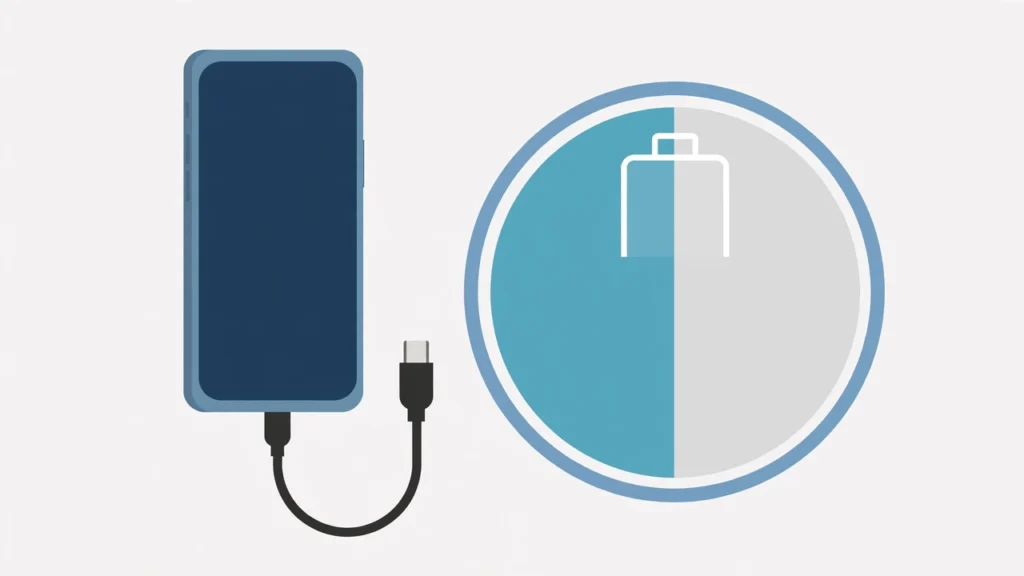
Battery life rose across the range, and the Pro Max leads it. Apple lists up to 30 hours of video playback for iPhone 17, eight more hours than the previous generation. Apple For the Pro models, Apple lists up to 33 hours of video playback for iPhone 17 Pro and up to 39 hours for iPhone 17 Pro Max on the eSIM-only models, with the extra battery space coming from the removal of the physical SIM tray. Apple Apple
Those hours come from a controlled video playback test, not from a day of mixed use with maps, camera, gaming and 5G, so real use will be lower. Charging is faster with the right adapter. iPhone 17 can charge up to 50 percent in 20 minutes with an optional high-wattage USB-C power adapter, such as the new 40W Dynamic Power Adapter with 60W Max from Apple, which costs $39 in the United States. Apple The Pro models charge at the same rate. Apple
Design, durability and Ceramic Shield 2
iPhone 17 keeps a familiar shape with thinner borders and five colors. iPhone 17 Pro and Pro Max move to a brushed aluminum unibody with a raised camera plateau, in deep blue, cosmic orange and silver. All models use Ceramic Shield 2 on the front, with 3x better scratch resistance.
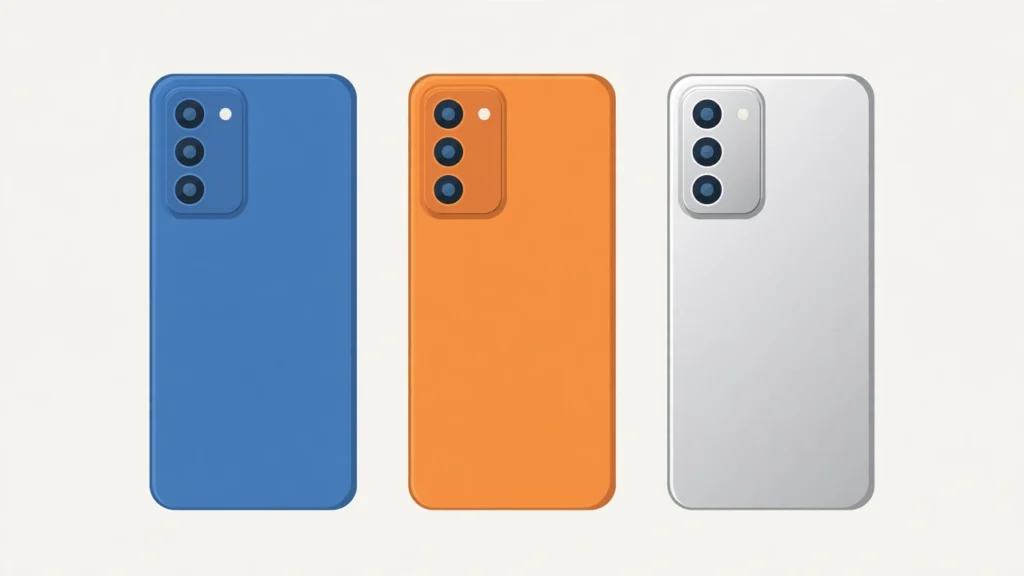
iPhone 17 looks close to iPhone 16 from the back. It keeps two vertically stacked rear lenses, while the Pro models and Air move to new horizontal layouts. Apple iPhone 17 comes in five colors: black, lavender, mist blue, sage and white. Apple
The Pro design changed more. Apple built iPhone 17 Pro and Pro Max with a brushed aluminum unibody made from a lightweight aerospace-grade 7000-series aluminum alloy. Apple That is a move away from the titanium frame used on the previous Pro models. The raised plateau on the back creates space for internal parts and a larger battery. Apple The Pro models come in deep blue, cosmic orange and silver. Apple Ceramic Shield 2 has a new Apple-designed coating for 3x better scratch resistance than the previous generation and reduced glare, and on the Pro models Ceramic Shield protects the back for the first time, with 4x better resistance to cracks than the back glass on previous models. Apple Apple
iOS 26, Apple Intelligence and connectivity
All iPhone 17 models ship with iOS 26, which adds the Liquid Glass design, Live Translation, visual intelligence and call and message screening. The series also adds the N1 wireless chip for Wi-Fi 7, Bluetooth 6 and Thread. In the United States and 10 other markets, the new iPhones are eSIM only.
iOS 26 ships on every iPhone 17 model, and it changes the look of the phone as well as some daily tasks. The new design uses Liquid Glass, which Apple says makes apps and system screens more expressive while keeping iOS familiar. Apple iOS 26 was released as a free software update on September 15, 2025, for older supported iPhones as well. Apple Apple Intelligence runs through the new software. Live Translation translates text and audio in Messages, FaceTime and Phone, and visual intelligence lets users take a screenshot and act on what is on screen. Apple New screening tools for calls and messages help cut distractions. Apple
Connectivity changed in two ways. The series introduces N1, a new Apple-designed wireless networking chip that enables Wi-Fi 7, Bluetooth 6 and Thread, and Apple says it improves Personal Hotspot and AirDrop. Apple The SIM tray is gone in some markets. eSIM-only models of iPhone 17 are sold in the United States, Canada, Japan, Mexico, the UAE and seven other markets. Apple eSIM is supported by over 500 carriers worldwide, and it cannot be physically removed if the phone is lost or stolen. Apple Before moving to a new iPhone, back up the old one first, as explained in the guide on how to back up an iPhone before an update or reset
iPhone 17 compared with iPhone 16 and Pro compared with iPhone 16 Pro
iPhone 17 improves on iPhone 16 with a larger 6.3-inch 120Hz display, 48MP rear cameras, an 18MP Center Stage front camera, the A19 chip, 256GB base storage and eight more hours of video playback, at the same $799 starting price. The Pro models add A19 Pro, a vapor chamber, three 48MP cameras and longer battery life.

Apple changed the base model in almost every area that buyers notice. The display grows from 6.1 inches to 6.3 inches and gains ProMotion up to 120Hz and an Always-On display, which iPhone 16 did not have. Apple The Ultra Wide camera moves from 12MP to 48MP, the front camera moves from 12MP to 18MP with Center Stage, and base storage doubles from 128GB to 256GB. Apple Video playback rises to up to 30 hours, eight more hours than iPhone 16. Apple
The price did not rise with those changes. iPhone 17 starts at $799 in the United States, but with double the storage. Apple The Pro comparison is about cooling, cameras and battery. iPhone 17 Pro and Pro Max move from a titanium frame to an aluminum unibody with a vapor chamber, which Apple says allows up to 40 percent better sustained performance than the previous generation. Apple All three rear cameras are now 48MP, including a new Telephoto with 8x optical-quality zoom, the longest ever on iPhone. Apple
Who should buy which iPhone 17 model
iPhone 17 fits most buyers, because it has the 120Hz display, 48MP cameras, A19 chip and 256GB storage for $799. iPhone Air fits buyers who want the thinnest phone and accept one rear camera. iPhone 17 Pro fits buyers who want the Telephoto camera, Pro video and the longest battery life.

Most buyers should start with iPhone 17. It has the 6.3-inch ProMotion display, the 48MP Dual Fusion camera system, the Center Stage front camera, the A19 chip and 256GB of storage for $799 in the United States. Apple
iPhone Air fits a narrower buyer. It is the thinnest iPhone ever at 5.6mm, it has the A19 Pro chip and a large display, and it starts at $999. Apple It has one rear camera, while iPhone 17 has two and the Pro models have three, so buyers who take a lot of zoom or wide photos should weigh that trade. iPhone 17 Pro and Pro Max fit buyers who use the camera or video tools for work, or who want the longest battery life. The three 48MP cameras and the 8x optical-quality zoom are aimed at filmmakers and content creators. Apple Before buying, check the current price at the Apple Store and confirm eSIM support with your carrier.
Frequently asked questions
When were the iPhone 17 models released?
Apple announced the iPhone 17 series on September 9, 2025. Preorders opened Friday, September 12, and the phones went on sale Friday, September 19, 2025, in more than 63 countries and regions.
How much does iPhone 17 cost?
iPhone 17 starts at $799 in the United States for 256GB, with a 512GB option. iPhone Air starts at $999, iPhone 17 Pro at $1,099 and iPhone 17 Pro Max at $1,199, all for 256GB at launch.
What is new in the iPhone 17 display?
iPhone 17 has a 6.3-inch Super Retina XDR display with ProMotion up to 120Hz, an Always-On display that drops to 1Hz, 3,000 nits peak outdoor brightness and Ceramic Shield 2. ProMotion was previously limited to Pro models.
What is the Center Stage front camera?
It is a new 18MP front camera with a square sensor, the first on iPhone. It gives a wider field of view, lets users shoot portrait or horizontal framing while holding the phone vertically, expands the frame for group shots, and supports 4K HDR video and Dual Capture.
How long does the iPhone 17 battery last?
Apple lists up to 30 hours of video playback for iPhone 17, up to 33 hours for iPhone 17 Pro and up to 39 hours for iPhone 17 Pro Max on eSIM-only models. Real use with 5G, gaming and the camera will be lower than those test figures.
Are the new iPhones eSIM only?
In the United States and 10 other markets, including Canada, Japan, Mexico and the UAE, the iPhone 17 models are eSIM only. In other markets, a physical SIM version is sold. Check with your carrier before buying.
Which iPhone 17 model should most people buy?
iPhone 17, because it has the 120Hz display, 48MP rear cameras, 18MP Center Stage front camera, A19 chip and 256GB storage for $799. Buyers who need a Telephoto camera, Pro video tools or the longest battery life should look at the Pro models instead.
Sources
- Apple Newsroom, Apple debuts iPhone 17: https://www.apple.com/newsroom/2025/09/apple-debuts-iphone-17/
- Apple Newsroom, Apple unveils iPhone 17 Pro and iPhone 17 Pro Max: https://www.apple.com/newsroom/2025/09/apple-unveils-iphone-17-pro-and-iphone-17-pro-max/
- Apple Newsroom, Introducing iPhone Air, a powerful new iPhone with a breakthrough design: https://www.apple.com/newsroom/2025/09/introducing-iphone-air-a-powerful-new-iphone-with-a-breakthrough-design/
- Apple, iPhone 17 Pro and iPhone 17 Pro Max technical specifications: https://www.apple.com/za/iphone-17-pro/specs/


3 comments