
OpenAI released GPT-5.1 on November 12, 2026, as an upgrade to the GPT-5 series. The release brings two models to ChatGPT: GPT-5.1 Instant for everyday questions and GPT-5.1 Thinking for harder reasoning work. Both models are warmer and clearer than GPT-5, and most users will meet them through GPT-5.1 Auto, which picks the model for each question. Developers get new API models, a no reasoning mode, longer prompt caching, and two new tools. Here is what changed in ChatGPT, who gets the update first, what developers get, and how the new models scored.
GPT-5.1 at a glance: what is new
OpenAI released GPT-5.1 on November 12, 2026, as an upgrade to the GPT-5 series. It ships as two models in ChatGPT: GPT-5.1 Instant for everyday use and GPT-5.1 Thinking for harder reasoning work. Both are warmer and clearer than GPT-5. Most users will see GPT-5.1 Auto, which picks the model for each question.

GPT-5.1 is not a new generation. OpenAI calls it GPT-5.1 to reflect real improvements inside the GPT-5 generation, and it says future step by step upgrades will follow the same pattern. It is a refined version of the same family, with changes to tone, reasoning, speed, and coding. The full details are in the OpenAI announcement.
The release was covered the same day by CIOL and DQIndia, which both reported the warmer tone and the two model split. The TechNewsNest guide to GPT-5 covers the background. GPT-5 stays available for paid users for three months, so no one must switch on day one.
GPT-5.1 Instant: warmer, more conversational, and it can reason
GPT-5.1 Instant is the most used model in ChatGPT, and it is now warmer by default and more conversational. For the first time, it can use adaptive reasoning and decide when to think before it answers a harder question. OpenAI reports clear gains on math and coding tests such as AIME 2025 and Codeforces.

Instant is the model most people already use, because it answers fast and handles everyday questions. In GPT-5.1 it can now think when a question calls for it: adaptive reasoning lets it decide whether to answer at once or to work through a harder problem first. Simple questions still get fast replies, while math problems and tricky coding questions get more thought first.
GPT-5.1 Instant is warmer by default, and its replies read more like a conversation and less like a form. OpenAI says the model improved on math and coding evaluations such as AIME 2025 and Codeforces, but the consumer announcement published no benchmark charts, so no numbers are attached to those tests here. The numbered results come from the developer post and appear in the coding section below.
GPT-5.1 Thinking: faster on simple tasks, more persistent on hard ones
GPT-5.1 Thinking is the advanced reasoning model, and it now adapts its thinking time more precisely. OpenAI says it is roughly twice as fast on the fastest tasks and twice as slow on the slowest tasks, compared with GPT-5 Thinking. Its answers are clearer, with less jargon and fewer undefined terms, and its default tone is warmer and more empathetic.

Thinking is the model for work that needs real reasoning: hard math, long analysis, and multi step problems. In GPT-5.1 it spends its time differently. OpenAI says it is roughly twice as fast on the fastest tasks and twice as slow on the slowest tasks, compared with GPT-5 Thinking, based on a representative set of ChatGPT tasks at the Standard thinking time setting. Easy questions get answered sooner, and hard questions get more effort instead of a rushed answer.
OpenAI says GPT-5.1 Thinking gives clearer answers, with less jargon and fewer terms left undefined. The default tone is warmer and more empathetic. Thinking is still the slower, deeper model, but it now spends its time where the task needs it and explains itself in plainer words.
GPT-5.1 Auto: most users do not need to pick a model
GPT-5.1 Auto keeps routing each question to the model best suited to it, so most users do not need to choose a model at all. Simple questions go to Instant, and harder ones go to Thinking. The model picker still exists for paid users who want to choose, and GPT-5 stays in the legacy models list for three months.
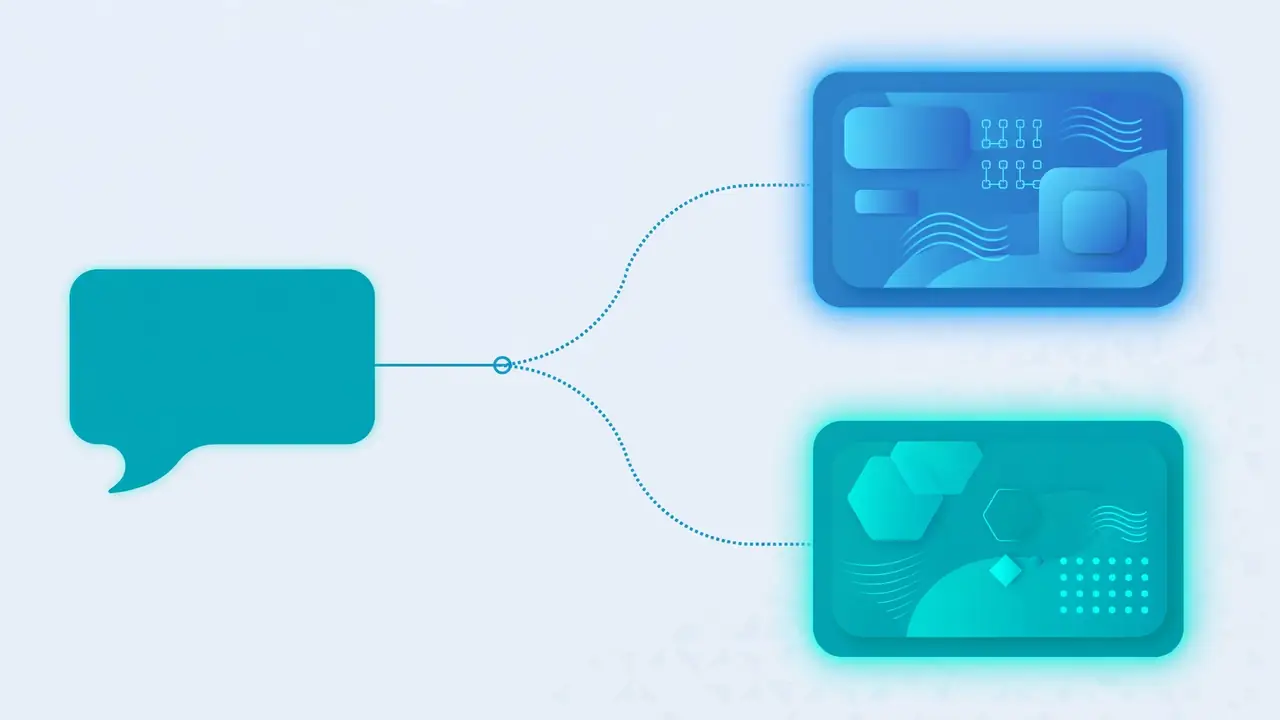
Auto reads each question and sends it to the model best suited to it. A quick question about dinner plans goes to Instant, and a long reasoning problem goes to Thinking. The user does not need to learn the difference or open a menu each time.
GPT-5 asked users to pick from a list of models with names that said little about what each one did. Auto removes that choice for most people, while the picker stays for paid users who want to choose by hand. GPT-5 Instant and GPT-5 Thinking also stay in the legacy models dropdown for paid subscribers for three months.
Rollout: who gets GPT-5.1 first and when
Rollout began on November 12, 2026, starting with paid ChatGPT users on Pro, Plus, Go, and Business plans. Free and logged out users follow gradually over the next few days. Enterprise and Edu plans get a seven day early access toggle that is off by default, and GPT-5.1 becomes the sole default model after that seven day window ends.
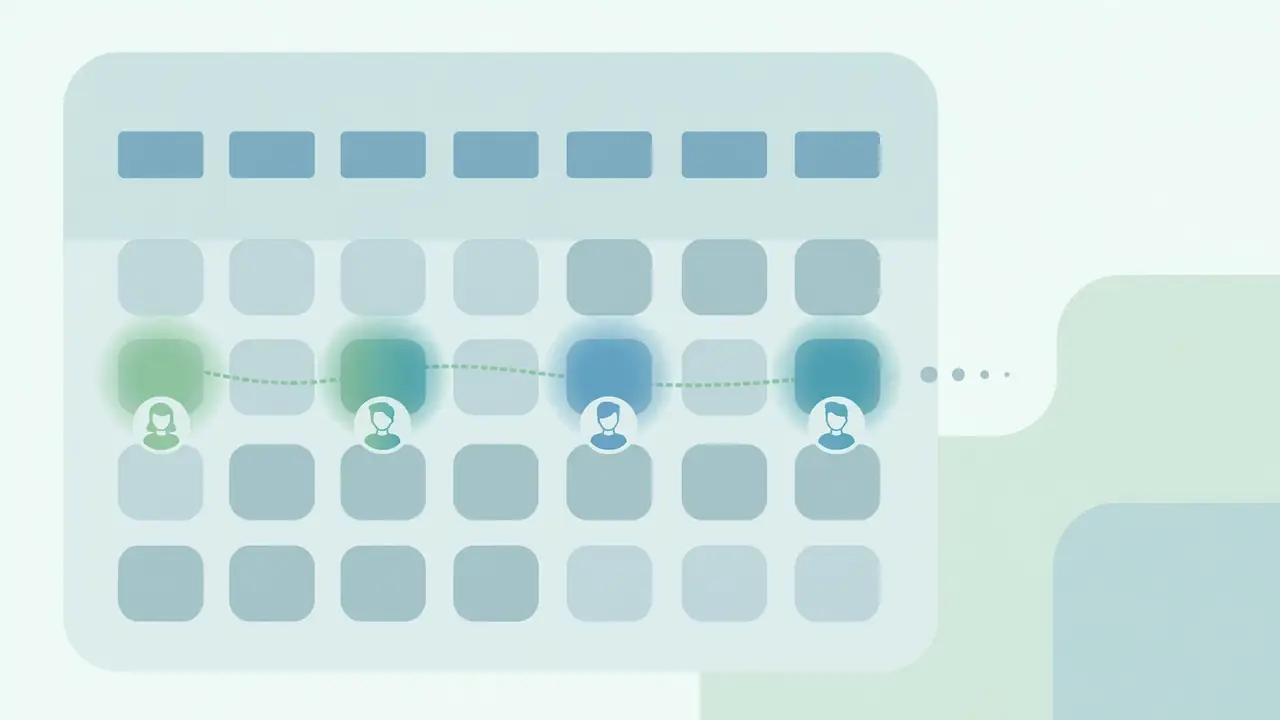
OpenAI started the rollout on November 12, 2026 with Pro, Plus, Go, and Business plans, then moves to free and logged out users over the next few days. The rollout is gradual, so not every account sees the new models at the same hour.
Enterprise and Edu plans get a seven day early access toggle, off by default, which admins can switch on for early access. After that window, GPT-5.1 becomes the sole default model for those plans. GPT-5 Pro will also be updated to GPT-5.1 Pro soon, though no date was given. The TechNewsNest guide to Google Gemini 3 covers a competing update from the same period.
GPT-5.1 for developers: new API models, tools, and caching
Developers get GPT-5.1 Instant as gpt-5.1-chat-latest and GPT-5.1 Thinking as GPT-5.1, both with adaptive reasoning, arriving later in the same week. There are also gpt-5.1-codex and gpt-5.1-codex-mini for long running agentic coding. Pricing and rate limits match GPT-5, and OpenAI has no current plan to retire GPT-5 in the API.

The API release follows the ChatGPT release by a few days. GPT-5.1 Instant arrives as gpt-5.1-chat-latest, and GPT-5.1 Thinking arrives as GPT-5.1, both with adaptive reasoning. Two more models serve coding agents: gpt-5.1-codex and gpt-5.1-codex-mini, built for long running agentic coding work. Pricing and rate limits match GPT-5, and OpenAI says GPT-5 is not currently planned for deprecation in the API. Full details are in the OpenAI developer post.
Extended prompt caching now allows up to 24 hour cache retention with prompt_cache_retention set to 24h, and cached input tokens cost 90 percent less than uncached tokens, with no extra charge for cache writes or storage. The Responses API also gains two new tools: apply_patch, a freeform tool for code edits through structured diffs with no JSON escaping, and shell, which lets the model propose shell commands to run on a local machine.
The no reasoning mode: faster answers with fewer tokens
A new no reasoning mode sets reasoning_effort to none, and GPT-5.1 defaults to none in the API. OpenAI says it beats GPT-5 with minimal reasoning at parallel tool calling, coding, instruction following, and search tool use. Sierra reported a 20 percent improvement on low latency tool calling, compared with GPT-5 minimal reasoning.

Not every task needs thinking. The new no reasoning mode sets reasoning_effort to none, and GPT-5.1 defaults to none, so the model answers at once unless the developer asks for more thought. Sierra, an early tester, reported a 20 percent improvement on low latency tool calling, compared with GPT-5 minimal reasoning.
OpenAI gives a concrete speed example. For the request "show an npm command to list globally installed packages", GPT-5.1 answered in 2 seconds instead of 10. GPT-5 Medium used about 250 tokens and took about 10 seconds, while GPT-5.1 Medium used about 50 tokens and took about 2 seconds. Fewer tokens mean a faster reply and a lower bill, which matters for chatbots, agents, and tools that call the model many times a day.
Coding gains: benchmarks and early feedback from coding tools
OpenAI built GPT-5.1 with feedback from Cursor, Cognition, Augment Code, Factory, and Warp. It is more steerable, overthinks less, and gives clearer updates during tool calls. On SWE-bench Verified, GPT-5.1 scored 76.3 percent, against 72.8 percent for GPT-5, and early testers reported fewer wasted actions and better diff editing.

Coding is where OpenAI published its most detailed numbers, comparing GPT-5.1 high with GPT-5 high. SWE-bench Verified: 76.3 percent against 72.8 percent. GPQA Diamond, no tools: 88.1 percent against 85.7 percent. AIME 2025, no tools: 94.0 percent against 94.6 percent, slightly lower. FrontierMath, with a Python tool: 26.7 percent against 26.3 percent. MMMU: 85.4 percent against 84.2 percent. Tau2-bench Airline: 67.0 percent against 62.6 percent. Tau2-bench Telecom: 95.6 percent against 96.7 percent, lower. Tau2-bench Retail: 77.9 percent against 81.1 percent, lower. BrowseComp Long Context 128k: 90.0 percent against 90.0 percent, tied.
Augment Code said the model is more deliberate with fewer wasted actions. Cline reported it is the best model on its diff editing benchmark, with a 7 percent improvement. CodeRabbit called it the top model of choice for PR reviews, and Warp is making it the default for new users. Denis Shiryaev of JetBrains also praised the update. Readers can compare with the TechNewsNest guides to Claude Opus 4.5 and Claude Sonnet 4.5, two rival models aimed at the same coding work.
Personality controls: new presets and finer tuning
The presets Default, Friendly, and Efficient stay, with updates, and three new presets arrive: Professional, Candid, and Quirky. Cynical and Nerdy stay unchanged. Granular tuning of traits such as conciseness, warmth, scannability, and emoji frequency rolls out gradually later in the week as an experiment to a limited number of users.

Default, Friendly, and Efficient remain, with updates. Friendly was formerly called Listener, and Efficient was formerly called Robot. Three new presets arrive: Professional, Candid, and Quirky. Cynical, formerly Cynic, and Nerdy, formerly Nerd, remain unchanged.
Granular tuning of traits such as conciseness, warmth, scannability, and emoji frequency rolls out gradually later in the week as an experiment to a limited number of users. ChatGPT can also proactively offer to update preferences during a conversation, and personalization changes now take effect across all chats right away, including chats already in progress. GPT-5.1 models follow custom instructions better, and a system card addendum covers the safety approach.
Frequently asked questions
The questions below cover the release date, the two models, the rollout, the legacy period, pricing, and what is new for developers, using only facts from OpenAI and the coverage linked in the sources section below, so readers can check each answer against the original posts.

When was GPT-5.1 released?
OpenAI released GPT-5.1 on November 12, 2026, starting with paid ChatGPT users. Free and logged out users follow gradually over the next few days.
What is the difference between GPT-5.1 Instant and GPT-5.1 Thinking?
Instant is the most used model, built for everyday questions, and it can now use adaptive reasoning when a question is harder. Thinking is the advanced reasoning model for hard problems, and it now adapts its thinking time more precisely.
Do I need to pick a model in ChatGPT?
No. GPT-5.1 Auto routes each question to the model best suited to it, so most users do not need to choose. Paid users can still pick a model by hand in the picker.
When will free users get GPT-5.1?
Free and logged out users get GPT-5.1 gradually over the few days after November 12, 2026, following the paid rollout, with no exact date given for any single account.
Is GPT-5 going away?
Not right away. GPT-5 Instant and GPT-5 Thinking stay in the ChatGPT legacy models dropdown for paid subscribers for three months, and OpenAI has no current plan to retire GPT-5 in the API.
What is new for developers in GPT-5.1?
Developers get GPT-5.1 Instant as gpt-5.1-chat-latest and GPT-5.1 Thinking as GPT-5.1, plus gpt-5.1-codex and gpt-5.1-codex-mini for agentic coding, a no reasoning mode, 24 hour prompt caching, and two new tools, apply_patch and shell.
How much does GPT-5.1 cost?
OpenAI did not announce a price change for ChatGPT with this release. In the API, pricing and rate limits match GPT-5, and cached input tokens cost 90 percent less than uncached tokens with extended prompt caching.
Sources
- OpenAI, Introducing GPT-5.1, November 12, 2026: https://openai.com/index/gpt-5-1/
- OpenAI, GPT-5.1 for developers, November 12, 2026: https://openai.com/index/gpt-5-1-for-developers/
- CIOL, OpenAI launches GPT-5.1, a warmer, smarter ChatGPT, November 12, 2026: https://www.ciol.com/generative-ai/openai-launches-gpt-51-a-warmer-smarter-chatgpt-10652683
- DQIndia, OpenAI updates core models to GPT-5.1, prioritises conversational style, November 12, 2026: https://www.dqindia.com/data-and-ai/openai-updates-core-models-to-gpt-51-prioritises-conversational-style-10652832