Apple updated Apple Vision Pro on October 15, 2025, and the new model went on sale on October 22, 2025. The headset keeps the same design, size, weight and price as the first model, which started at $3,499 in the United States. The changes sit inside the device and in the strap that holds it on your head. Apple replaced the M2 chip with the M5 chip, added a Dual Knit Band for comfort, and shipped the headset with visionOS 26. The result is a faster headset with a sharper display, longer battery life and new software features.
What changed in the new Apple Vision Pro
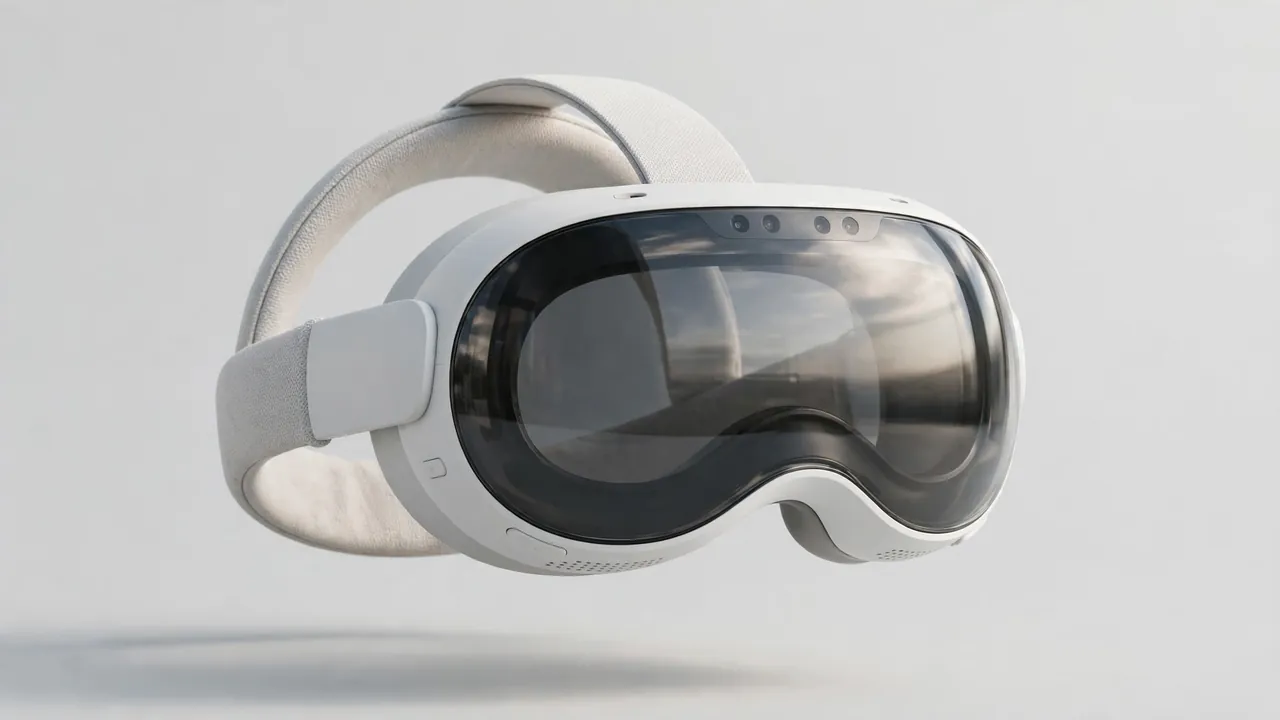
The new Apple Vision Pro swaps the M2 chip for the M5 chip, adds the Dual Knit Band, and runs visionOS 26. It renders 10 percent more pixels, reaches a refresh rate of up to 120Hz, and lasts up to two and a half hours on a charge for general use. The price stays at $3,499 in the United States.
Apple announced the update in a press release on October 15, 2025, and the headset reached stores on October 22, 2025. Pre-orders opened on the day of the announcement in the United States, the United Kingdom, Canada, Australia, France, Germany, Hong Kong, Japan and the United Arab Emirates. China and Singapore followed with pre-orders on October 17, 2025. South Korea and Taiwan were set to follow later, with no date given in the announcement.
The update is a chip refresh rather than a new generation of hardware. Apple kept the same aluminum and glass enclosure, the same micro-OLED displays and the same R1 chip that handles camera and sensor input. AppleInsider notes that the design, size, weight and price are identical to the previous model, and that the M5 is the only notable hardware change inside the headset. Apple has never announced a product called Vision Pro 2, and this update should not be confused with one. The company calls it Apple Vision Pro with the M5 chip, and rumors about a true second-generation model point to a later release.
The M5 chip inside the headset
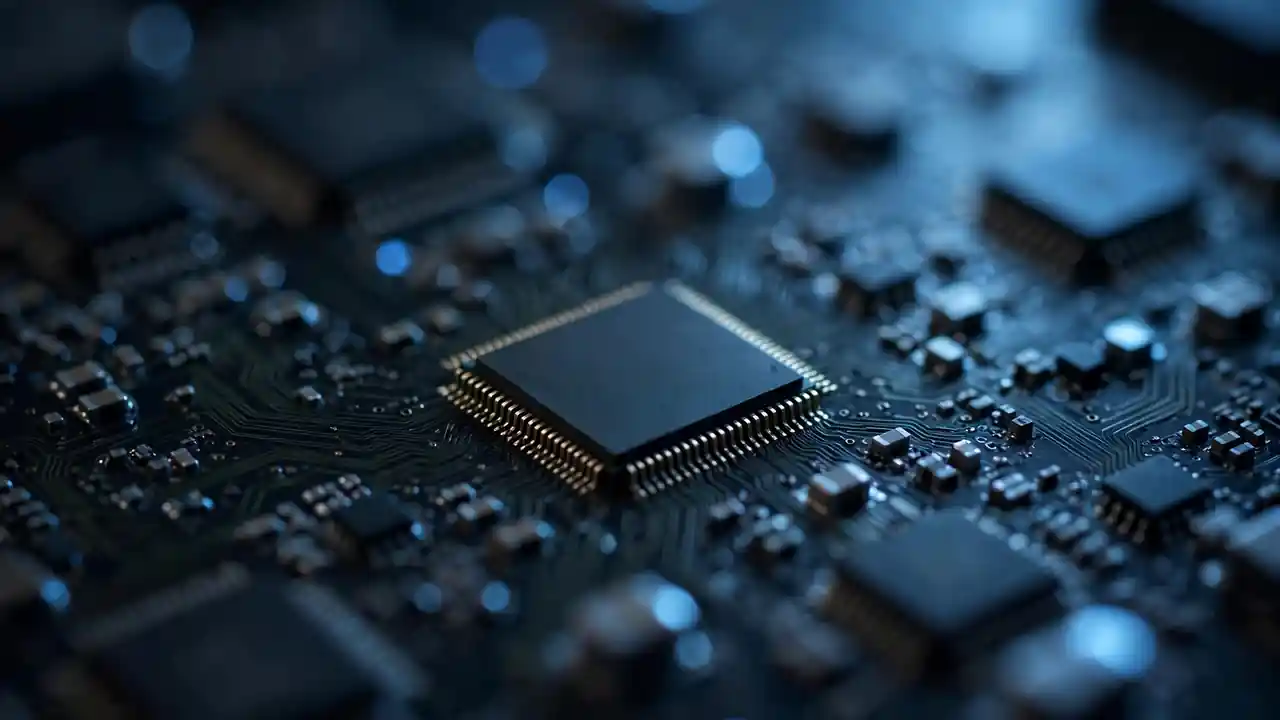
The M5 chip is built on third-generation 3-nanometer technology and has a 10-core CPU, a 10-core GPU and a 16-core Neural Engine. Apple says it makes apps load faster, web browsing feel more responsive and AI features run faster than the M2 chip in the first Vision Pro.
The CPU has four performance cores and six efficiency cores, and Apple says multithreaded performance is up to 15 percent faster than the M4 chip. The GPU uses a new design with a Neural Accelerator in each core, and it adds hardware-accelerated ray tracing and mesh shading. Those two features let developers add more detail to lighting, shadows and reflections in games.
The Neural Engine is the part of the chip that handles on-device AI work. Apple says it makes system AI features run up to 50 percent faster, and third-party apps run up to two times faster, compared with the previous generation. Apple tested those figures in September 2025 with preproduction M5 units and production M2 units, using the Draw Things app and the Photos app. The results are Apple-reported test figures, not independent benchmarks, so they show what Apple measured in its own tests. The M5 also works with the R1 chip, which processes input from 12 cameras, five sensors and six microphones, and sends new images to the displays within 12 milliseconds.

Display, refresh rate and image quality
The M5 chip lets Apple Vision Pro render 10 percent more pixels on its micro-OLED displays than the previous model, and it can raise the refresh rate to 120Hz. The result is sharper text, clearer passthrough video of the room, and a smoother Mac Virtual Display experience.
Each display in the headset has a resolution of 3,660 by 3,200 pixels, or about 3,380 pixels per inch, according to AppleInsider. The displays use a micro-OLED backplane with pixels seven and a half microns wide. The extra pixels the M5 renders do not change the panel itself. They change how much detail the chip draws, so text looks crisper and fine detail looks cleaner.
The 120Hz refresh rate matters most when the wearer looks at the physical world through passthrough. A higher refresh rate cuts motion blur, so the room looks steadier as the wearer turns their head. It also helps Mac Virtual Display, the feature that puts a large virtual Mac screen in front of the wearer. Two high-resolution cameras send more than one billion pixels per second to the displays, and the R1 chip keeps the delay from camera to display at 12 milliseconds. The headset also has eye tracking built from LEDs and infrared cameras, so the wearer can look at a control and tap their fingers to select it.

The Dual Knit Band and comfort
The Dual Knit Band is the new head strap that ships with the M5 Vision Pro. It has upper and lower straps knitted as a single piece, tungsten inserts in the lower strap that act as a counterweight, and a dual-function Fit Dial for fine adjustment.
Comfort was one of the main complaints about the first Vision Pro. The original Solo Knit Band left most of the headset weight on the wearer’s face, and long sessions could feel tiring. The Dual Knit Band spreads the weight across the top of the head. The upper strap carries part of the load, and the lower strap uses flexible fabric ribs with tungsten inserts to balance the headset. Apple says the dual-rib structure adds cushioning, breathability and stretch.
The Fit Dial controls the tightness of both straps, so the wearer can tune the fit without removing the headset. The band comes in small, medium and large sizes, and Apple says the Apple Store app for iPhone can help buyers find the right size. The Dual Knit Band costs $99 on its own in the United States, and it works with the previous-generation Vision Pro too. That means owners of the first model can buy the new band without buying a new headset. The headset still uses an external battery pack. Apple says the battery now lasts up to two and a half hours for general use and up to three hours for video playback on a single charge.

visionOS 26 and new software features
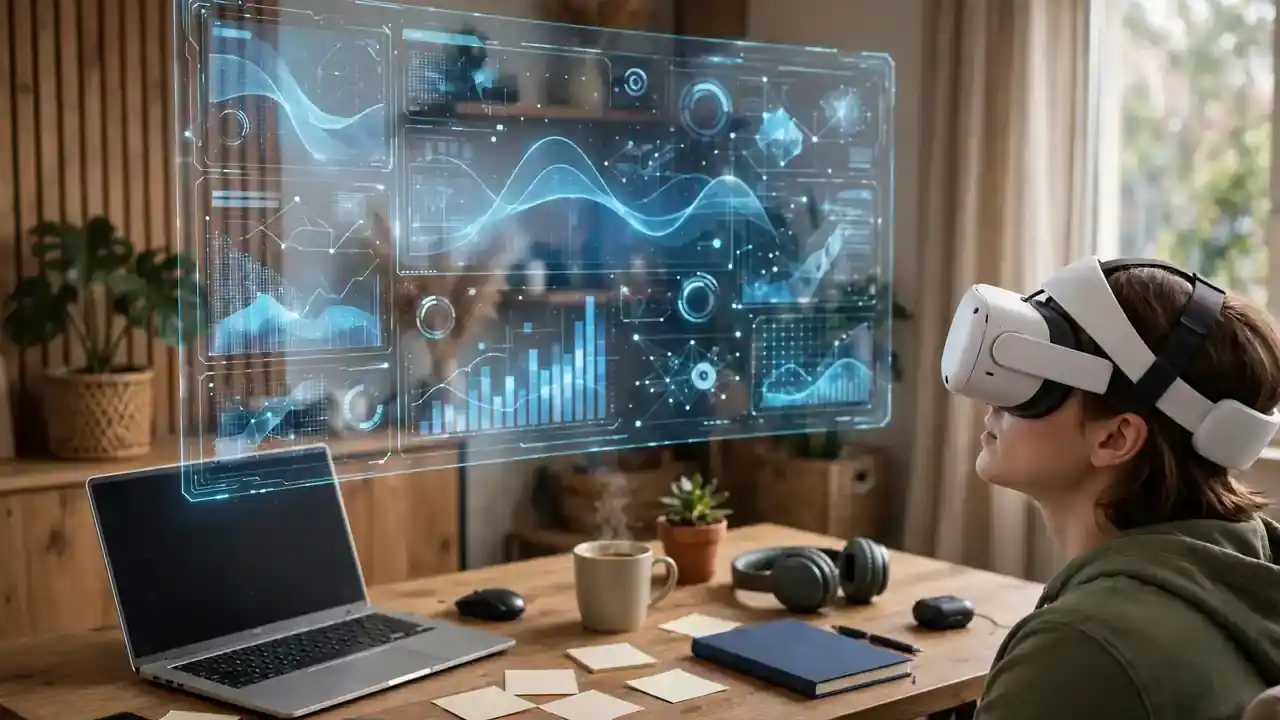
visionOS 26 is the software that ships with the M5 Vision Pro, and it adds spatial widgets, improved Personas, an interactive Jupiter Environment and new Apple Intelligence features with support for more languages. Widgets stay in place in the room and return each time the wearer puts the headset on.
Spatial widgets are the most visible change. The wearer can place a clock, a weather panel, a photo frame or a music player on a wall or a table, and it stays there between sessions. The widgets work like objects in the room rather than windows on a screen. Apple announced visionOS 26 at WWDC 2025, and AppleInsider notes that the update also lets users organize the Home View and put apps in folders.
Personas are the digital versions of the wearer that appear in FaceTime calls. Apple says the new Personas in visionOS 26 look more natural and familiar, with better facial expressions and fewer visual artifacts. Spatial scenes use generative AI to add lifelike depth to ordinary photos, so a flat photo can feel three-dimensional when viewed in the headset. The update also adds playback of 180-degree, 360-degree and wide field-of-view video from action cameras made by Canon, Insta360 and GoPro. The Vision Pro app comes to iPad with iPadOS 26.1, which Apple said would arrive later in the fall of 2025.
Apps, Apple Immersive and entertainment
Apple says more than one million apps are available for Vision Pro, including more than 3,000 apps built for visionOS. The Apple TV app holds hundreds of 3D movies and new Apple Immersive series and films, and select live NBA games are coming to the platform.
The app catalog covers design, shopping, travel and art. Users can plan a home with HomeByMe and Lowe’s Style Studio, browse art with Christie’s Select and Art Authority Museum, explore places with Epic Earth and Explore POV, or turn a room into a planetarium with Space Vision.
Apple Immersive is the format for the headset’s own films and series. New titles from the Audi F1 Project, the BBC, HYBE and Red Bull were set to launch in the months after the announcement. The Apple TV app also carries recent 3D movies such as Superman, Jurassic World Rebirth, How to Train Your Dragon and Wicked. Later in the season, people in the Lakers broadcast territory were set to watch select live games in Apple Immersive. The screen in the headset can appear up to 100 feet wide, which is why Apple describes the device as a personal theater. The catalog is still smaller than the app stores on iPhone or Mac, and AppleInsider notes that even Apple has not made all of its own apps run natively on the headset.

Gaming on the M5 Vision Pro
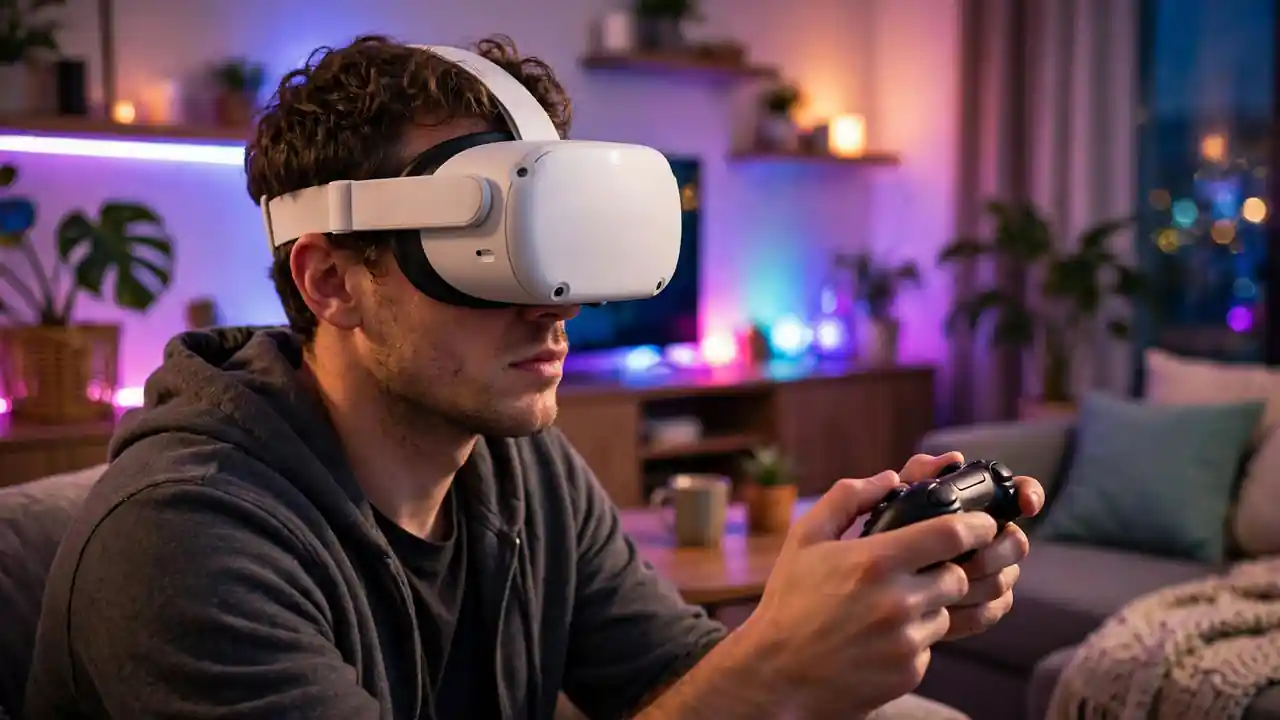
Gaming on the M5 Vision Pro gains hardware-accelerated ray tracing and mesh shading from the M5 GPU, support for the PlayStation VR2 Sense controller, and new titles on Apple Arcade. The headset also works with the Sony DualSense controller, which now supports pairing with more than one device.
The PlayStation VR2 Sense controller adds motion tracking in six degrees of freedom, finger touch detection and vibration. Games built for it include Elu Legend, Pickle Pro, Ping Pong Club and Spatial Rifts. The controller and its charging station cost $249.95 in the United States, and Apple said they would be available from the Apple Store online from November 11, 2025.
Apple Arcade adds Glassbreakers: Champions of Moss, which launched on November 13, 2025, alongside more than 200 other games for Vision Pro. iPad games such as Where Winds Meet, POOLS and Sniper Elite 4 also run on the headset, and PC and console games are available through apps such as Portal and Steam Link. The M5 GPU is the part that makes the difference here. Ray tracing adds realistic light, shadows and reflections, and mesh shading lets developers draw more detailed geometry without slowing the frame rate. The library is still small next to PlayStation or Xbox, but the controller support and the graphics upgrade show that Apple wants the device to hold its own as a gaming machine.
Pro and enterprise use
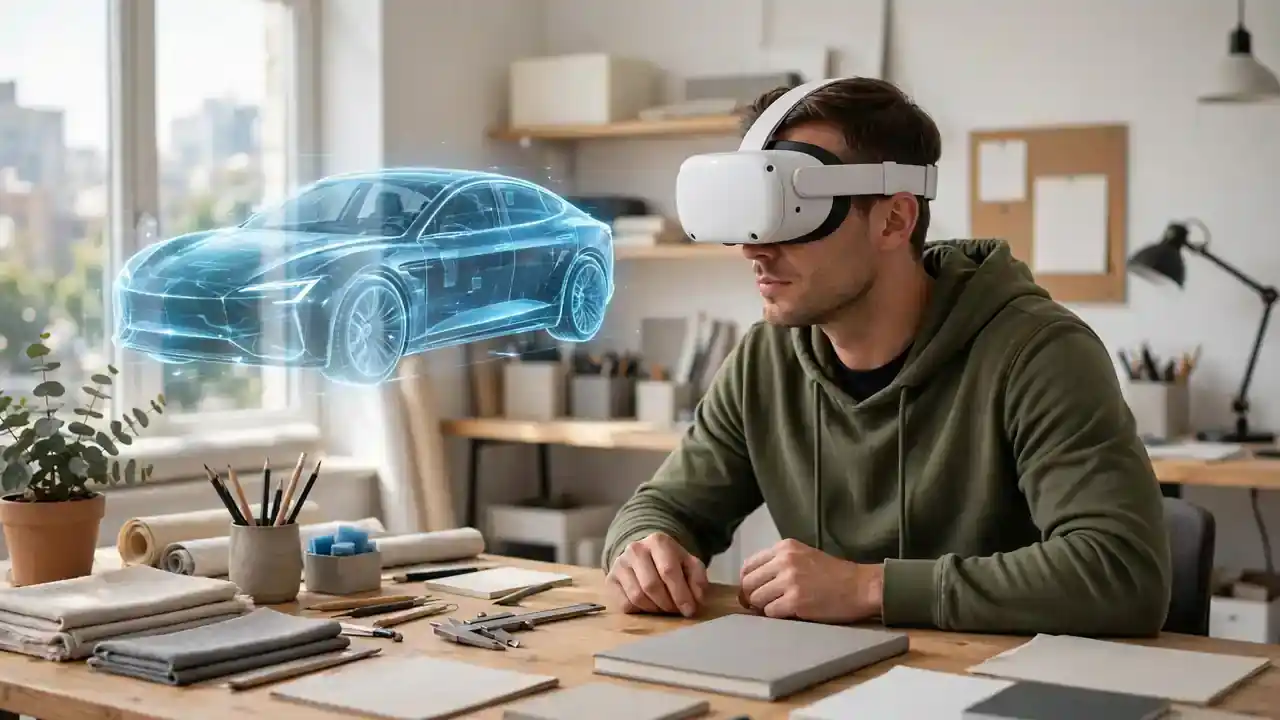
Pro users and businesses get new tools with the M5 Vision Pro, including the Logitech Muse digital pencil, better Mac Virtual Display, and apps for design, training and medical imaging. Companies such as CAE, Porsche and UC San Diego Health already use the headset at work.
Logitech Muse is a digital pencil built for Vision Pro, and it costs $129.95 in the United States. It lets users draw and create with more precision in apps such as Crayon, doppl by Interaptix, Sketch Pro and Spatial Analogue. Artists can design new work in Crayon and Da Vinci Eye, and photographers can edit images with color accuracy using Pixelmator on a Mac through Mac Virtual Display. Filmmakers can scout locations on a large wraparound display, and presenters can rehearse in a replica of the Steve Jobs Theater using Keynote.
Business use covers design, education, healthcare and sales. CAE uses Vision Pro to help pilots complete training activities outside specialized centers, using true-to-life flight deck environments. Porsche lets drivers visualize and personalize new vehicles in select showrooms before taking delivery. Visage Imaging provides three-dimensional medical imaging that helps hospitals such as UC San Diego Health improve patient care. The M5 chip matters for this work because on-device AI runs faster, and the JigSpace app uses Apple’s Foundation Models framework to help users parse complex datasets with natural language and interactive 3D models.
Price, storage, accessories and availability
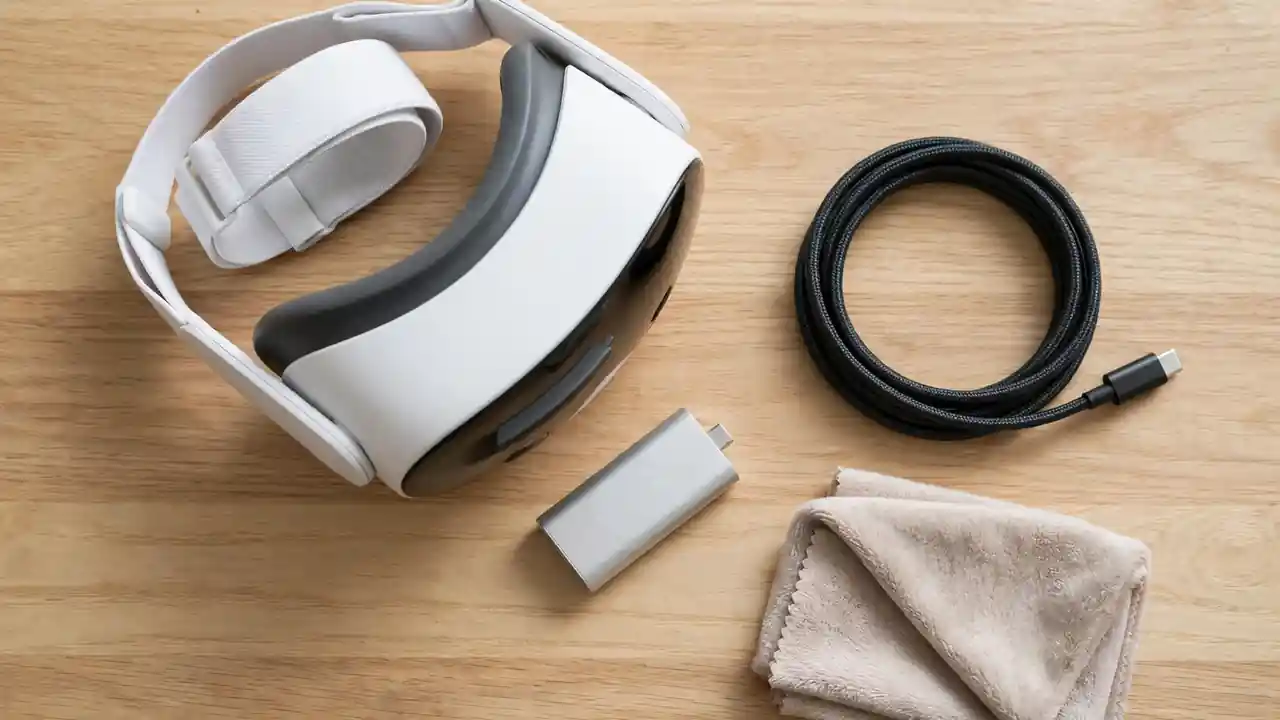
Apple Vision Pro with the M5 chip starts at $3,499 in the United States, with 256GB, 512GB and 1TB storage options. It went on sale on October 22, 2025, and the box includes the Dual Knit Band, a Light Seal, two Light Seal Cushions, a cover, a Polishing Cloth, a battery, a USB-C cable and a 40W power adapter.
The price is unchanged from the first Vision Pro, which also started at $3,499. The higher storage options cost more, though Apple did not list those prices in the announcement. Buyers who need vision correction can add ZEISS Optical Inserts. The reader version costs $99 and the prescription version costs $149 in the United States. A valid prescription is required for the prescription inserts, and not all prescriptions are supported.
The accessory list is short but priced at the high end. The Dual Knit Band costs $99 on its own, and the Travel Case costs $199. The Logitech Muse digital pencil costs $129.95, and the PlayStation VR2 Sense controller with its charging station costs $249.95. AppleCare+ is available, and AppleCare One in the United States can cover the headset with other Apple devices under one plan. The headset is sold in Apple Store locations in Australia, Canada, China, Hong Kong, France, Germany, Japan, Singapore, the United Arab Emirates, the United Kingdom and the United States. South Korea and Taiwan were set to follow later. Buyers can book a demo at Apple Store locations to try the new band and Apple Intelligence features.

Frequently Asked Questions
Is the M5 Vision Pro the same as Vision Pro 2?
No. Apple has never announced a product called Vision Pro 2. The M5 model is an update to the original Apple Vision Pro, with the same design and a new chip, a new head strap and new software. Rumors point to a later release for a true second-generation model, and Apple has not confirmed a date or a name.
How much does the Apple Vision Pro M5 cost?
The M5 Vision Pro starts at $3,499 in the United States, the same price as the first model. It comes in 256GB, 512GB and 1TB storage options, with the higher capacities costing more. Accessories such as the Dual Knit Band, the Travel Case and the Logitech Muse pencil are sold separately.
When did the Apple Vision Pro M5 go on sale?
Apple announced the M5 Vision Pro on October 15, 2025, and it went on sale on October 22, 2025. Pre-orders opened on October 15 in the United States and eight other countries. China and Singapore followed on October 17, 2025.
What is the battery life of the M5 Vision Pro?
Apple says the battery lasts up to two and a half hours for general use and up to three hours for video playback on a single charge. Apple tested those figures in August and September 2025 with preproduction M5 units, and the battery can be plugged in for longer sessions.
Does the Dual Knit Band work with the first Vision Pro?
Yes. The Dual Knit Band costs $99 on its own in the United States and works with the previous-generation Apple Vision Pro. It comes in small, medium and large sizes, and the Apple Store app for iPhone can help buyers find the right size.
What is new in visionOS 26?
visionOS 26 adds spatial widgets, improved Personas for FaceTime calls, an interactive Jupiter Environment, and new Apple Intelligence features in more languages. It also adds playback of 180-degree, 360-degree and wide field-of-view video from action cameras made by Canon, Insta360 and GoPro.
Should owners of the first Vision Pro upgrade to the M5 model?
The answer depends on how the owner uses the headset. The M5 model is faster, shows sharper text and video, and feels more comfortable with the Dual Knit Band. Owners who want those gains can buy the band alone for $99. Owners who play games or run AI apps will get more from the full upgrade.
Sources
- Apple Newsroom. “Apple Vision Pro upgraded with the M5 chip and Dual Knit Band.” October 15, 2025. https://www.apple.com/newsroom/2025/10/apple-vision-pro-upgraded-with-the-m5-chip-and-dual-knit-band/
- AppleInsider. “Apple Vision Pro.” https://appleinsider.com/inside/apple-vision-pro
- NDTV Profit. “Apple Vision Pro With M5 Chip, Dual Knit Band Launched.” https://www.ndtvprofit.com/technology/apple-vision-pro-with-m5-chip-dual-knit-band-launched-specs-features-price-availability-9465090
- Wikipedia. “Apple M5.” https://en.wikipedia.org/wiki/Apple_M5