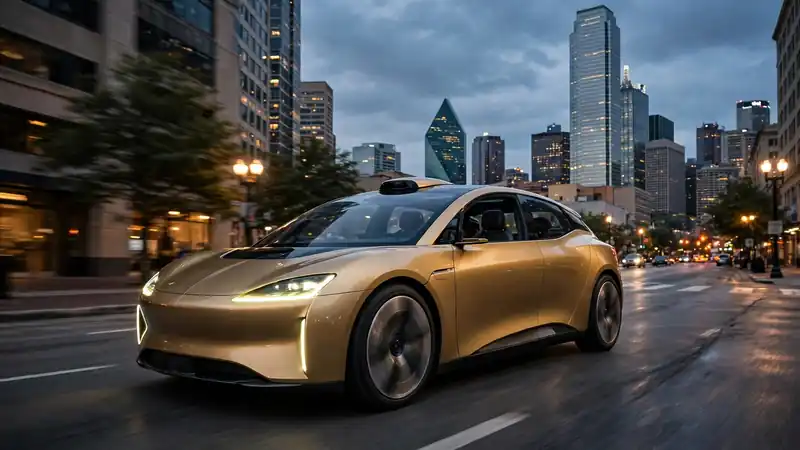
Tesla Cybercab Dallas rides began on November 19, 2026, when Tesla’s Robotaxi account posted a short video with the words “Howdy Dallas. Cybercab has arrived in your city.” Dallas is the second city where the public can ride the purpose-built two-seat car, after Austin, where public rides began in early September. The launch matters because it moves the Cybercab from a single-city pilot to a second market, and it puts Tesla’s camera-only driverless car on the same Dallas streets where Waymo has operated since February. Booking, coverage, fares, and the safety questions all look different once the car has no driver.
Dallas becomes the second Cybercab city
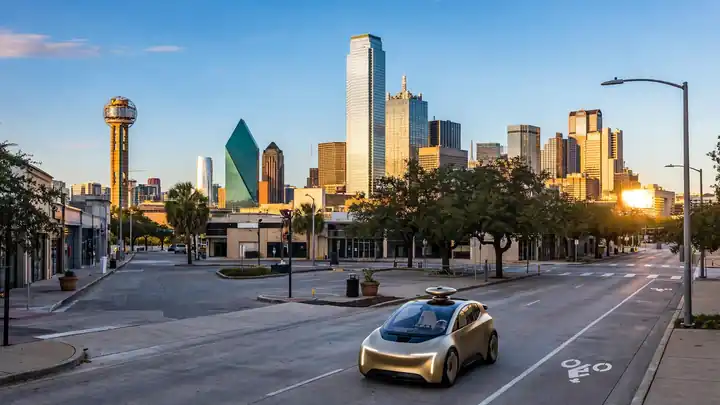
Tesla confirmed public Cybercab rides in Dallas on November 19, 2026, through its Robotaxi account on X. Dallas follows Austin, where public rides began in early September. The cars join Model Y robotaxis that have run without a safety monitor in Dallas since April, so the launch adds a new vehicle to a network that already existed.
The timing matched what Tesla told investors a month earlier. On the October 21 earnings call, Ashok Elluswamy, Tesla’s head of AI software, said Dallas would be the next Cybercab city. On November 19, Tesla sent app notifications and emails inviting people in the Dallas service area to be among the first to ride. Teslarati reported the announcement the same day, and InsideEVs confirmed that riders can order the car through the Tesla Robotaxi app.
Austin remains the larger Cybercab market. Tesla said on October 10 that more than 300 Cybercabs were serving Austin, about a month after public rides began there following an invite-only event on September 3. Dallas therefore tests whether the same vehicle and software can serve a second city. Tesla has said it plans to reach more cities by the end of 2026.
Inside a car with no steering wheel
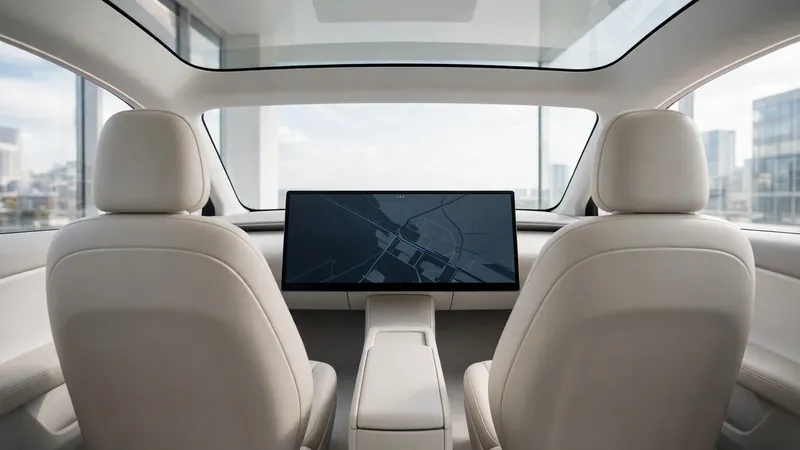
The Cybercab carries two passengers in a car that has no steering wheel and no pedals. Its butterfly doors open upward, and the cabin is built around a central touchscreen. The car drives itself using cameras and Tesla’s unsupervised Full Self-Driving software.
The first thing a rider notices is the empty space where the driver would sit. There is no one to greet and no wheel to watch. The rider uses the touchscreen or the Robotaxi app to manage the trip. Tesla builds the vehicle at Gigafactory Texas and designed it only for autonomous operation, which means it cannot be driven by a person at all.
That design choice shapes the whole experience. A two-seat car suits a solo rider or a pair, and it leaves no room for a third passenger. Luggage goes in the trunk at the rear, behind the seats. Riders used to chatting with a driver will find a quieter trip, with the app as the only way to reach Tesla during the ride.
Booking a ride through the Robotaxi app
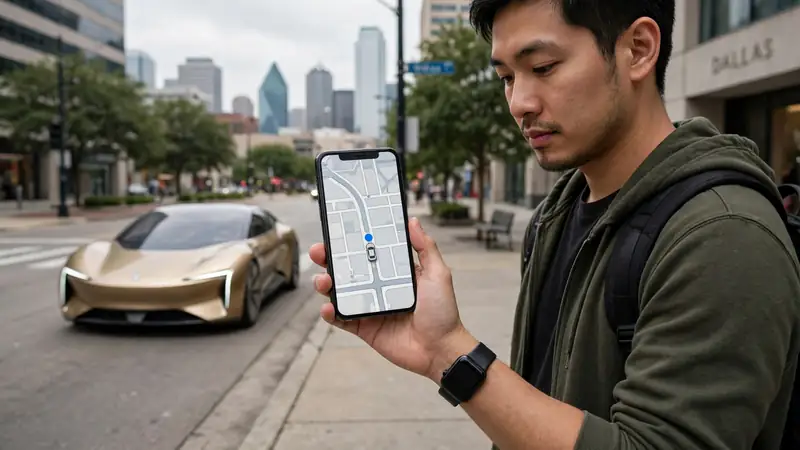
Riders book a Tesla Cybercab Dallas trip in the Tesla Robotaxi app, the same app that already serves Model Y robotaxis in the city. A rider sets a pickup point inside the service area and confirms the destination. The fare quote appears in the app before the rider confirms, and payment happens in the app.
One detail matters for anyone hoping to ride in the Cybercab on purpose. In Austin, the app sends whichever car is closest, a Cybercab or a Model Y, and riders cannot request the Cybercab by name. Tesla has not said whether Dallas works the same way, so a rider there may be matched with either vehicle. The Cybercab lights its front bar in a color shown in the app, which helps the rider spot the right car.
Payment inside the app is now routine across ride services, and the same pattern now extends well past ride hailing, as card networks build payment tools for software agents. Readers who follow that shift can see how Mastercard and Visa are approaching agent payments in our report on AI agent payments. For the rider, the practical point is simple: keep the app updated, keep a payment method on file, and check the quote before confirming.
Where the cars go in Dallas, and where they stop short
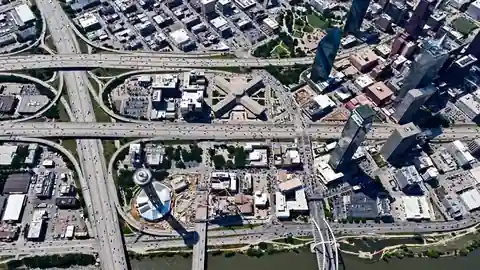
Tesla has not published a Cybercab-only map for Dallas, and it has not said how many Cybercabs are operating there. The Robotaxi service area covers about 81 square miles, according to independent trackers, after an August 29 expansion from about 31 square miles. Tesla has not confirmed whether Cybercabs serve the full zone or a smaller part of it.
The zone covers central Dallas and reaches west toward Irving, with coverage across downtown and neighborhoods such as Oak Lawn and Highland Park. Fort Worth joined the Robotaxi network on November 2, but it runs as a separate zone, so a Dallas rider cannot book a trip to Fort Worth in the same ride. The gap between the zones includes Arlington and Grand Prairie.
Two gaps deserve attention before anyone plans a trip around the service. Tesla has not said whether Cybercabs serve Dallas Love Field, and it has not published hours for Cybercab rides in Dallas. Independent tracker Where Is Robotaxi reports that the Robotaxi service has run around the clock in every unsupervised city since November 11, Dallas included, but that is a tracker reading, not a promise from Tesla about Cybercab availability at every hour. Riders should check the app for live availability rather than assume the car will be there at 3 a.m.
Cybercab, Waymo, and a regular rideshare, side by side
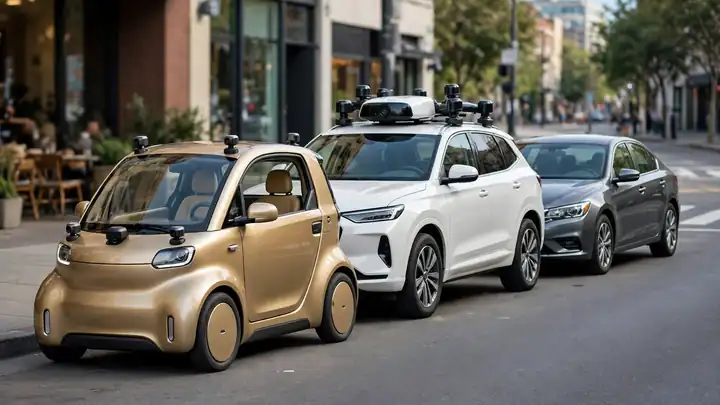
Dallas now has three ways to get a car with an app, and the Cybercab is the newest of the three. Waymo opened its Dallas service to invited riders on February 24, 2026, and removed the waitlist on August 4. A regular rideshare remains the most flexible option, since it covers the whole metro area and both airports.
| Feature | Tesla Cybercab | Waymo | Traditional rideshare |
|---|---|---|---|
| Vehicle | Purpose-built two-seat Tesla with no steering wheel or pedals | Jaguar I-Pace SUV with a sensor pod on the roof | Standard car driven by a person |
| Passengers | Two | A small group | A small group |
| Driver | None | None | Human driver |
| Booking | Tesla Robotaxi app | Waymo app | Uber or Lyft app |
| Dallas service area | About 81 square miles, per trackers, with the Cybercab zone unconfirmed | About 50 square miles at launch, covering downtown and nearby neighborhoods | Citywide, including both Dallas airports |
| Hours | Not published for Dallas Cybercab rides | 24 hours a day, 7 days a week | Around the clock, depending on driver supply |
| Airport trips | Not stated for Cybercab | Love Field still in testing, with rider service to come | Available at DFW and Love Field |
| Price | Quote shown in the app, with no published fare table | Quote shown in the app | Quote shown in the app, with surge pricing at busy times |
The table shows the trade clearly for anyone comparing a Tesla Cybercab Dallas trip with the alternatives. Waymo offers a larger car, a published service area, and round-the-clock hours, while the Cybercab offers a novel vehicle in a zone that Tesla has not mapped in public. A regular rideshare offers the widest coverage and a driver who can help with luggage or a change of plan, while the two driverless services offer a trip with no conversation and no tip decision. Readers who like head-to-head comparisons of AI systems can see a similar approach in our Gemini versus ChatGPT comparison.
Cybercab V1.5 and the hardware riders spotted
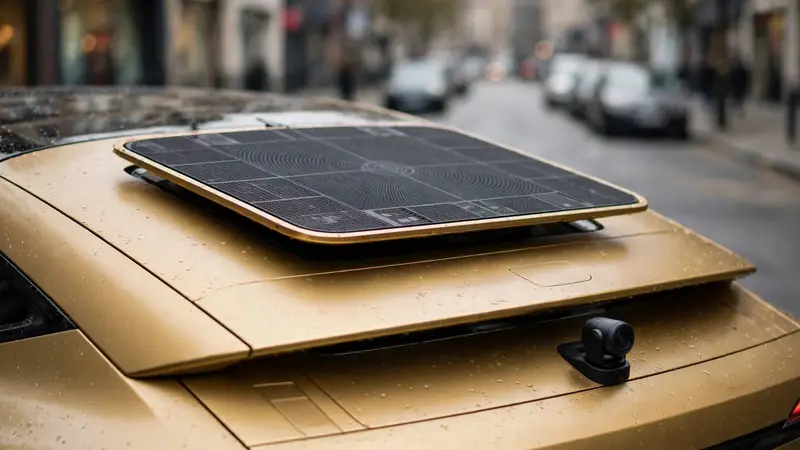
Eric Earley, Tesla’s Cybercab chief engineer, called the Dallas cars “Cybercab V1.5” in a post on X on November 19. Tesla has not explained what changed in this version, and its official accounts had not used the V1.5 label before the Dallas launch, according to Not a Tesla App.
Riders in Dallas quickly reported two hardware details on the new cars. One rider found a Starlink dish integrated into the rear of the roof, and another found a camera in the rear trunk lid. Both sightings came from rider photos posted on X on November 19, and neither has been confirmed by Tesla. The panel on the rear hatch that marks the factory-fitted Starlink terminal had already appeared on Cybercabs in drone footage from September 8, so the hardware itself is not new, even if the V1.5 label is.
Tesla announced the satellite link for the Cybercab on July 20, but the company has not said whether the terminals are switched on in Dallas or what the trunk camera is for. The honest reading is that Dallas cars carry hardware that Austin cars may also carry, and the V1.5 name may mark a production update rather than a new capability. Riders should treat the label as a sign that Tesla is still revising the car, not as proof of a specific new feature.
Safety claims, and the questions Dallas riders should still ask
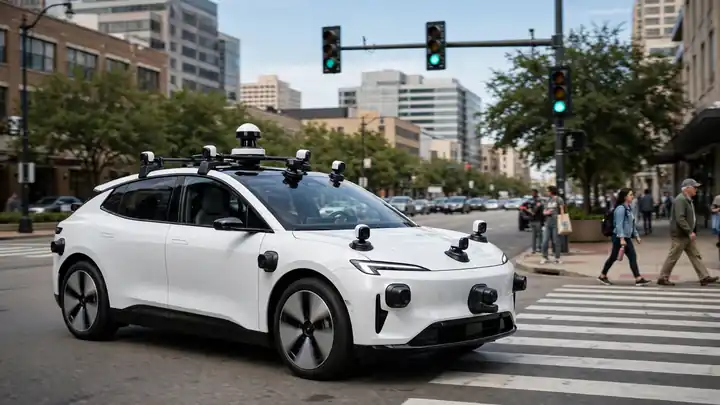
Tesla Cybercab Dallas rides run without a safety monitor in the car. That is the same unsupervised setup Tesla already used for Model Y robotaxis in Dallas, and it is the point of the Cybercab design: there is no seat for a monitor to sit in and no wheel for one to grab.
Tesla’s first Robotaxi Safety Report, which counts only miles driven with no safety monitor in the car, credits Dallas with 608,130 such miles between January 22 and October 18, 2026. Austin recorded about 2.12 million miles in the same period. Those figures describe the Model Y fleet, not the Cybercab, and they show scale rather than a safety verdict. Tesla has not published Dallas incident data for the Cybercab, and no independent safety rating exists for a car with no steering wheel.
The sensor question sits at the center of the safety debate. The Cybercab relies on cameras alone, while Waymo uses lidar and radar alongside cameras. Tesla argues that cameras plus software are enough, while Waymo argues that extra sensors add a margin in poor visibility. Waymo paused service in Dallas and other Texas cities in May 2026 after problems in heavy rain and flooded roads, then resumed. That episode shows that weather remains a live test for every driverless service in Texas, including Tesla’s.
What a Cybercab ride costs in Dallas
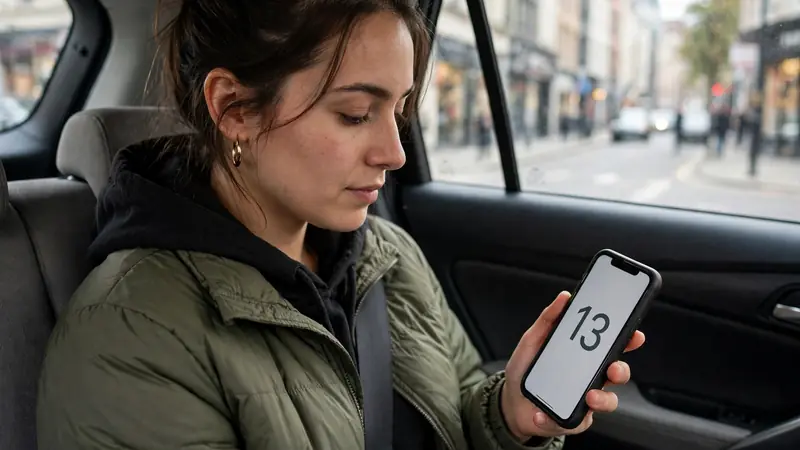
Tesla has not published a fare table for Cybercab rides in Dallas, and it stated no Dallas fare in the launch announcement. Riders see a quote in the Robotaxi app before they confirm, and that quote is the only fare figure that counts for a given trip.
One number that often gets confused with the ride fare is the purchase price. Tesla has invited select customers to buy a Cybercab for personal use at $29,990 before taxes, with a required $299 monthly Autonomy Subscription and a $1,000 non-refundable deposit. Deliveries are targeted for December, with initial availability focused on Austin. That price buys the car, not rides, and the subscription is what lets the car move at all. A rider who only wants a trip across Dallas should ignore the purchase price and compare the app quote with Waymo and a regular rideshare before booking.
The absence of a published fare table is itself useful information. It means Tesla can adjust prices by time of day and demand without updating a public page, and early riders cannot tell from the announcement whether the Cybercab will undercut the Model Y or Waymo on a given route. The practical test is to request the same trip in each app and compare the quotes, then decide whether the novelty of the two-seat car is worth any difference in price.
Who should try it now, and who should wait
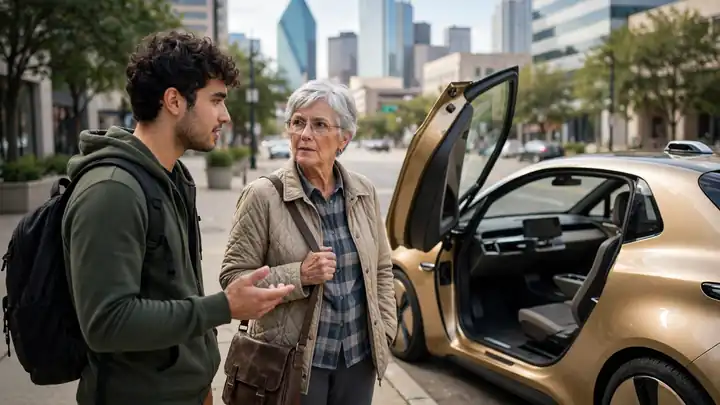
The Cybercab suits a solo rider or a pair making a short trip inside central Dallas, with light luggage and a flexible schedule. A curious rider who wants to see the car up close will get the most from the trip. Other riders should wait, including groups of three or more, airport travelers, and anyone on a tight schedule.
A group of three or more cannot fit, and a rider with heavy luggage should check the app and Tesla’s rider guide before booking, since the two-seat layout and the automatic butterfly doors change how you get in and out. An airport trip is a poor first test, because Tesla has not said the Cybercab serves Love Field. A rider on a tight schedule should also wait, because a new service can mean longer waits or a Model Y arriving instead of the Cybercab.
The simplest rule is to treat the first ride as a trial. Pick a short daytime trip inside the known service area, keep a backup option in mind, and judge the car on the ride itself rather than on the launch video. If the car arrives quickly and the trip feels calm, it will be there for a second ride.
What Dallas tells us about Tesla’s next moves
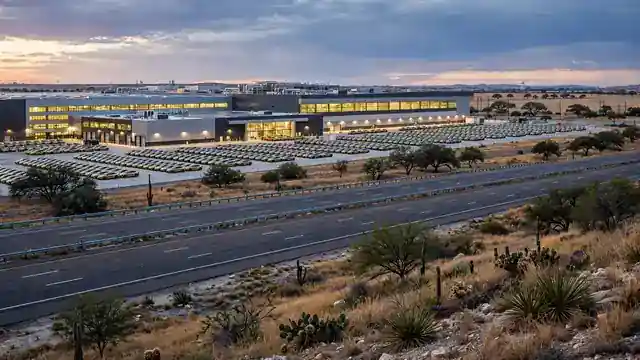
Dallas is the first proof that the Cybercab can leave Austin. Teslarati noted that the move shows Tesla shifting from a pilot to multi-city deployment, with the software stack and vehicle data transferring to a new environment. That transfer matters more than the launch video, because a robotaxi business only works if the same system can serve city after city.
Tesla registered 200 more Cybercabs in Texas on November 17, bringing the state total to 773, according to Not a Tesla App. Registration is not the same as cars in service, and Tesla has not said how many of those cars will run in Dallas, so the figure shows production rather than fleet size. Even so, most of the cars are expected to stay in the company’s own fleet rather than go to private buyers.
Elon Musk said at the DealBook Summit in November that Tesla is also looking at a Model Y with no steering wheel or pedals, which would put the same idea into a larger, more familiar car. Leadership changes at rival AI companies show how fast this field moves, as seen in our report on the Nvidia chief executive transition. For Dallas riders, the near-term question is narrower: whether Tesla adds cars, widens the zone, and holds the service steady through the winter.
Frequently asked questions
Q: Can I book a Cybercab ride in Dallas today?
A: Yes. Tesla Cybercab Dallas rides opened to the public on November 19, 2026, and riders book through the Tesla Robotaxi app. The app shows live availability, so check it before planning a trip around the service.
Q: How many people can ride in a Cybercab?
A: Two. The car has two seats and no room for a third passenger. A group of three or more should book a Model Y robotaxi or a regular rideshare instead.
Q: Is there a safety monitor in the car?
A: No. Cybercab rides in Dallas run without a safety monitor, the same unsupervised setup Tesla already used for Model Y robotaxis in the city.
Q: How much does a Cybercab ride cost in Dallas?
A: Tesla has not published a fare table for Dallas. The Robotaxi app shows a quote before the rider confirms, and that quote is the fare for that trip. Compare it with Waymo and a regular rideshare for the same route.
Q: Can I choose a Cybercab instead of a Model Y?
A: Not by name, as far as Tesla has stated. In Austin, the app sends whichever car is closest, and Tesla has not said Dallas works differently. A rider may be matched with either vehicle.
Q: Does the Cybercab go to Dallas Love Field airport?
A: Tesla has not said so. Waymo is also still testing at Love Field rather than carrying riders there. Check the app for the destination before booking an airport trip.
Q: Can I buy a Cybercab for myself?
A: Only by invitation for now. Tesla has invited select customers to order at $29,990 before taxes, with a required $299 monthly Autonomy Subscription and a $1,000 non-refundable deposit. Deliveries are targeted for December, focused on Austin.
Sources
Teslarati, “Tesla Cybercab without steering wheel and pedals expands public rides to Dallas,” November 19, 2026: https://www.teslarati.com/tesla-cybercab-without-steering-wheel-pedals-expands-public-rides-dallas/
InsideEVs, “The Tesla Cybercab Is Now Available In Dallas,” November 19, 2026: https://insideevs.com/news/816139/tesla-cybercab-robotaxi-expands-to-dallas/
Waymo, “August 4, 2026: Dallas open to everyone”: https://waymo.com/blog/shorts/dallas-open-to-all/
Waymo, “Ready to Ride: Dallas, Houston, San Antonio, and Orlando,” February 24, 2026: https://waymo.com/blog/2026/02/dallas-houston-san-antonio-orlando/
TechCrunch, “Waymo opens up robotaxi service in Dallas to everyone,” August 4, 2026: https://techcrunch.com/2026/08/04/waymo-opens-up-robotaxi-service-in-dallas-to-everyone/
Not a Tesla App, “Tesla Launches Cybercab Rides in Dallas With New V1.5 Design,” November 19, 2026: https://www.notateslaapp.com/news/5044/tesla-launches-cybercab-rides-in-dallas-with-new-v15-design