Xiaomi 18 Pro Series: What Changed With the Global Launch
Xiaomi took the Xiaomi 18 Pro and 18 Pro Max outside China on 17 November 2026 at an event in Paris, after their China launch on 23 September 2026. This is the first time Xiaomi has sold its Pro models in global markets, since the previous 17 Pro phones stayed in China. The global versions keep the rear display and the Leica cameras, but they arrive with smaller batteries and premium prices. Sales began on 17 November in Germany, France, Spain and the United Kingdom. There is no launch planned for the United States.
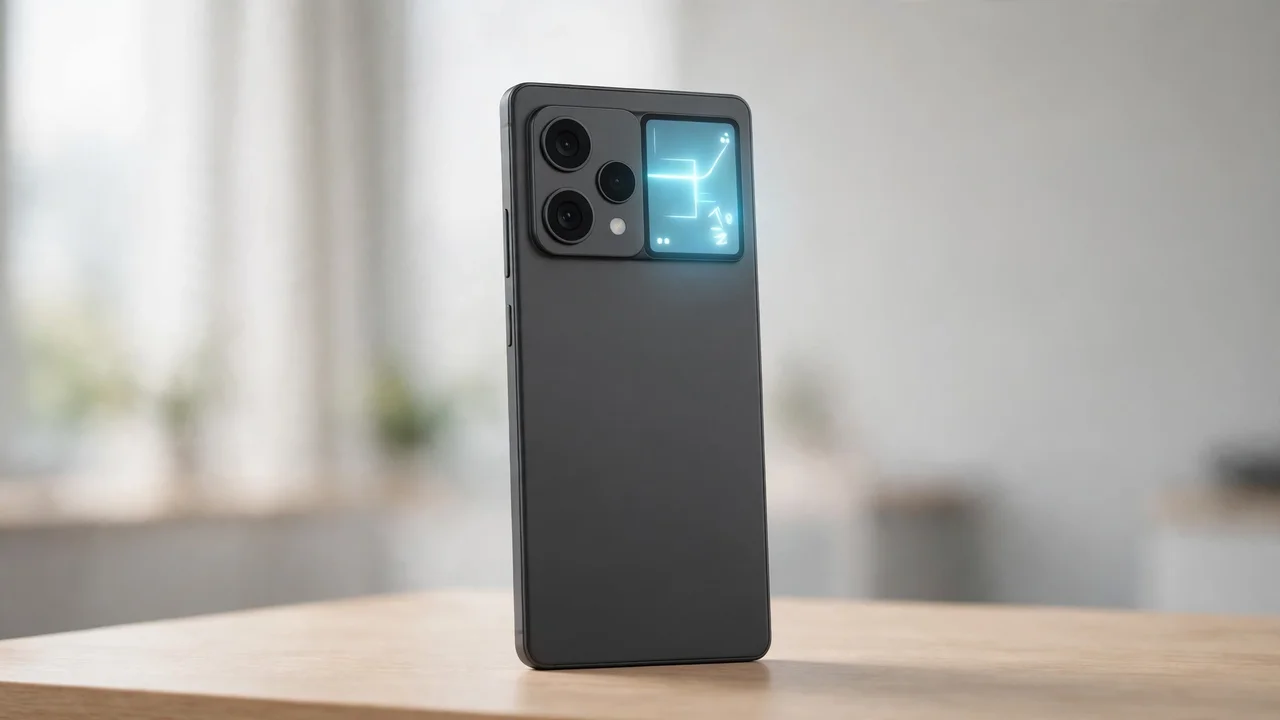
What changed at the Paris launch
Xiaomi launched the 18 Pro and 18 Pro Max in Paris on 17 November 2026, eight weeks after their China debut. The phones keep the rear display, the Leica dual 200MP cameras and the new Snapdragon chips. Global models get smaller batteries, and prices start at 1,399 euros for the 18 Pro and 1,599 euros for the 18 Pro Max.
The event started at 14:00 Central European Time and streamed on YouTube and X, with two sizes only. The standard Xiaomi 18 and an Ultra model were not part of the Paris launch. GSMArena reported the event time and the two-model lineup ahead of the show, and PetaPixel confirmed the global release after the event. (Links: GSMArena https://www.gsmarena.com/newsdetail.php3?idNews=75472&c=10003 ; PetaPixel https://petapixel.com/2026/11/17/xiaomis-eye-catching-pro-series-phones-go-global-for-the-first-time/)
The change that matters most for buyers is the battery. The global 18 Pro has a 6,000mAh battery, down from 7,000mAh in China. The global 18 Pro Max has a 7,050mAh battery, down from 8,500mAh in China. Xiaomi has not explained why the global models are smaller. One camera sensor differs between the models, as covered below.

The rear display goes global
The rear display is a second screen on the back of the phone, set beside the cameras. The 18 Pro has a 2.7 inch panel and the Pro Max has a 2.9 inch panel. Both use M11 LTPO AMOLED panels with a 1Hz to 120Hz refresh rate and peak brightness of up to 4,000 nits.
The screen works as a viewfinder for the rear cameras, so the person in front of the lens can see the shot before it is taken. It also shows notifications, boarding passes and QR codes without waking the main screen. Xiaomi says it can run live translation during a conversation, with each person seeing their own language on a different side of the phone. Google Maps, Spotify and YouTube Music work on the rear display.
DPReview tested the phones in Paris and found the rear screen useful for selfies, group photos and vlogging. The same hands-on found limits: the rear camera interface works with the main camera and the ultrawide lens, but not the telephoto camera, and pinch to zoom reaches 3.2x with digital zoom rather than the telephoto module. (Link: DPReview https://www.dpreview.com/news/xiaomi-18-pro-series-hands-on-a-useful-rear-screen-and-some-strong-looks/)
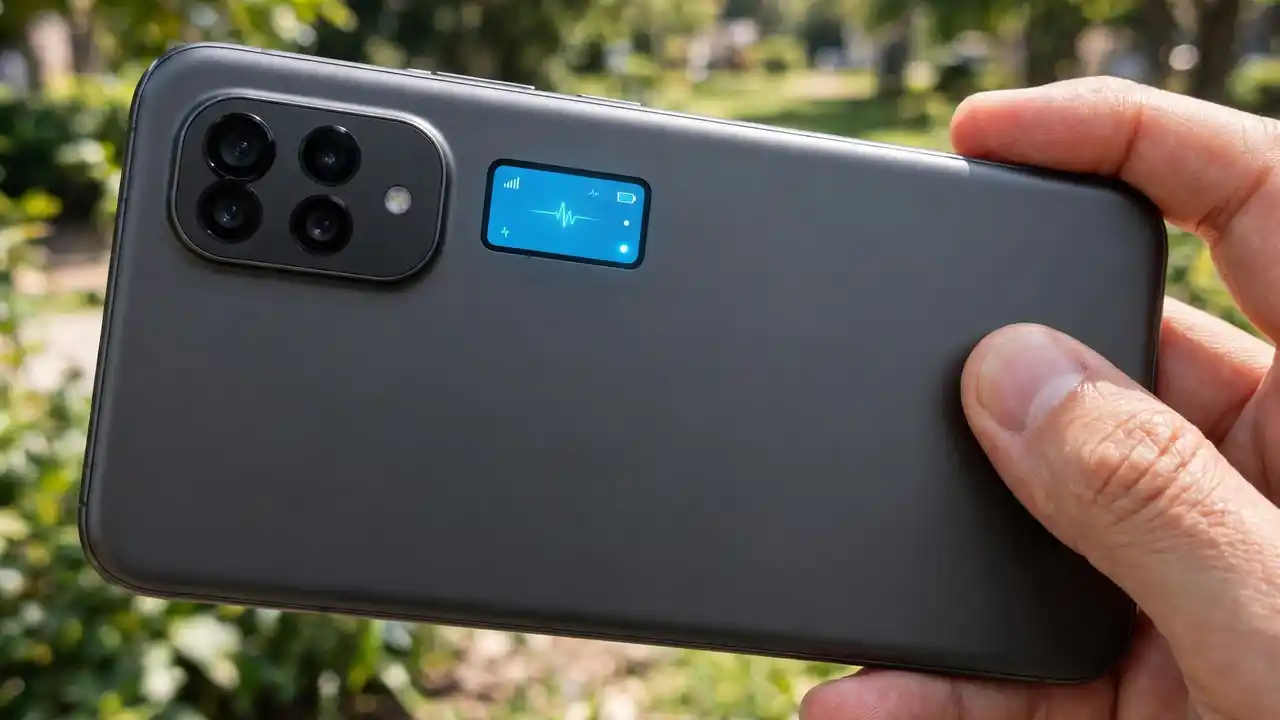
Leica cameras: two 200MP sensors
Both phones carry a Leica triple camera system with two 200MP sensors and a 50MP ultrawide camera. The main camera is a 200MP sensor with a 1/1.28 inch size, an f/1.67 aperture and a 23mm equivalent focal length. The periscope telephoto camera is also 200MP, with a 1/1.56 inch sensor, an f/2.4 aperture and 3.2x optical zoom at 75mm.
The 50MP ultrawide camera has a 17mm focal length, an f/2.4 aperture and a 102 degree field of view, and a 50MP autofocus front camera handles selfies. Both phones record 8K video at 30 frames per second, 4K Dolby Vision at 120 frames per second, and a 10-bit Log mode for color grading.
The one camera difference between the two models sits in the main sensor. The 18 Pro Max uses the Light Fusion 960L sensor with LOFIC technology, while the 18 Pro uses the standard Light Fusion 960 sensor. Xiaomi claims a dynamic range of up to 16.2 stops for the Pro Max. That figure is a vendor claim, and no independent lab had tested it at launch, as TechTimes and PetaPixel noted. The 200MP mode and LOFIC HDR cannot be used together on the main camera, according to Notebookcheck. (Links: TechTimes https://www.techtimes.com/articles/330954/20261117/xiaomi-18-pro-max-launches-europe-untested-camera-claim-17-percent-smaller-battery.htm ; Notebookcheck https://www.notebookcheck.net/Xiaomi-18-Pro-Max-Hands-On-Two-200-MPix-Cameras-two-displays-and-a-weak-privacy-filter.1451516.0.html)
Chips, screens and the privacy display
The 18 Pro runs on the Snapdragon 8 Elite Gen 6, and the Pro Max runs on the Snapdragon 8 Elite Extreme Gen 6. Both chips use a 2nm process from TSMC and can reach 5GHz on their prime cores. The Pro Max pairs its faster chip with a larger cooling system built around a direct copper thermal path.
The main screens measure 6.4 inches on the 18 Pro and 6.9 inches on the 18 Pro Max. Both use Xiaomi M11 LTPO AMOLED panels with a 1 to 120Hz adaptive refresh rate and peak brightness of up to 4,000 nits. Resolutions are 1120 by 2436 on the 18 Pro and 2624 by 1208 on the Pro Max. Xiaomi Shield Glass protects the Pro Max display.
The new feature on the main screen is the Privacy Display. Xiaomi built a new subpixel layout called HyperRGB 2.0 that switches off standard pixels and leaves narrow angle privacy pixels lit. 9to5Google reported that Xiaomi presented the privacy screen as a hardware design rather than a software filter. (Link: 9to5Google https://9to5google.com/2026/11/17/the-xiaomi-18-pro-debuts-globally-with-sub-mm-bezels-privacy-display-4000-nit-back-display-and-dual-200mp-leica-cameras/)
Notebookcheck tried the privacy filter hands-on in Paris and called it weak in its headline. Xiaomi’s own launch page also carries a caveat that content may remain visible under certain viewing angles or conditions, according to Gadgets Now. No independent benchmark or thermal test of the global models had been published at launch. (Link: Gadgets Now https://gadgetsnow.indiatimes.com/mobiles/xiaomi-18-pro-goes-global-from-eur-1399-with-a-back-display-and-200mp-leica-cameras/articleshow/135934648.cms)

Battery and charging: the global trade-off
The global 18 Pro has a 6,000mAh battery with 90W wired charging, and the global 18 Pro Max has a 7,050mAh battery with 100W wired charging. Both support 50W wireless charging, and both use silicon carbon cells. The smaller global batteries hold less charge than the China versions.
Notebookcheck reported that the Pro Max battery uses a dual cell design with 28 percent silicon content and a high voltage architecture at 4.56 volts.
The trade-off is clear when the global models are set against the China versions. The China 18 Pro has a 7,000mAh battery, so the global model loses 1,000mAh. The China 18 Pro Max has an 8,500mAh battery, so the global model loses 1,450mAh, about 17 percent. Charging speeds stay the same in both markets, so the smaller batteries should refill faster. AndroidPure confirmed the global battery figures from Xiaomi’s global product page and noted that Xiaomi had not explained the smaller batteries as of 18 November. (Link: AndroidPure https://www.androidpure.com/xiaomi-18-pro-max-global-price/)
Battery life in daily use is still untested, and no independent battery test of the global models had been published at launch.
HyperOS 4 and Android 17
Both phones ship with HyperOS 4 based on Android 17. HyperOS 4 brings a new glass style design and more lock screen customization, and it adds Google Gemini as the built-in assistant. Xiaomi includes three months of Google AI Pro with 5TB of Google Cloud storage, according to 9to5Google.
The software also powers the rear display, where the Back Display GenAI Apps feature lets users create simple apps with AI under restricted access. The AI features vary by region and carry monthly usage limits, according to Xiaomi’s launch page as reported by Gadgets Now. Xiaomi says its AI Wallpapers feature will reach the 18 Pro series through a software update from December 2026.
Both phones carry an IP68 rating. The 18 Pro is 8.5mm thick and weighs 203g or 208g depending on the variant, according to GSMArena, and its 72mm width keeps it usable in one hand. The Android 16 changes show how Google’s platform reached this point. (Internal link: Android 16 changes https://technewsnest.com/android-16-what-changed/)
Prices, colors and where to buy
The 18 Pro starts at 1,399 euros for 12GB of RAM and 256GB of storage, and the 512GB version costs 1,599 euros. The 18 Pro Max starts at 1,599 euros, with a 512GB version at 1,799 euros and a 16GB and 1TB version at 2,099 euros.
In the United Kingdom the 18 Pro starts at 1,199 pounds and the Pro Max starts at 1,399 pounds. The phones come in four colors: Velvet Red, Cosmic Blue, Black and White.
Sales began on 17 November in Germany, France, Spain and the United Kingdom, according to MobiDevices. Pre-orders opened in Japan on 17 November, with general sales set for 27 November. Xiaomi has announced no launch for the United States, so American buyers would need to import the phones. Imported phones may not support every US carrier band. (Link: MobiDevices https://mobidevices.com/en/xiaomi-18-pro-max-global)
The Philippines launch is set for 26 November 2026, according to Revu Philippines. Xiaomi Indonesia marketing director Andi Renreng said at the Paris event that the series will reach Indonesia in December 2026, as reported by Aktualita. Xiaomi has confirmed the 18 Pro for India, with no price or date yet, and the Pro Max is not yet confirmed for India. (Links: Revu Philippines https://www.revu.com.ph/2026/11/xiaomi-18-pro-series-philippines-launch-date/ ; Aktualita https://aktualita.co/en/technology/xiaomi-18-pro-series-officially-launches-globally-featuring-200-mp-leica-cameras-and-coming-soon-to-indonesia)

The rest of the Paris stage: watches, band and earbuds
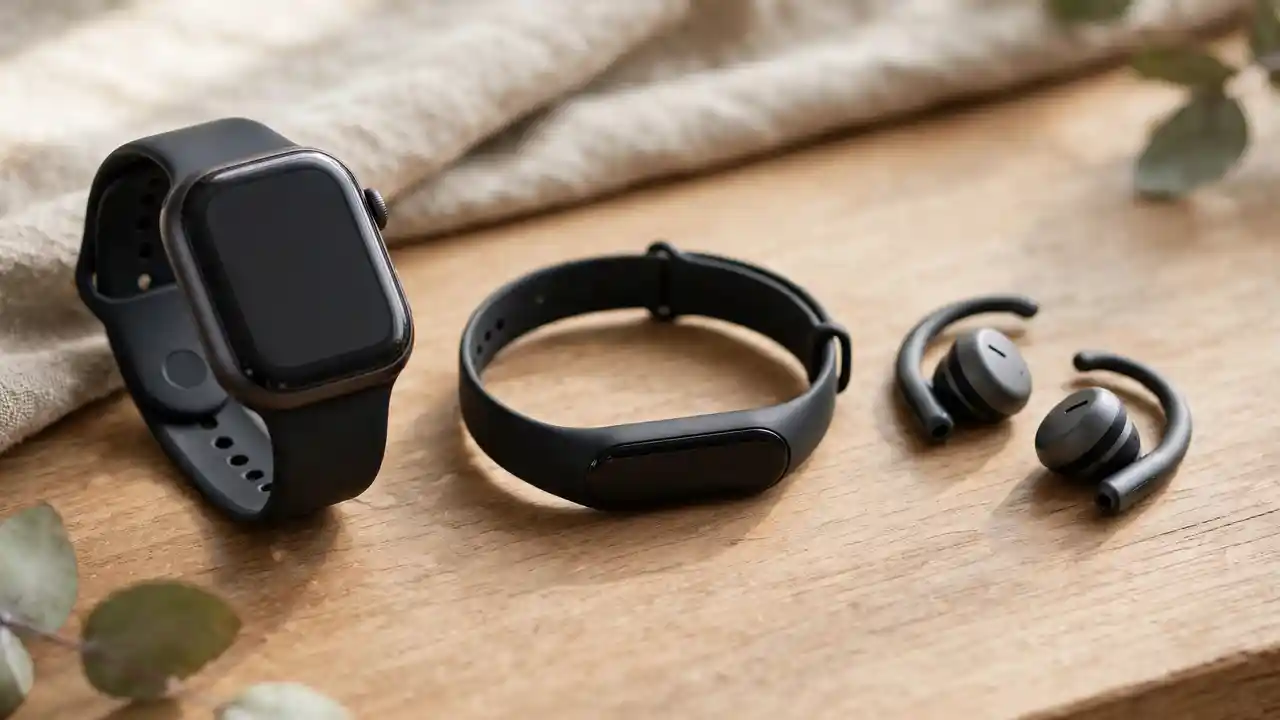
The Paris event covered more than phones. Xiaomi also launched the Watch S5 41mm, the Smart Band 11 NFC, the Xiaomi Clip earbuds and four Mijia smart home appliances for global markets. The Watch S5 41mm has a 1.32 inch AMOLED screen, up to 14 days of battery life and more than 150 sports modes.
It runs HyperOS 4 and supports tap to pay through built-in NFC, including Google Pay. The Watch S5 41mm screen reaches 3,000 nits of brightness and the watch has 5 ATM water resistance. The Smart Band 11 NFC has a 1.72 inch AMOLED display. Xiaomi lists up to 21 days of battery life in light use, 10 days in normal use and 6 days with the always-on display on. The Xiaomi Clip is the brand’s first clip-on, open-ear earbuds, with 11mm drivers and up to 38 hours of playback with the charging case.
The Mijia range includes the Refrigerator Pro Multi-Door 546L, the Tri-Drum Washer Dryer Pro 12kg, the Robot Vacuum 6 Max and the Vacuum Cleaner 4 Max. Global pricing for the wearables and appliances was not part of the launch figures reported so far.
Who should buy the Xiaomi 18 Pro series
The 18 Pro fits buyers who want a smaller flagship with a second screen and strong cameras. Its 6.4 inch display and 72mm width suit one-handed use, and its chip and cameras match the larger model in most areas. The 18 Pro Max fits buyers who want the bigger 6.9 inch screen, the faster Extreme chip and the larger battery.
The price gap is 200 euros at the entry level. Buyers should weigh three points before ordering. The global batteries are smaller than the China versions, and no independent battery test had been published at launch. The privacy display looked weak in an early hands-on, so it should be treated as a bonus rather than a guarantee. The phones are not sold in the United States, so US buyers face import costs. For camera comparisons, see the Pixel 10 series changes and the iPhone 17 series changes. (Internal links: Pixel 10 series changes https://technewsnest.com/google-pixel-10-series-what-changed/ ; iPhone 17 series changes https://technewsnest.com/iphone-17-series-what-changed/)

Xiaomi 18 Pro vs 18 Pro Max at a glance
| Feature | Xiaomi 18 Pro | Xiaomi 18 Pro Max |
|---|---|---|
| Main display | 6.4 inch, 1120 by 2436 | 6.9 inch, 2624 by 1208 |
| Rear display | 2.7 inch | 2.9 inch |
| Main camera | 200MP, Light Fusion 960 | 200MP, Light Fusion 960L with LOFIC |
| Telephoto camera | 200MP periscope, 3.2x | 200MP periscope, 3.2x |
| Ultrawide camera | 50MP, 102 degrees | 50MP, 102 degrees |
| Chip | Snapdragon 8 Elite Gen 6 | Snapdragon 8 Elite Extreme Gen 6 |
| Battery (global) | 6,000mAh, 90W wired | 7,050mAh, 100W wired |
| Wireless charging | 50W | 50W |
| Software | HyperOS 4, Android 17 | HyperOS 4, Android 17 |
| Starting price | 1,399 euros | 1,599 euros |
Six checks before you pay 1,399 euros for the Xiaomi 18 Pro
The Xiaomi 18 Pro starts at 1,399 euros, but the price is only the first check. The global battery is smaller than the China version, the privacy display looked weak in an early hands-on, and the phone is not sold in the United States. Check the battery, the privacy screen and the import rules before you order.
| Check | What the sources say | What to do |
|---|---|---|
| Battery | Global 18 Pro has 6,000mAh, down from 7,000mAh in China; Pro Max 7,050mAh, down from 8,500mAh | Expect shorter life than the China reviews show; wait for an independent battery test |
| Privacy display | Notebookcheck called the privacy filter weak in its headline; Xiaomi warns content may stay visible at some angles | Treat it as a bonus, not a guarantee, on a crowded train |
| Camera claim | Pro Max claims up to 16.2 stops of dynamic range; no independent lab had tested it at launch | Judge the camera by the 200MP sensors and the Leica lenses, not the 16.2 figure |
| 200MP mode | 200MP mode and LOFIC HDR cannot be used together on the main camera | Check which mode you will actually use before you buy for the camera |
| AI features | AI features vary by region and carry monthly usage limits; AI Wallpapers arrive from December 2026 | Check which AI features work in your country and what the limits are |
| US buyers | No US launch announced; imported phones may not support every US carrier band | US buyers should check carrier bands and import costs first |
The 200 euro gap to the Pro Max buys a bigger screen, a faster chip and a larger battery, but the camera set is the same on both phones, and the main sensor is the only camera difference. The 18 Pro suits buyers who want the smaller 6.4 inch phone with the rear display and the Leica cameras. Buyers who are unsure should wait for independent battery and camera tests, because the battery is smaller than the China version and the dynamic range figure is untested. Readers weighing another flagship at a high price can read our Motorola Signature 27 guide.
Frequently asked questions
When did the Xiaomi 18 Pro series launch globally?
Xiaomi launched the 18 Pro and 18 Pro Max globally in Paris on 17 November 2026. The event started at 14:00 Central European Time and streamed on YouTube and X. The phones had already launched in China on 23 September 2026. Sales began the same day in Germany, France, Spain and the United Kingdom.
How much does the Xiaomi 18 Pro cost?
The 18 Pro starts at 1,399 euros for 12GB of RAM and 256GB of storage, and the 512GB version costs 1,599 euros. In the United Kingdom it starts at 1,199 pounds. The 18 Pro Max starts at 1,599 euros, or 1,399 pounds in the United Kingdom. A top 16GB and 1TB Pro Max is listed at 2,099 euros.
What is the rear display on the Xiaomi 18 Pro?
The rear display is a second screen on the back of the phone, beside the cameras. It measures 2.7 inches on the 18 Pro and 2.9 inches on the Pro Max. It works as a viewfinder for the rear cameras, shows notifications and boarding passes, and runs live translation, Google Maps, Spotify and YouTube Music.
Are the global batteries smaller than the China versions?
Yes. The global 18 Pro has a 6,000mAh battery against 7,000mAh in China, and the global Pro Max has a 7,050mAh battery against 8,500mAh in China. Charging speeds are unchanged at 90W on the Pro and 100W on the Pro Max, with 50W wireless charging on both. Xiaomi has not explained the smaller global batteries.
Will the Xiaomi 18 Pro launch in the United States?
No launch has been announced for the United States, and launch coverage states the phones are not coming to the US. American buyers would need to import the phones, which may not support every US carrier band.
What is the difference between the 18 Pro and the 18 Pro Max cameras?
Both phones share the same 200MP main camera, 200MP periscope telephoto and 50MP ultrawide setup. The difference is the main sensor: the Pro Max uses the Light Fusion 960L sensor with LOFIC technology, while the Pro uses the standard Light Fusion 960. Xiaomi claims up to 16.2 stops of dynamic range for the Pro Max, but no independent lab had tested that figure at launch.
When will the Xiaomi 18 Pro launch in the Philippines and Indonesia?
The Philippines launch is set for 26 November 2026, with local pricing still to be announced. Xiaomi Indonesia marketing director Andi Renreng said at the Paris event that the series will reach Indonesia in December 2026. Xiaomi has confirmed the 18 Pro for India but has announced no India date or price.