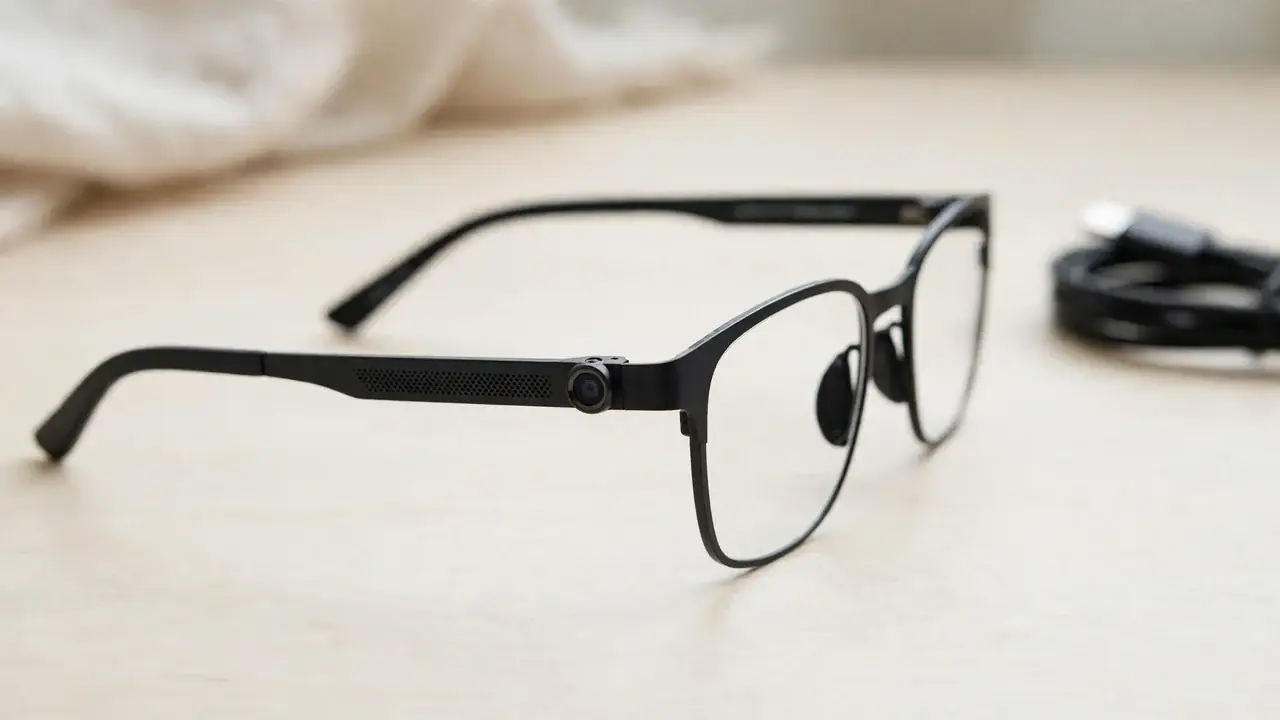
Samsung and Google opened preorders for Intelligent Eyewear on November 12, 2026, and the glasses will go on sale on December 10, 2026, in the United States and South Korea. The product is a pair of display-free audio and camera glasses built by Samsung on the Android XR platform, with Google Gemini built in. It comes in two collections, one from Gentle Monster and one from Warby Parker, with 30 designs in total. Prices start at 395 dollars for Warby Parker frames and run from 449 dollars to 489 dollars for Gentle Monster frames, before prescription lenses. The glasses have no screen. They use voice, touch, a 12MP camera, and open-ear speakers to answer questions, take photos, and give directions.
What Samsung and Google announced
Samsung and Google announced Intelligent Eyewear on November 12, 2026, as display-free audio and camera glasses on Android XR, with Gemini built in, no screen, a 12MP camera, open-ear speakers, and two frame collections from Gentle Monster and Warby Parker.
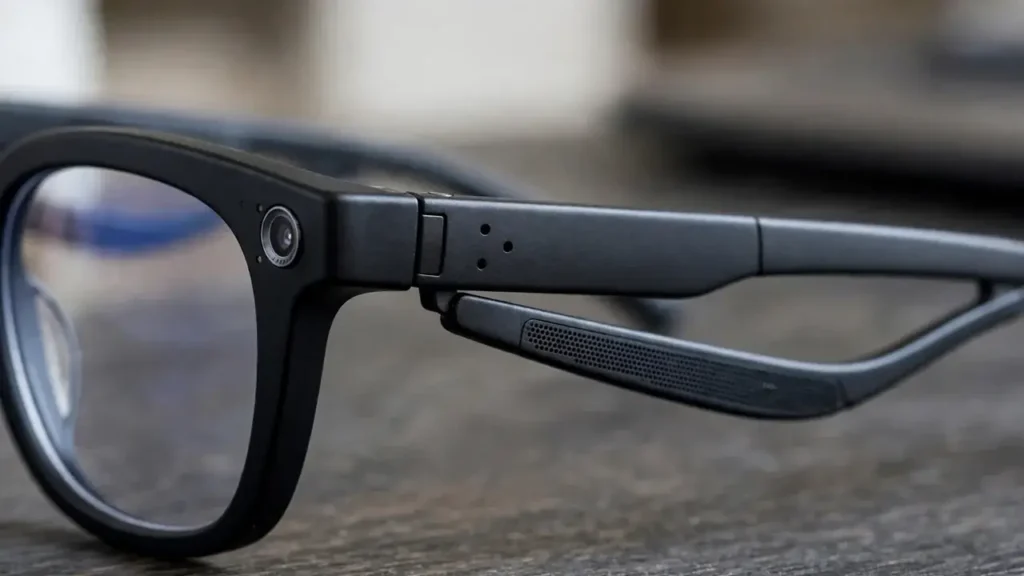
Samsung announced the product through its Global Newsroom on November 12, 2026, in a post titled “Samsung Announces December Release for Intelligent Eyewear, Bringing a Smarter Way to See the World.” Google published a companion post the same day about privacy protections for intelligent eyewear. Samsung covers price, frames, and uses; Google covers camera, microphone, and Gemini handling.
The glasses do not show images in front of the eye. They listen, look through a camera when asked, and speak back through open-ear speakers. A wearer can ask Gemini about a landmark, an object, a menu, or a whiteboard, hear notifications aloud, get turn-by-turn directions, and take calls without holding a phone. Split computing offloads part of the processing to the connected phone. Google gave a first look at Google I/O in May 2026, and Samsung showed the glasses at Galaxy Unpacked in London on July 22, 2026. XREAL AURA, the first wired Android XR glasses, launched on October 28, 2026, from 1,099 dollars. The main rival with a display is Meta Ray-Ban Display glasses, while the Ray-Ban Meta Gen 3 costs 449 dollars. See Meta Ray-Ban Display glasses.
Price and preorder details
Preorders for Samsung Google Intelligent Eyewear began on November 12, 2026, with Warby Parker frames from 395 dollars and Gentle Monster frames from 449 dollars to 489 dollars, depending on the model, for non-prescription lenses, with prescription lenses costing more.
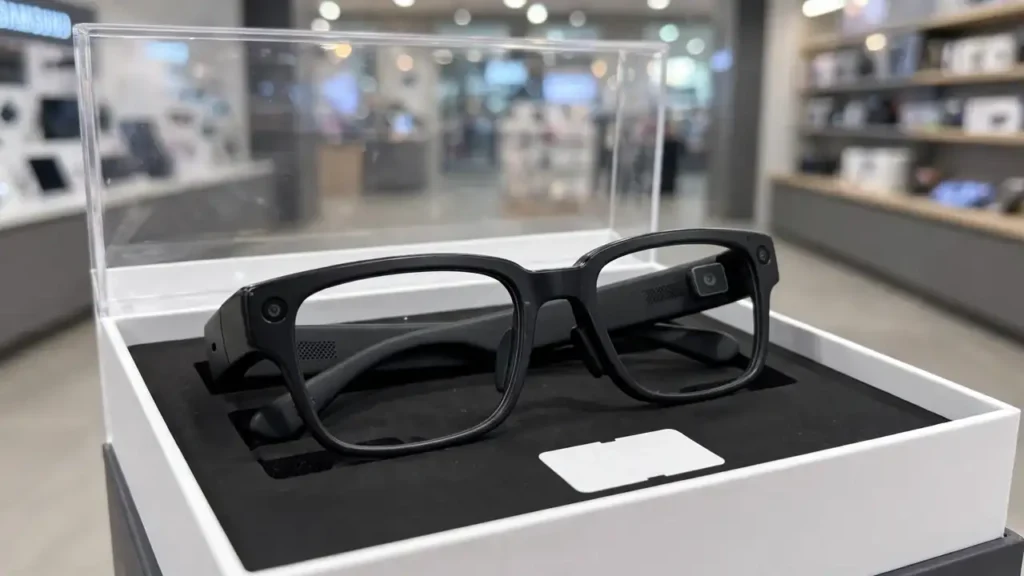
Preorders began on the same day as the announcement, November 12, 2026. That timing matters for buyers who want a pair for the December 10 sale date, because the first stock will go to early orders and to demo stock for stores.
Warby Parker frames start at 395 dollars in the United States. Gentle Monster frames cost from 449 dollars to 489 dollars, depending on the model. Those prices are for non-prescription lenses. Prescription lenses cost more, and the final price will depend on the prescription and the lens options chosen. The two collections share the same core hardware and software, so the price gap reflects frame design, materials, and brand, not a different processor, camera, or battery. At 395 dollars and above, the glasses sit in the same price band as premium sunglasses and as the Ray-Ban Meta Gen 3 at 449 dollars, but without a display.
Release date and where to buy
Samsung Google Intelligent Eyewear goes on general sale on December 10, 2026, in the United States and South Korea, after preorders that began on November 12, 2026, with both collections in the United States and Gentle Monster also in Korea.
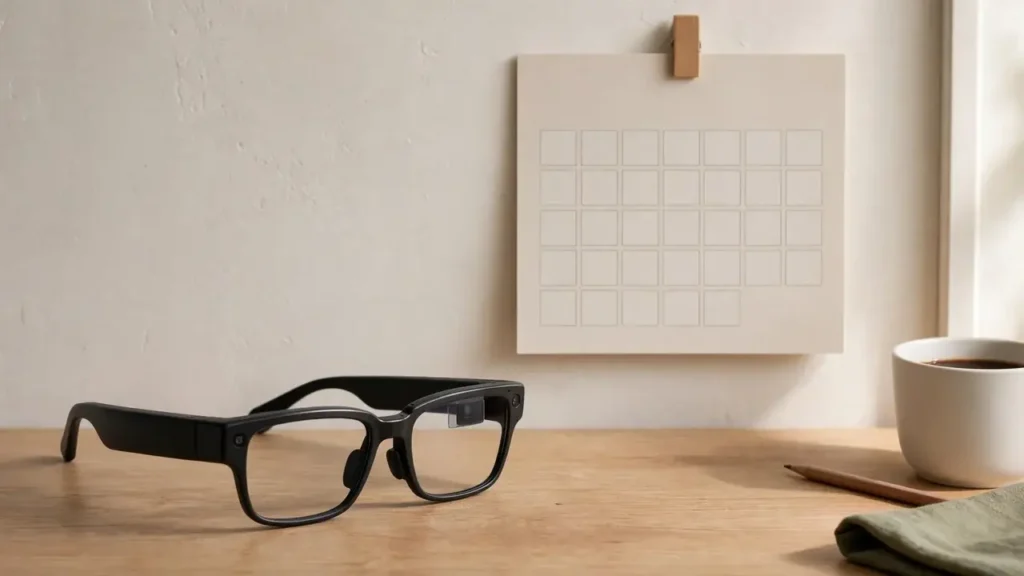
General availability is December 10, 2026, in the United States and South Korea. Preorders began on November 12, 2026, almost a month earlier. The gap gives Samsung, Gentle Monster, and Warby Parker time to take orders, prepare prescription lenses where needed, and place demo pairs in stores. It also gives buyers time to check phone compatibility and age rules before they pay.
Both collections launch in the United States. Gentle Monster also launches in Korea. Samsung did not list other launch countries in the facts used here, so buyers outside the United States and South Korea should not assume the glasses will be on sale in their country on December 10. The glasses work only with Google accounts from the United States and South Korea at launch. Demos will be at select Samsung retail locations from December 10, and at more than 360 Warby Parker stores. Warby Parker sells eyewear in stores and online at https://www.warbyparker.com/, and Gentle Monster is at https://www.gentlemonster.com/. Use the official listings for current stock.
Design and frames
Samsung Google Intelligent Eyewear comes in 30 designs in total, with 16 Gentle Monster variations in six frame styles and 14 Warby Parker variations in three frame designs named Alden, Reid, and Wren, in optical and sun versions for everyday use.
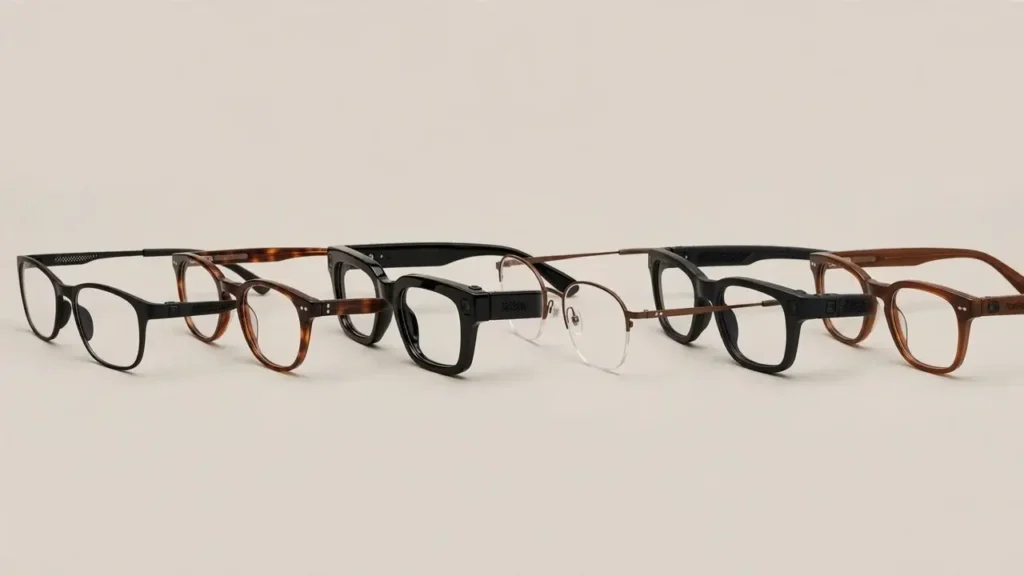
The design choice is the most visible difference between the two collections. Gentle Monster offers 16 variations across six frame styles. Warby Parker offers 14 variations across three frame designs, named Alden, Reid, and Wren, in optical and sun versions. Optical versions are clear lens frames for everyday wear and for prescription lenses. Sun versions are sunglasses. That split lets buyers choose the same frame shape in a clear or sun form.
Weight is close to a normal pair of glasses. Samsung lists the weight as about 41 grams. The full range is 39.6 grams to 43.9 grams for Gentle Monster frames and 40.4 grams to 42.6 grams for Warby Parker frames, with standard lenses included. The Gentle Monster case weighs 194.5 grams, and the Warby Parker case weighs 166.8 grams. The glasses are rated IPX4 for water resistance, for the glasses only, which covers splashes, not submersion. The frames hold the camera, speakers, microphones, battery, and touch controls, but Samsung presents them as eyewear first.
Gemini features and what the glasses can do
Gemini is built into Samsung Google Intelligent Eyewear, so wearers can ask about what they see, capture and summarize a whiteboard, translate a menu, get Google Maps directions, hear summarized notifications, and make hands-free calls and messages by voice each day.

Gemini is the assistant at the center of the product. The glasses have no display, so answers come by voice through the open-ear speakers. A wearer can ask Gemini about a landmark or an object in view, then ask follow-up questions without starting over. That use fits travel, a museum visit, or a walk in a new city. Readers who follow Gemini updates can read more in Google Gemini 3.
In a meeting, the wearer can capture a whiteboard, ask Gemini to summarize the takeaways, and save them to Samsung Notes. The same idea applies to a restaurant menu, which Gemini can translate. The glasses give turn-by-turn directions from Google Maps by voice. Notifications are prioritized, grouped, and summarized by context, then read aloud, with voice replies. Hands-free calls and messages work through the microphones and speakers. Gemini Live is also available, and Guided Vision gives audio descriptions for people who are blind or have low vision. Bixby works only with Galaxy phones, so a Pixel or iPhone user will use Gemini.
Hardware and specifications
Samsung Google Intelligent Eyewear uses the Snapdragon AR1 Gen 1 Platform, a 12MP HDR camera, 2GB of memory with 64GB of storage, two open-ear speakers, four microphones, Wi-Fi 6E, Bluetooth 5.4, touch and voice controls, and IPX4 water resistance for the glasses only.
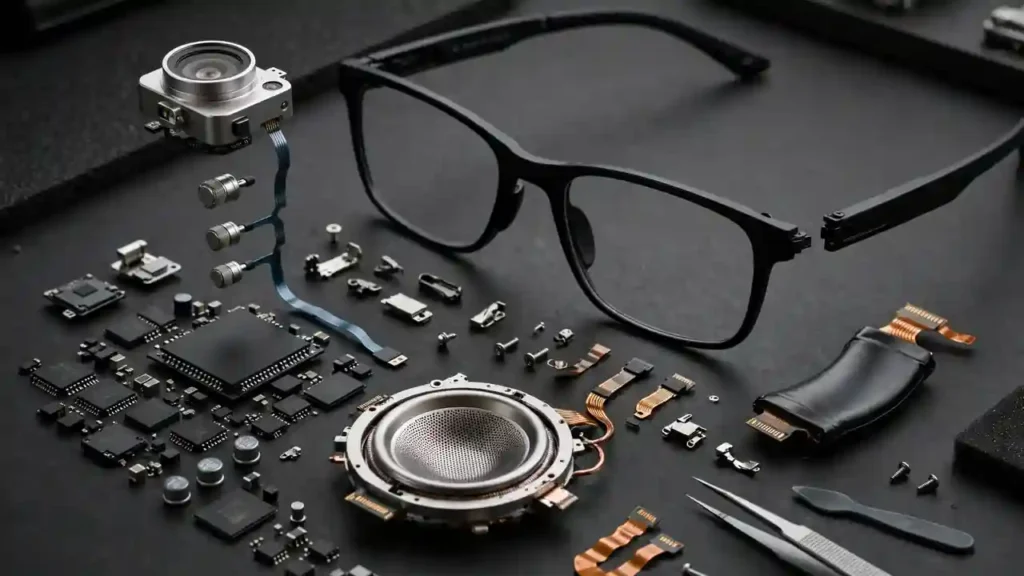
The processor is the Snapdragon AR1 Gen 1 Platform. It handles on-glasses work, while split computing offloads part of the processing to the connected phone. That split is why the glasses can stay near 41 grams and still run Gemini tasks. The phone does the heavier work, and the glasses handle capture, audio, and quick local tasks. The glasses are not a standalone computer. They need a compatible phone nearby to work as described.
The camera is 12MP with HDR. Photos are 3024 by 4032 pixels. Video is 3K at 30 frames per second, or 2K recording with HDR up to 2K. Audio uses two open-ear speakers and four microphones. Open-ear speakers sit near the ear without blocking it, so the wearer can hear Gemini, directions, and calls while still hearing traffic or a meeting room. Memory is 2GB, with 64GB of storage. Wi-Fi 6E and Bluetooth 5.4 connect the glasses to the phone and to networks. Controls are touch and voice, with no display.
Battery life and charging
Samsung rates Samsung Google Intelligent Eyewear at up to 9 hours on one charge, and up to 72 hours with a fully charged case, so a day of normal use fits on one charge and the case extends total use across several days.
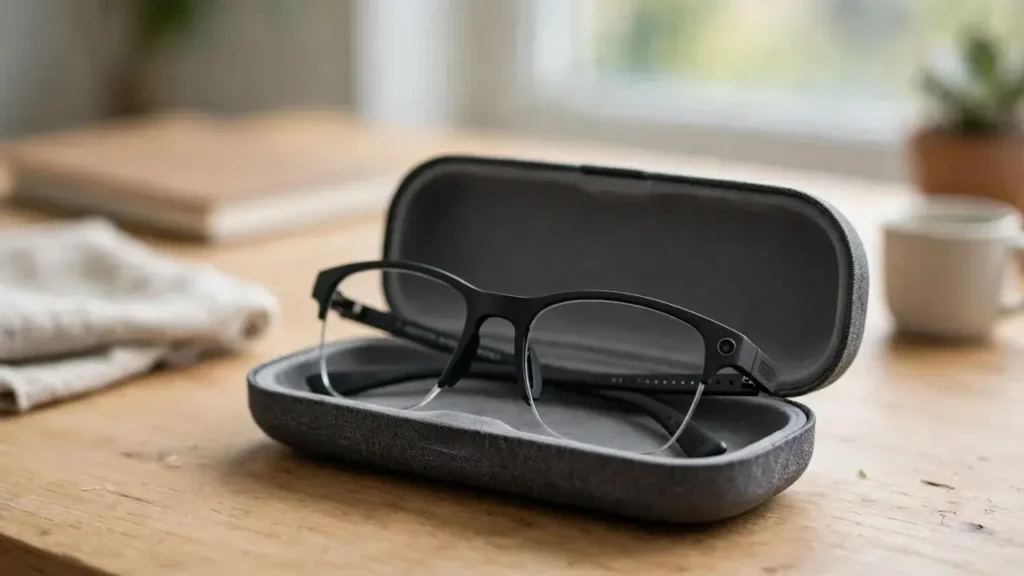
Battery life is stated as up to 9 hours on one charge. Total use rises to up to 72 hours with a fully charged case. The words up to matter in both figures. Real battery life will depend on how often the camera runs, how long Gemini Live runs, how loud the speakers are, and how often the phone link stays active. A day of light use, with short questions, a few photos, and directions, will last longer than a day of constant video and voice.
The case is both storage and charger. It protects the glasses and tops up the battery between uses. The Gentle Monster case weighs 194.5 grams, and the Warby Parker case weighs 166.8 grams, separate from the glasses weight of about 41 grams. The case recharges the glasses more than once. Put the glasses back in the case when they are not needed, so they recharge between uses. The glasses are meant for short tasks through the day, not for continuous video recording.
Phone compatibility
Samsung Google Intelligent Eyewear works with Galaxy S, Galaxy S FE, Galaxy Z Fold, Flip and Fold Ultra phones on One UI 9.0 or higher, Pixel 7 and later on Android 17 or later, and iPhone 13 and later with at least 6GB of RAM on iOS 26.6 or later.
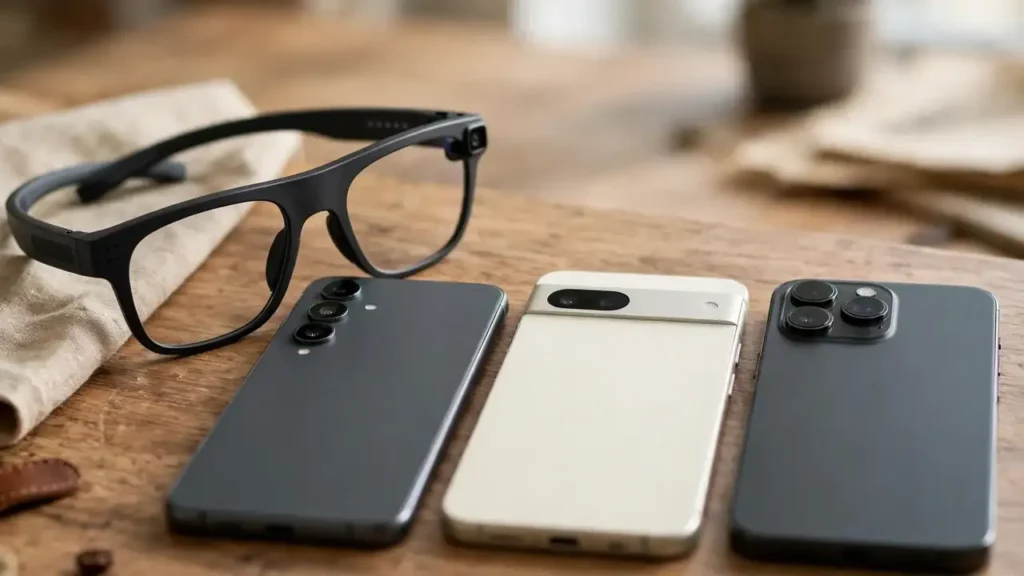
Phone support is broad, but it has clear limits. Samsung lists three groups. The first is Galaxy phones: Galaxy S, Galaxy S FE, Galaxy Z Fold, Flip, and Fold Ultra series running One UI 9.0 or higher. The second is Google Pixel: Pixel 7 series and later running the Android 17 September 2026 update or later. The third is iPhone: iPhone 13 and later with at least 6GB of RAM running iOS 26.6 or later. See Samsung Galaxy Z Fold 7 and Google Pixel 10 series.
The software version matters as much as the model name. A Galaxy phone on an older One UI version will not meet the One UI 9.0 or higher rule. A Pixel 7 on an older Android build will not meet the Android 17 September 2026 update rule. An iPhone 13 with less than 6GB of RAM will not meet the memory rule, even if it runs iOS 26.6 or later. Background is in Samsung One UI 8. Users must be 18 or older, with age verification, and the glasses work only with Google accounts from the United States and South Korea at launch.
Privacy and safety protections
Samsung and Google built privacy into Samsung Google Intelligent Eyewear with a visible camera LED, a wearer light and sound, a camera block if the LED is covered or fails, filtered voices in Gemini Live, and automatic face redaction before Gemini answers about a scene.
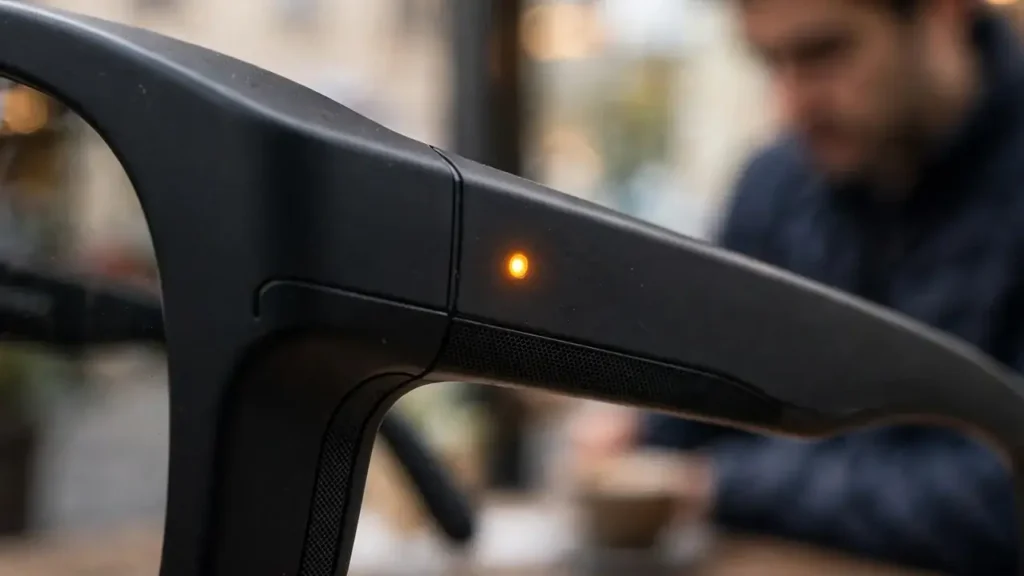
Privacy is a core part of the announcement. Samsung and Google published separate details on November 12, 2026, and the two posts agree on the same protections. The most visible one is the LED. An external LED shows when the camera is active. The wearer also gets an inner light and a sound when the camera runs. That pair of signals tells both the wearer and the people nearby that capture is happening. Camera capture is disabled if the external LED is covered or not working, which prevents silent recording when the indicator cannot be seen.
Open-ear speakers also limit sound leakage, so answers stay close to the wearer. In Gemini Live, surrounding voices are filtered to protect bystander privacy. Visuals collected by Gemini are not used for AI model training or ad targeting. Bystander faces are redacted automatically before Gemini answers about what the wearer sees. Camera visuals are not saved in Gemini History. Private AI Compute for glasses is coming soon, according to Google. The source for the privacy details is the Google blog post “Privacy protections for intelligent eyewear” at https://blog.google/innovation-and-ai/technology/safety-security/intelligent-eyewear-privacy-protections/, and the Samsung post at https://news.samsung.com/global/samsung-announces-december-release-for-intelligent-eyewear-bringing-a-smarter-way-to-see-the-world/.
Frequently asked questions
Samsung Google Intelligent Eyewear costs from 395 dollars, goes on sale December 10, 2026, has no display, works with Gemini, and needs a compatible Galaxy, Pixel, or iPhone, with users aged 18 or older and a United States or South Korea Google account at launch.

When do preorders start for Samsung Google Intelligent Eyewear?
Preorders began on November 12, 2026, the day Samsung and Google announced the glasses. Sales start December 10, 2026, in the United States and South Korea.
How much does Samsung Google Intelligent Eyewear cost?
Warby Parker frames start at 395 dollars in the United States. Gentle Monster frames cost from 449 dollars to 489 dollars, depending on the model. Those prices cover non-prescription lenses; prescription lenses cost more.
Does Samsung Google Intelligent Eyewear have a display?
No. They are display-free audio and camera glasses on Android XR, with Gemini built in, a 12MP camera, open-ear speakers, and voice and touch controls.
Which phones work with Samsung Google Intelligent Eyewear?
Galaxy S, Galaxy S FE, Galaxy Z Fold, Flip, and Fold Ultra phones on One UI 9.0 or higher; Pixel 7 series and later on Android 17 or later; and iPhone 13 and later with at least 6GB of RAM on iOS 26.6 or later.
How long does the battery last?
Samsung rates the glasses at up to 9 hours on one charge, and up to 72 hours with a fully charged case. Real use will vary with camera use, Gemini Live, volume, and the phone link.
What privacy protections are included?
An LED shows when the camera is active, capture stops if the LED is covered or fails, bystander faces are redacted before Gemini answers, and visuals are not used for training or ads, or saved in Gemini History.
Where can I try Samsung Google Intelligent Eyewear before buying?
Demos start at select Samsung retail locations from December 10, 2026, and at more than 360 Warby Parker stores.