Apple introduced three new watches on September 9, 2025: Apple Watch Series 11, Apple Watch Ultra 3 and Apple Watch SE 3. All three reached stores on Friday, September 19, 2025, and all three run watchOS 26. Prices start at 399 dollars for Series 11, 799 dollars for Ultra 3 and 249 dollars for SE 3. The shared changes are hypertension notifications, sleep score and 5G, while Ultra 3 adds satellite connectivity. This guide explains what changed on each model and what to check before you buy.
Apple Watch Series 11, Ultra 3 and SE 3 at a glance: what changed
Apple announced all three watches on September 9, 2025, available from September 19, 2025. Series 11 adds hypertension notifications, sleep score, 5G and up to 24 hours of battery. Ultra 3 adds satellite SOS, the largest Apple Watch display and up to 42 hours of battery. SE 3 adds the S10 chip, an Always-On display and fast charging.
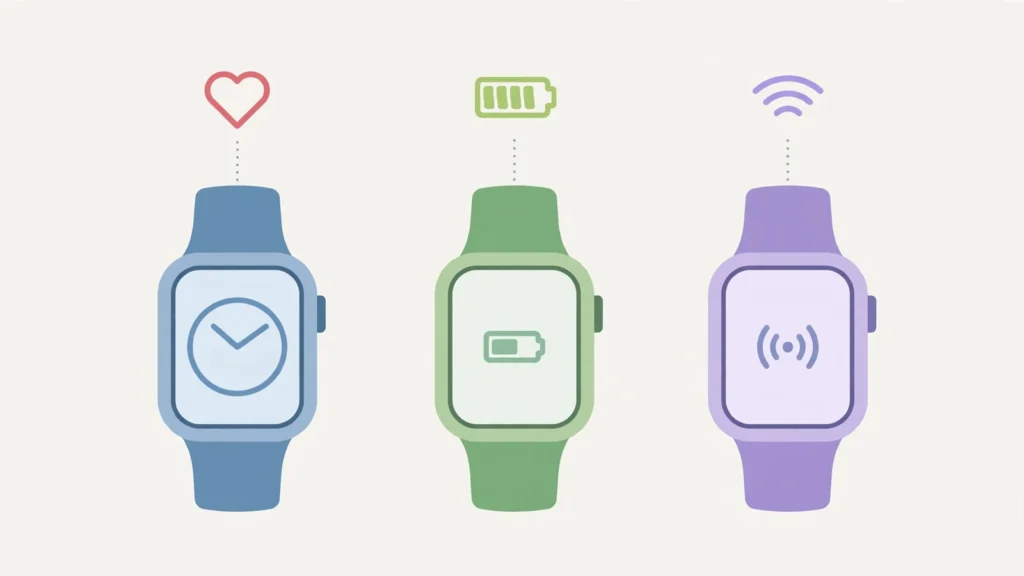
The three models cover three different buyers, and Apple kept the prices at the same starting points as the models they replace. Series 11 is the standard watch for most people. Ultra 3 is the large titanium watch for outdoor sport and long trips away from a charger. SE 3 is the lower priced watch for a first Apple Watch or for kids. Apple announced all three models at its September event.
Two headline health features are not limited to the new hardware. Hypertension notifications and sleep score also come to Series 9 and later, and Ultra 2 and later, through watchOS 26, according to Apple. All three watches need an iPhone 11 or later running iOS 26 for watchOS 26, according to Apple.
Prices, sizes and release date
Apple Watch Series 11 starts at 399 dollars, Apple Watch Ultra 3 starts at 799 dollars, and Apple Watch SE 3 starts at 249 dollars in the United States. All three were announced on September 9, 2025, and available from Friday, September 19, 2025. Preorders opened on announcement day, and watchOS 26 arrived on September 15, 2025.
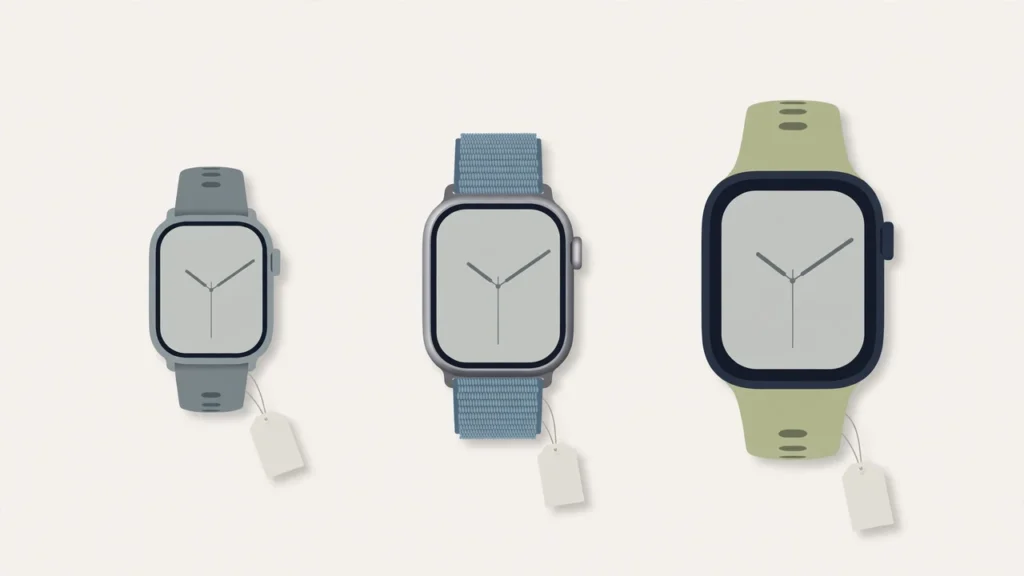
Series 11 comes in 42mm and 46mm sizes. The 42mm GPS model starts at 399 dollars and the 46mm GPS model starts at 429 dollars, with cellular models costing 100 dollars more, according to GSMArena. Aluminum cases come in jet black, silver, rose gold and a new space gray. Polished titanium cases come in natural, gold and slate. Ultra 3 comes in one 49mm titanium case, in natural or black titanium, starting at 799 dollars with GPS and cellular included, according to Apple. SE 3 comes in 40mm and 44mm sizes in midnight and starlight aluminum, starting at 249 dollars, according to TechCrunch.
Prices vary by region, size and cellular option, so check the current Apple Store price before you buy.
Hypertension notifications and sleep score
Hypertension notifications use the optical heart sensor to look for signs of chronic high blood pressure over 30-day periods. Sleep score rates the quality of each night from duration, bedtime consistency, wakeups and time in each sleep stage. Both features arrive with watchOS 26, and both also reach Series 9 and later and Ultra 2 and later.
Hypertension notifications work passively in the background. The optical heart sensor records how blood vessels respond to each heartbeat, and the algorithm reviews that data over 30-day periods. Apple says training data came from studies covering more than 100,000 participants, and the feature is expected to notify more than 1 million people with undiagnosed hypertension in the first year, according to Apple.
The watch does not measure blood pressure, and it will not catch every case. If you get a notification, Apple recommends logging blood pressure for seven days with a cuff and sharing the results with your provider. Apple said at launch that clearance was expected soon, with availability in more than 150 countries and regions. The feature is not intended for people under 22, people already diagnosed with hypertension, or use during pregnancy. Sleep score turns sleep data into one number and a plain breakdown, using heart rate, wrist temperature, blood oxygen, duration, bedtime consistency, wakeups and time in each sleep stage. Apple says the scoring method follows guidance from the American Academy of Sleep Medicine, the National Sleep Foundation and the World Sleep Society, and it was tested with more than 5 million nights of sleep data.
Battery life and charging across the three models
Series 11 is rated for up to 24 hours of battery life, Ultra 3 for up to 42 hours, and SE 3 for up to 18 hours. All three support fast charging. Ultra 3 reaches up to 72 hours in Low Power Mode, and a 15 minute charge gives Ultra 3 up to 12 hours of use.
Series 11 moves from 18 hours on Series 10 to up to 24 hours, which is the change that matters most for sleep tracking, because the watch can now last a full day and still have charge left overnight. A 15 minute charge gives up to eight hours of battery life, according to Apple. Battery life varies with use, so heavy GPS workouts and cellular calls will shorten it.
Ultra 3 moves from 36 hours on Ultra 2 to up to 42 hours for daily use, and up to 72 hours in Low Power Mode, according to Apple. For continuous outdoor workout tracking, Apple rates it at 20 hours in Low Power Mode with full GPS and heart rate readings. A 15 minute charge gives up to 12 hours of battery life. SE 3 keeps an 18-hour rating, but it adds fast charging for the first time: 15 minutes adds up to eight hours of battery and about 80 percent is reached in 45 minutes, according to Apple.
5G cellular and the redesigned antenna
All three new watches are the first Apple Watches with 5G cellular. Series 11, Ultra 3 and SE 3 offer 5G on cellular models, with faster downloads and wider coverage than the LTE models they replace. Series 11 also gets a redesigned cellular antenna that uses two system antennas at once in weak coverage areas.
5G on a watch is about downloads and coverage, not streaming video on a small screen. Music, podcasts and apps download faster on a cellular model, and the watch stays connected when the iPhone is not nearby. With a cellular plan, the watch can take calls, send messages and reach emergency services without the phone, according to Apple. A wireless service plan is required, and 5G is available in select markets and through select carriers.
Apple says the new 5G modem is more power efficient and uses less battery for cellular than the LTE modem it replaces, according to Apple. On Series 11, Apple also redesigned the cellular antenna to cover more bands and to engage both system antennas at the same time when needed, which Apple says increases signal strength in areas with weak coverage. The GPS-only models cost less and skip the monthly plan, and they still get calls and messages through the paired iPhone.
Apple Watch Ultra 3 and satellite connectivity
Apple Watch Ultra 3 is the first Apple Watch with satellite connectivity. It can send Emergency SOS via satellite, send Messages via satellite, and share a location with Find My via satellite when cellular and Wi-Fi are not available. Satellite SOS and messages work off the grid, where a normal watch would have no connection.
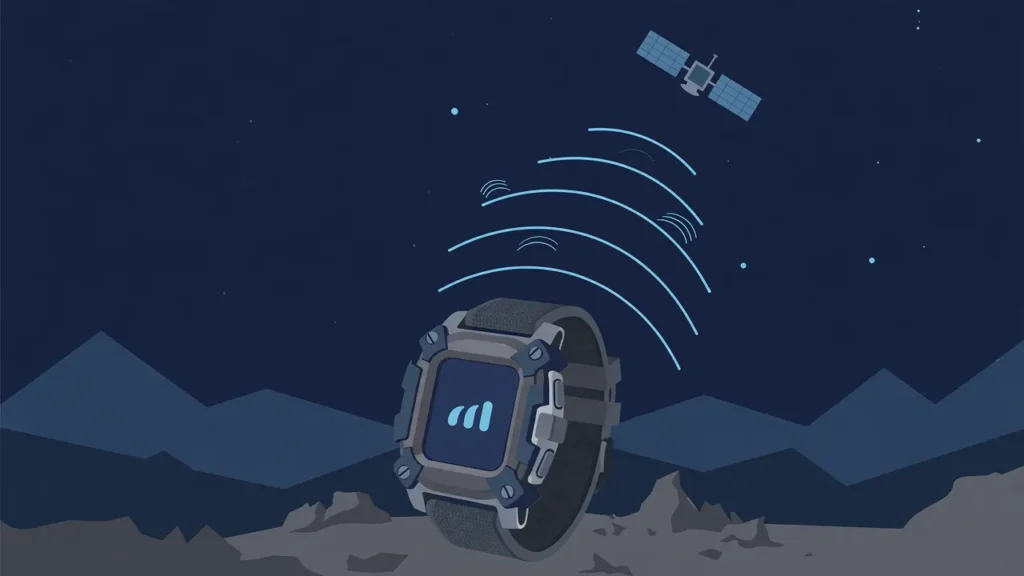
Satellite connectivity is the one feature no other Apple Watch offers. Emergency SOS via satellite lets the wearer text emergency services and notify emergency contacts with a few taps, according to Apple. Messages via satellite sends texts, emoji and Tapbacks to friends and family, including anyone the wearer has been in touch with over the last 30 days, and Apple says those messages stay end-to-end encrypted. Find My via satellite can send a location once every 15 minutes to contacts already added to Find My.
Ultra 3 pairs satellite with dual-frequency GPS, which Apple calls the most accurate GPS in a sports watch. Runners get a customizable Action button, plus vertical oscillation, ground contact time, stride length and automatic track running detection. Cyclists can connect a Bluetooth power meter and see cadence and Power Zones. Swimmers get automatic stroke detection, lap count and a SWOLF score. Hikers get offline maps with turn-by-turn directions, Waypoints and Backtrack in the Compass app. Divers can use the Oceanic+ app as a dive computer for recreational scuba diving to 40 meters, according to Apple.
Displays, glass and durability
Series 11 keeps its Always-On Retina display with wide-angle OLEDs and LTPO3, with up to 2000 nits peak brightness. Its Ion-X glass is 2x more scratch resistant than Series 10. Ultra 3 has the largest Apple Watch display ever, with borders 24 percent thinner. SE 3 has cover glass 4x more resistant to cracks than SE 2.
Series 11 uses an S10 chip and 64GB of storage, and its Always-On Retina display uses wide-angle OLEDs and LTPO3, with up to 2000 nits peak brightness and 326 pixels per inch, according to Apple. Aluminum models get Ion-X glass with a ceramic coating that Apple says gives 2x more scratch resistance than Series 10, while titanium models keep a sapphire front crystal, according to Apple.
Ultra 3 uses LTPO3 and wide-angle OLEDs to make the largest screen of any Apple Watch, with display borders 24 percent thinner and no change to the case size, according to Apple. The wide-angle OLED sends more light at wider angles, so the screen is brighter when viewed from the side, such as when the wrist is turned during a run. The always-on refresh rate moves from once a minute to once a second, so a ticking seconds hand is visible without raising the wrist. SE 3 keeps a simpler display, but its cover glass is 4x more resistant to cracks than the previous generation, according to Apple.
Apple Watch SE 3: the biggest step up in the lineup
Apple Watch SE 3 is the model that changed most. It moves from the S8 chip in SE 2 to the S10 chip, gains an Always-On display for the first time, adds fast charging for the first time, and adds 5G cellular. It also gains wrist temperature sensing and sleep score at a starting price of 249 dollars.
The S10 chip is what makes the rest possible. It powers the Always-On display, so the time and notifications stay visible without raising the wrist or tapping the screen, according to Apple. The same chip brings double tap and wrist flick gestures, faster on-device Siri that can access and log health data, media playback through the speaker, and Voice Isolation for calls in noisy places.
Health is where SE 3 closes the gap with the standard watch. Wrist temperature sensing feeds richer data into the Vitals app. Retrospective ovulation estimates use wrist temperature data to estimate the likely day of ovulation after it has occurred. Sleep score joins sleep duration, sleep stages and other Vitals data. Core health features carry over, including heart health notifications and Cycle Tracking, plus safety features such as Fall Detection, Crash Detection, Emergency SOS and Check In, according to Apple. SE 3 is also the natural pick for Apple Watch For Your Kids, which gives kids connectivity and safety features without their own iPhone. The gaps against Series 11 are real: no ECG app, no Blood Oxygen app and no hypertension notifications are listed for SE 3.
watchOS 26, Workout Buddy and everyday software
All three watches ship with watchOS 26, which arrived on September 15, 2025, for Apple Watch Series 6 and later, Apple Watch SE 2 and later, and all Apple Watch Ultra models. It brings a Liquid Glass design, two new watch faces, Workout Buddy, a wrist flick gesture, Live Translation in Messages, the Notes app, Hold Assist and Call Screening.
Workout Buddy is the most talked about software change. It uses Apple Intelligence to read workout data and fitness history and to give spoken motivation during a session, based on heart rate, pace, distance, Activity rings and personal milestones, according to Apple. It starts in English across popular workout types, and it needs Bluetooth headphones with an Apple Intelligence-supported iPhone nearby. AirPods Pro 3, launched the same day, add heart rate sensing during workouts, so the two products pair well for training, but any Bluetooth headphones work for Workout Buddy. The Workout app also gets a new layout with Workout Views, custom workouts, Pacer and Race Route.
The rest of watchOS 26 is about small daily tasks. A wrist flick gesture dismisses a notification, stops a timer or silences an alarm with one hand, joining the double tap gesture. Two new watch faces arrive: Flow and Exactograph. Live Translation in Messages translates incoming texts on the wrist when paired with an Apple Intelligence-supported iPhone. The Notes app comes to the watch, Smart Stack hints offer suggestions based on routine and sensor data, and Hold Assist and Call Screening help with phone calls when the iPhone is nearby.
Which Apple Watch should you buy
Buy SE 3 at 249 dollars if price matters most or if this is a first Apple Watch. Buy Series 11 at 399 dollars if you want the full health set, longer battery and 5G in a standard size. Buy Ultra 3 at 799 dollars if you need satellite connectivity, the longest battery and the largest display for outdoor sport.

SE 3 suits a first watch or a kid’s watch. It has the S10 chip, an Always-On display, fast charging, 5G and sleep score for 150 dollars less than Series 11. What it lacks is the ECG app, the Blood Oxygen app and hypertension notifications, so buyers who want those should not buy SE 3 to save money. Series 11 suits most buyers: it has the full health set, up to 24 hours of battery and 5G, in 42mm or 46mm, for 399 dollars. Owners of Series 9, Series 10 or Ultra 2 get hypertension notifications and sleep score from watchOS 26, so they should only upgrade for battery life or 5G.
Ultra 3 suits hikers, trail runners, divers and anyone who spends long stretches without cellular coverage or a charger. It costs twice the Series 11 price, and the extra money buys satellite SOS and messaging, up to 42 hours of battery and the largest display. Before you buy, run four checks. First, confirm your iPhone is an iPhone 11 or later running iOS 26. Second, decide between GPS and cellular, and check that your carrier supports 5G on Apple Watch. Third, try the case size on your wrist. Fourth, confirm the return policy, so you can test battery life and fit in real use.
Frequently asked questions
When were Apple Watch Series 11, Ultra 3 and SE 3 released?
Apple announced all three watches on September 9, 2025, and they were available from Friday, September 19, 2025. Preorders opened on announcement day, and watchOS 26 arrived on September 15, 2025.
How much do Apple Watch Series 11, Ultra 3 and SE 3 cost?
Series 11 starts at 399 dollars, Ultra 3 starts at 799 dollars, and SE 3 starts at 249 dollars in the United States. The 46mm Series 11 starts at 429 dollars, and cellular models cost 100 dollars more than GPS models.
Do hypertension notifications measure blood pressure?
No. The watch uses its optical heart sensor to look for patterns linked to high blood pressure over 30-day periods. It does not give a blood pressure reading. If you get a notification, Apple recommends logging blood pressure for seven days with a cuff and sharing the results with your provider.
Which older watches get hypertension notifications and sleep score?
Both features come with watchOS 26 to Apple Watch Series 9 and later, and Apple Watch Ultra 2 and later. Sleep score also reaches Apple Watch Series 6 and later and Apple Watch SE 2 and later with watchOS 26.
Can Apple Watch Ultra 3 send messages without a cell signal?
Yes. Ultra 3 is the first Apple Watch with satellite connectivity. It can send Emergency SOS via satellite, send Messages via satellite, and share a location with Find My via satellite when cellular and Wi-Fi are not available.
How long does the battery last on each model?
Series 11 is rated for up to 24 hours, Ultra 3 for up to 42 hours and up to 72 hours in Low Power Mode, and SE 3 for up to 18 hours. All three support fast charging, and a 15 minute charge gives Series 11 and SE 3 up to eight hours of use.
Do the new watches need a new iPhone?
watchOS 26 requires an iPhone 11 or later running iOS 26. Older iPhones cannot run the software the new watches ship with, so check your iPhone model before buying.
Sources
- Apple Newsroom, Apple debuts Apple Watch Series 11, featuring groundbreaking health insights: https://www.apple.com/ie/newsroom/2025/09/apple-debuts-apple-watch-series-11-featuring-groundbreaking-health-insights/
- Apple Newsroom, Introducing Apple Watch Ultra 3: https://www.apple.com/ph/newsroom/2025/09/introducing-apple-watch-ultra-3/
- Apple Newsroom, Apple introduces Apple Watch SE 3: https://www.apple.com/in/newsroom/2025/09/apple-introduces-apple-watch-se-3/
- Apple Support, Apple Watch Series 11 tech specs: https://support.apple.com/en-us/125093
- TechCrunch, Apple unveils Apple Watch Series 11, Watch Ultra 3, and Watch SE 3: https://techcrunch.com/2025/09/09/apple-unveils-apple-watch-series-11-watch-ultra-3-and-watch-se-3/
- GSMArena, Apple Watch Series 11, Watch SE 3 and Watch Ultra 3 announced: https://m.gsmarena.com/apple_watch_series_11_watch_se_3_and_watch_ultra_3_announced_-news-69424.php