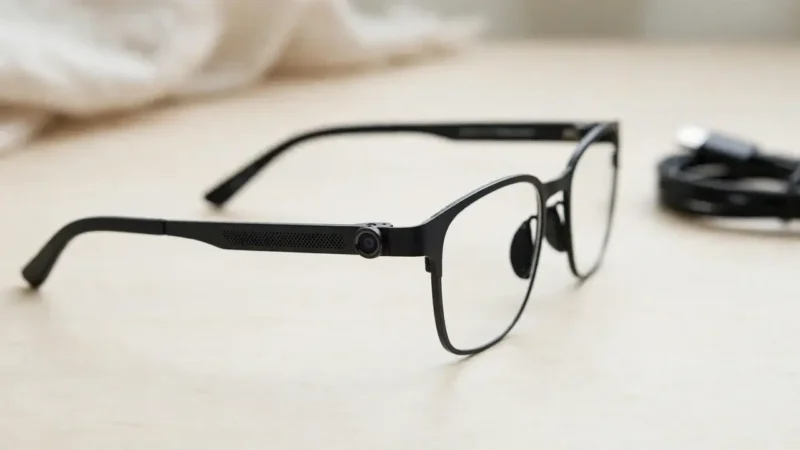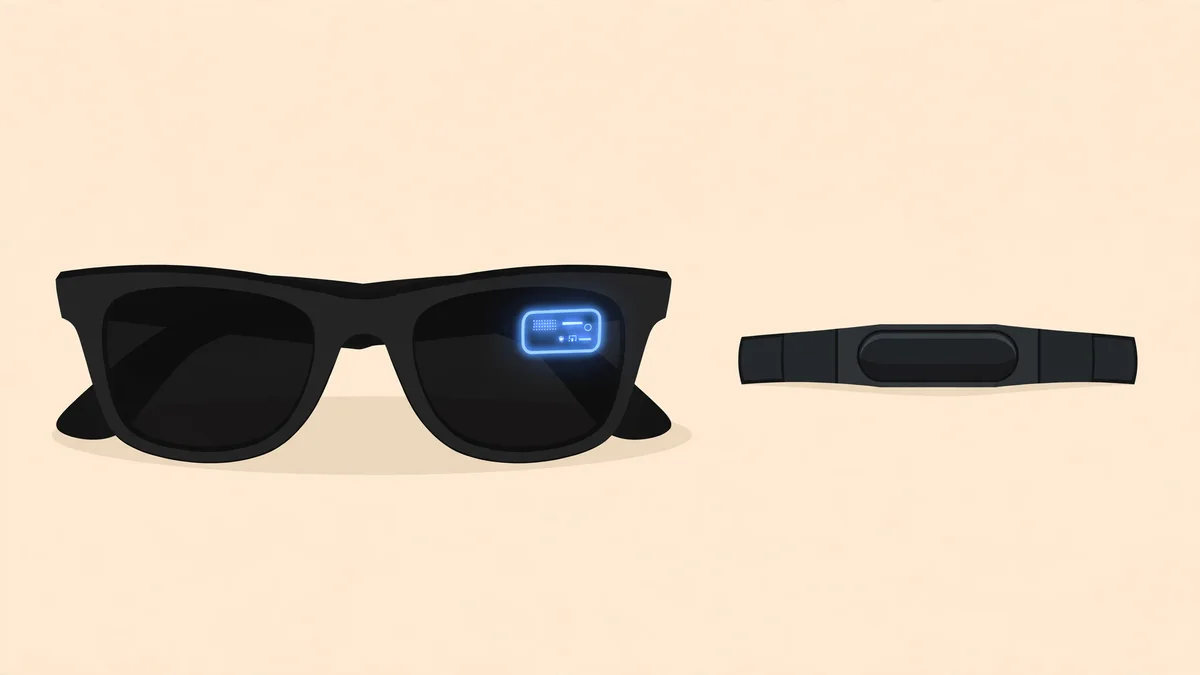
Meta Ray-Ban Display glasses arrived in the United States on September 30, 2025. A small full color display sits in the right lens, and a wristband called Meta Neural Band reads muscle signals in the wrist so the wearer can control that display with small finger movements. Meta announced the glasses on September 17, 2025, at its Connect event, and the price in the United States is $799, with the Neural Band included in the box. This guide explains what changed, how the display and the band work in daily use, and what to check before you buy.
Meta Ray-Ban Display at a glance: what changed
Meta Ray-Ban Display is the first pair of Ray-Ban glasses from Meta with a screen built into a lens. The display sits in the right lens only, the Neural Band comes in the box, and the price is $799. Sales began in the United States on September 30, 2025. It reached the United Kingdom and Canada on September 23, 2026.
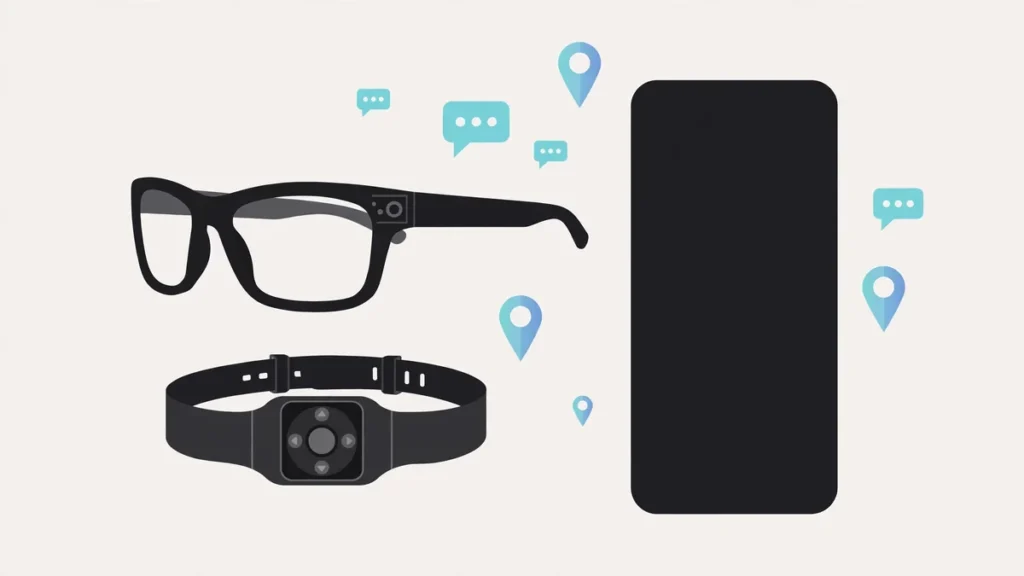
The earlier Ray-Ban Meta glasses had a camera, speakers, microphones and Meta AI, but no screen, so every answer came back as spoken audio. Meta Ray-Ban Display keeps those parts and adds a visual layer. Meta says the display lets the wearer check messages, preview photos, see translations and get help from Meta AI without taking out a phone. It appears when needed and sits off to the side, so it does not block the view straight ahead.
At $799 in the United States, it costs more than twice the $379 starting price of the screen free Ray-Ban Meta Gen 2. Digital Trends The Neural Band is included, so there is no separate controller to buy. Prescription lenses add $200, which brings the total to $999. Meta The glasses were built with EssilorLuxottica, the parent company of Ray-Ban, and they keep the familiar Wayfarer shape.
The in-lens display: what you see and how it works
The display is a small full color screen built into the right lens, with a resolution of 600 by 600 pixels and a field of view of about 20 degrees. It is made for quick glances at messages, directions and photo previews, not to replace a phone screen.
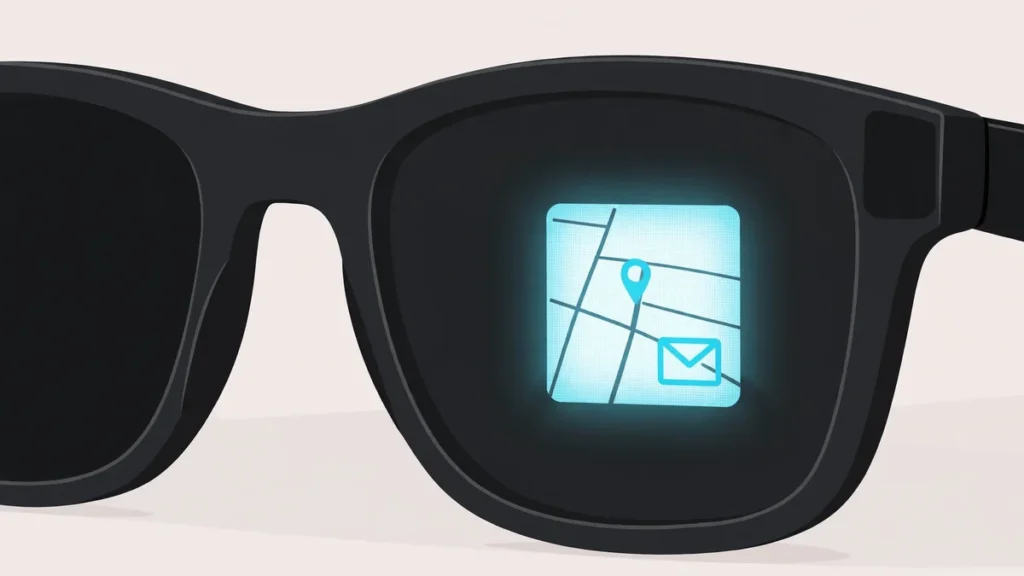
The display is monocular, which means it shows an image to the right eye only. Meta says the screen is placed off to the side, so it does not obstruct the view, and it is not on all the time. The design is built for short interactions. A wearer glances at a message, checks a direction, previews a photo, and then the screen goes away.
Brightness is the number that decides whether a small lens screen works outside. The display reaches up to 5,000 nits at its brightest and drops to 30 nits in dim light. Meta The screen is small and sits off to the side, so people nearby can barely see it. Text, maps and photo thumbnails fit the small square shape, while long articles do not.
Meta Neural Band: how wrist control works
Meta Neural Band is a wristband that reads the small electrical signals muscles make in the wrist, a method called surface electromyography, or sEMG. A pinch selects, a thumb swipe scrolls, and a pinch with a wrist turn changes volume. The band is included with every pair and lasts up to 18 hours per charge.

The Neural Band is the part of the package that makes the display usable without a phone in hand. Meta says the band translates the signals created by muscle activity into commands for the glasses, so the wearer can control the display with subtle hand movements and without touching the glasses or taking out a phone. The gestures are small by design. A pinch selects an item, a swipe of the thumb along the side of the index finger scrolls, and a pinch held while the wrist turns works like a dial for volume or zoom.
Meta built the band on years of research into surface electromyography. In its announcement, Meta says the research involved nearly 200,000 participants, and the band is meant to work right out of the box for nearly anyone. Muscle signals at the wrist can give control to people who cannot produce large movements because of a spinal cord injury, a stroke or another disabling event, and to people who experience tremors or have fewer than five fingers on a hand. Meta has said writing messages with finger movements will come in the near future.
Meta AI with visuals, messages and calls
Meta AI on the Display glasses can show answers, photos and step by step instructions on the lens instead of reading everything aloud. Messages from WhatsApp, Messenger and Instagram appear on the display, and the wearer can take live video calls from WhatsApp and Messenger while showing the other person what the camera sees.

Meta AI is the assistant built into the glasses, and the display changes what it can do. Without a screen, an assistant can only speak. With a screen, it can show. Meta says Meta AI can now show answers and step by step how tos, rather than just reading something back, and the wearer moves through the steps with a quick swipe of the thumb.
Messaging is where the display earns its place in daily use. Meta says the glasses show short texts, WhatsApp messages and Reels that friends share, and the wearer can view text and multimedia messages from WhatsApp, Messenger, Instagram and the phone, hands free, with just a pinch. The message still comes from the phone, and the glasses still need the phone nearby, so the display is a second screen for the phone, not a replacement for it. Meta also says the wearer can take live video calls from WhatsApp and Messenger and show friends and family what the glasses camera sees.
Live captions, translation and navigation
Live captions show the words of a person speaking to the wearer on the lens, and live translation turns speech in select languages into translated text in real time. Walking navigation shows turn by turn directions with a visual map on the display, starting in select cities in beta.

Live captions and translation are the features most likely to change how the glasses feel in conversation. Meta says the display can show captions for speech that is directed at the wearer, or translate select languages in real time, while the wearer stays present in the conversation. The text appears in the lens, so the wearer reads it while still looking at the other person. That helps in a loud room, in a meeting, or when talking with someone who speaks another language.
Translation has limits that buyers should know before they rely on it. Meta says it translates select languages, and the announcement does not publish a full list of supported languages for the Display model. Test the exact language pair you need during the return window, and do not use the glasses for medical or legal conversation without a human interpreter. Walking navigation has a similar limit. Meta says the wearer gets turn by turn walking directions with a visual map on the display, but the service launched for select cities in beta, with more cities to be added over time.
Camera, photos and the viewfinder
The glasses carry a 12 megapixel camera with 3 times digital zoom, and the display works as a live viewfinder so the wearer can frame a photo before taking it. Photos and videos can be previewed on the lens, zoomed, and shared from the glasses.
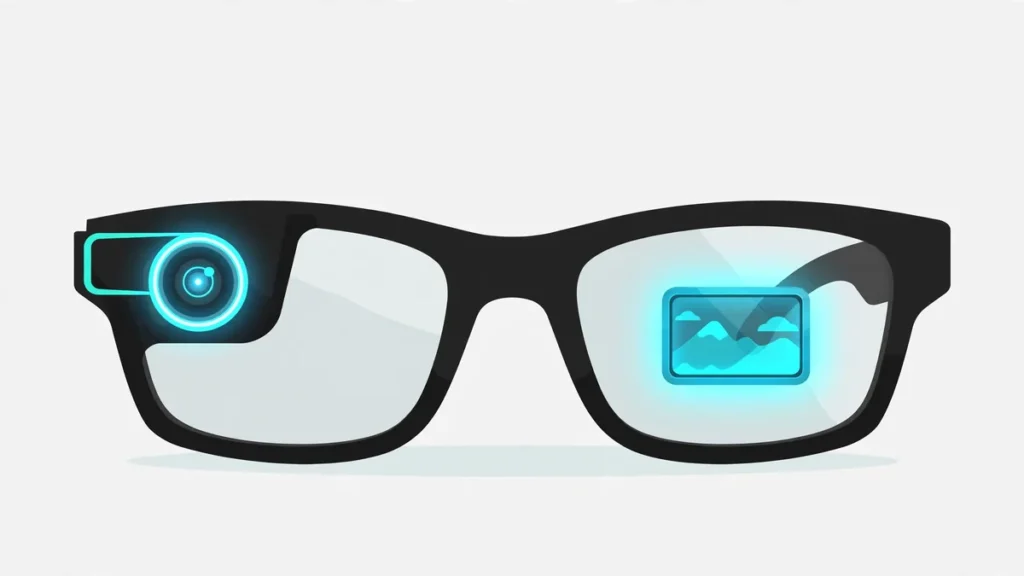
The camera is the part of the glasses that existed before the display, and the display makes it easier to use. Meta says the real time camera viewfinder and zoom help the wearer get the shot right on the first try, and the display makes it easy to select and share favorite photos and videos. Now the frame appears in the lens before the shutter fires. The camera records at 12 megapixels with 3 times digital zoom. Meta
Video and photos are stored on the glasses first. The glasses carry 32 GB of storage. Meta Buyers should know that the Display model is not the camera leader in the Meta line. The separate Ray-Ban Meta Gen 2, which has no display, is the model Meta lists with video up to 3K resolution, while the available Display materials do not clearly confirm 3K recording for this model. Digital Trends
Battery life, charging case and weight
The glasses last up to six hours of mixed use on one charge, and the collapsible charging case adds up to 24 more hours, for up to 30 hours in total. The Neural Band lasts up to 18 hours. The glasses weigh 69 grams in the standard size and 70 grams in the large size.
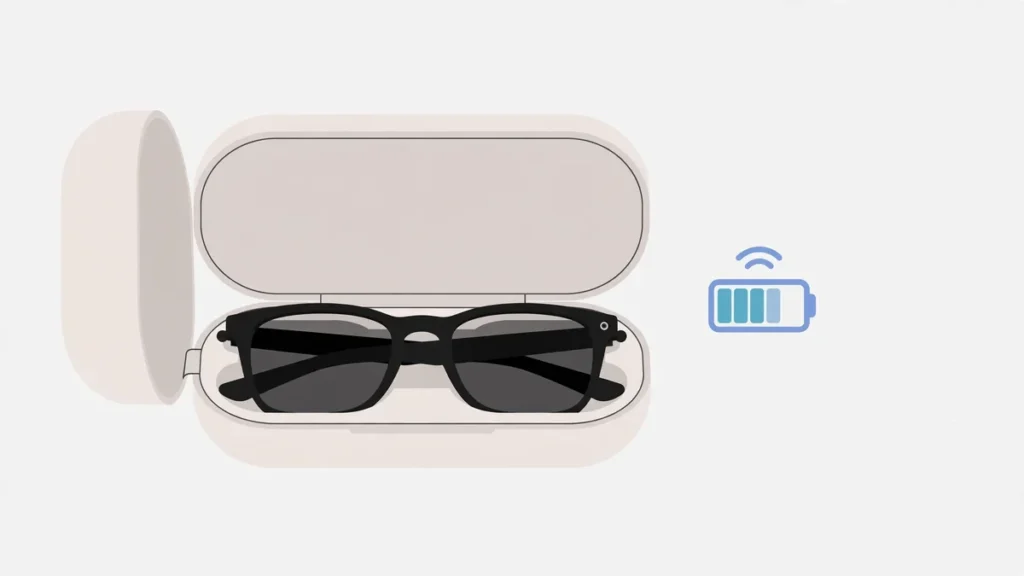
Battery life is the weakest number in the specification list, and Meta states it plainly. Meta says the glasses give up to six hours of mixed use battery life and up to 30 hours of total battery life with the portable and collapsible charging case. Heavy use, such as video calls and live translation, drains the battery faster.
The case is part of the battery plan, not an extra. It charges the glasses between uses. The Neural Band charges separately, and its 18 hour battery outlasts the glasses. Meta Weight is the other daily cost of the display. The glasses weigh 69 grams in the standard size, according to Meta, against about 51 grams for the screen free Ray-Ban Meta Gen 2. Digital Trends
Price, colors, sizes and where to buy
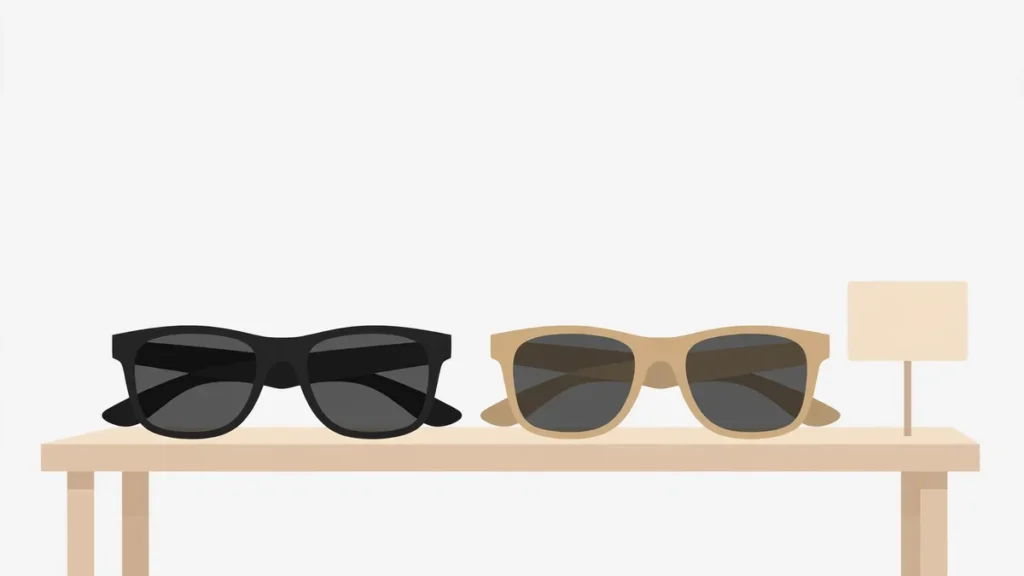
The United States price is $799, including the glasses and the Meta Neural Band, with prescription lenses adding $200 for a $999 total. The glasses come in Black and Sand, in Standard and Large sizes, with Transitions lenses. They first sold in select United States stores, and online ordering opened later.
The price has not moved in the United States since launch. Meta announced the glasses at $799, including both the glasses and Meta Neural Band, and the United States store still lists $799. Meta Prescription lenses add $200, which brings the total to $999 in the United States. Meta The cost covers two devices, the glasses and the band, and the display is the reason for the gap over the $379 Gen 2 model.
Colors and sizes are simple. Meta says the glasses come in two colors, Black and Sand, and the Neural Band comes in three sizes. The glasses come in Standard and Large frame sizes. Meta
Meta Ray-Ban Display compared with Ray-Ban Meta Gen 2
The Display model adds a 600 by 600 screen and the Neural Band, and it costs $799 against the Gen 2 starting price of $379. The Gen 2 lasts longer per charge at up to eight hours and weighs about 51 grams against 69 grams, so the choice turns on whether the screen is worth the extra cost.

The two models share the same idea and differ on the screen. Both are Ray-Ban glasses with a camera, open ear speakers, microphones and Meta AI, and both need a phone nearby. The Display model adds the in lens screen and the Neural Band controller, and that is the whole difference that matters. Meta’s announcement presents the Display model as a new category, display AI glasses, while the Gen 2 stays in the camera AI glasses category. A buyer who wants to read messages, see a map, or frame a photo without pulling out a phone is the person the Display model is built for.
The Display model has a 600 by 600 full color display in the right lens, with a 20 degree field of view and brightness from 30 to 5,000 nits. Meta The Display model gives up to six hours of mixed use, with up to 30 hours in total from the case, according to Meta’s announcement. The Gen 2 gives up to eight hours per charge. Digital Trends The price gap is $420.
Who should buy, and who should wait
The Display glasses suit buyers who want messages, directions and photo previews on a lens, who are comfortable wearing a wristband and charging two devices, and who can try the fit first. Buyers who want long battery life, the best video quality, or a lower price should wait or choose the Gen 2 model instead.

The buyer who gets the most from these glasses is easy to picture. They walk a lot, they get messages all day, and they want to glance at the lens instead of pulling out a phone. They are comfortable wearing a wristband every day and charging it at night. They live in a country where the glasses are sold, their city is covered by walking navigation, and the languages they need are covered by live translation.
The buyer who should wait is just as easy to picture. They need a full day of heavy use without a charging case nearby, and six hours of mixed use will not cover it. They want the best video the line offers, and the Gen 2 lists video up to 3K while the Display model does not clearly confirm it. They are sensitive to weight on the nose, or they dislike wearing a wristband. They also may simply want a lower price, and $379 for the Gen 2 buys the camera, the speakers and Meta AI without the screen. Before buying, confirm the glasses are sold in your country, try both frame sizes, and check the return policy.
Frequently asked questions
When were Meta Ray-Ban Display glasses released?
Meta announced the glasses on September 17, 2025, at Connect, and they went on sale in the United States on September 30, 2025. The United Kingdom and Canada followed on September 23, 2026, and France, Italy and Germany followed on October 13, 2026.
How much do Meta Ray-Ban Display glasses cost?
The price in the United States is $799, including the glasses and the Meta Neural Band. Prescription lenses add $200, for a $999 total. The glasses also sell in the United Kingdom, Canada, France, Italy and Germany; check the Meta store for the local price.
What is the Meta Neural Band?
The Meta Neural Band is a wristband included with every pair. It uses surface electromyography, or sEMG, to read small muscle signals in the wrist and turn them into commands. A pinch selects, a thumb swipe scrolls, and a pinch with a wrist turn changes volume. It lasts up to 18 hours per charge and carries an IPX7 water rating.
How long does the battery last?
The glasses last up to six hours of mixed use on one charge, and the charging case adds up to 24 more hours, for up to 30 hours in total. Heavy use, such as video calls and live translation, drains the battery faster, so the case matters for a full day out.
Do the glasses work without a phone?
No. The glasses need a phone nearby for messages, calls, navigation and most app functions. The display shows information from the phone, and media moves to the phone through the Meta AI app. The glasses are a second screen for the phone, not a standalone phone.
Can you see the display from the outside?
Barely. The display is small, sits in the right lens only, and is made for the wearer’s eye, so it is easy to miss unless you are looking for it.
Are Meta Ray-Ban Display glasses worth buying over Ray-Ban Meta Gen 2?
It depends on the screen. The Display model costs $799 against the Gen 2 starting price of $379, and it gives a shorter battery life of up to six hours against up to eight hours. Buy the Display model if you want messages, maps and photo previews on a lens. Buy the Gen 2 if you want longer battery life, lower cost, and video up to 3K.
Sources
- Meta, Meta Ray-Ban Display: AI Glasses With an EMG Wristband: https://about.fb.com/news/2025/09/meta-ray-ban-display-ai-glasses-emg-wristband/
- Meta, Meta Ray-Ban Display product page: https://www.meta.com/ai-glasses/meta-ray-ban-display/
- Digital Trends, Ray-Ban Meta Gen 3 vs. Gen 2: https://www.digitaltrends.com/cool-tech/ray-ban-meta-gen-3-vs-gen-2-its-better-but-i-wouldnt-rush-to-upgrade/